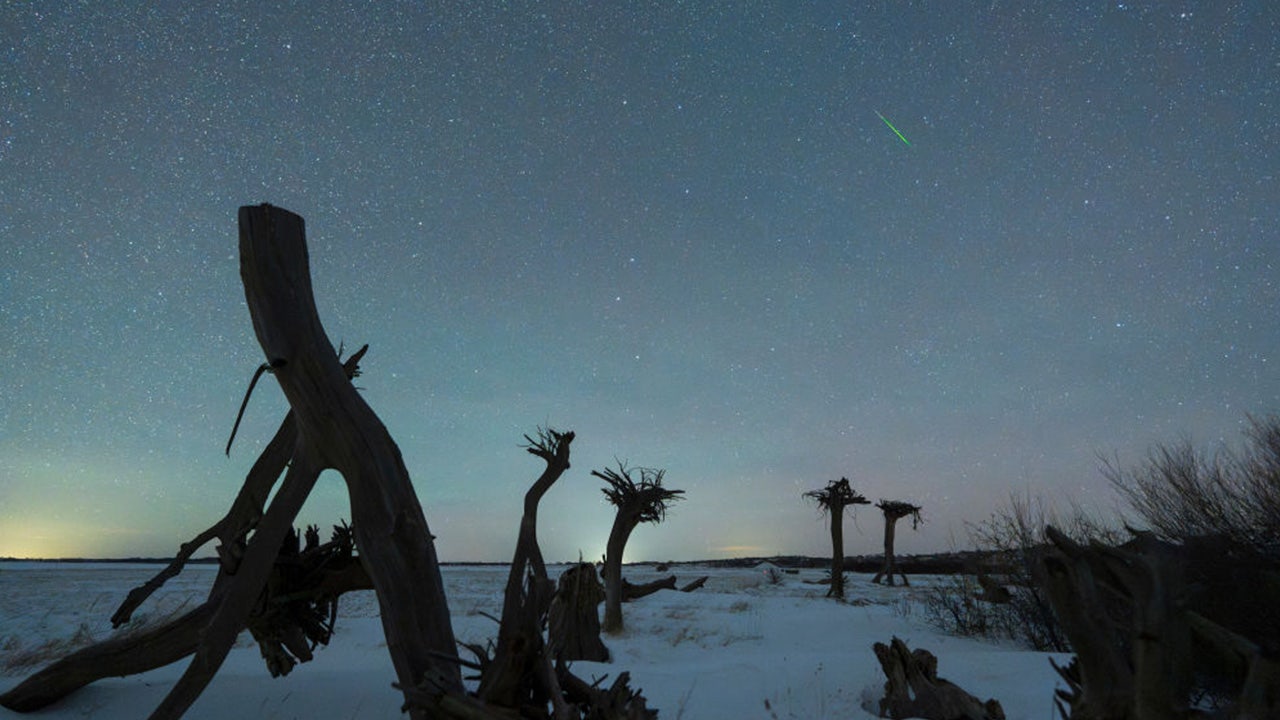
A Celestial Ballet: The Quadrantid Meteor Shower and the Super Wolf Moon of 2026
As the year 2026 begins, the cosmos prepares to treat skygazers to an extraordinary double feature: the annual Quadrantid meteor shower reaching its dazzling peak, precisely timed with the majestic rise of the year's first supermoon, affectionately known as the Super Wolf Moon. This rare conjunction promises a breathtaking spectacle, a testament to the dynamic beauty of our solar system, contingent, of course, on clear skies.
The Quadrantids: A Fiery Start to the Year
Unlike most meteor showers that originate from comet debris, the Quadrantids are believed to stem from an asteroid, 2003 EH1, a fascinating quirk that adds to their mystique. Peaking sharply over a short window, often just a few hours, this shower is renowned for its bright, fast meteors, frequently displaying vivid fireballs. Originating from the now-defunct constellation Quadrans Muralis, they appear to radiate from near the Big Dipper, making them primarily a Northern Hemisphere delight. The brief but intense nature of the Quadrantids means timing is everything for observers eager to catch dozens of meteors per hour streaking across the night sky.
The Super Wolf Moon: A Luminary Spectacle
Coinciding with this celestial firework display is the Super Wolf Moon, the first supermoon of 2026. A 'supermoon' occurs when a full moon nearly coincides with perigee – the point in the Moon's elliptical orbit where it is closest to Earth. This proximity makes the Moon appear significantly larger and brighter than a typical full moon, captivating observers with its enhanced presence. The 'Wolf Moon' moniker, steeped in folklore, traces back to Native American traditions, referring to the full moon in January, when hungry wolves howled outside villages. When combined with the 'super' designation, it evokes an image of an exceptionally potent and luminous lunar presence, a silent, powerful guardian presiding over the meteor shower.
A Conjunction of Cosmic Proportions
The true wonder of this event lies in the rare synchronicity of a major meteor shower peak with a supermoon. While a bright moon can sometimes diminish the visibility of fainter meteors, the Quadrantids' propensity for bright fireballs offers a unique viewing challenge and opportunity. Stargazers will need to position themselves carefully, perhaps using the Moon's glow to illuminate the landscape while still allowing the fast-moving meteors to slice through the darker patches of the sky. This dual event provides a powerful reminder of the universe's ceaseless activity and its capacity for breathtaking, unpredictable beauty.
Beyond the Visual: Scientific and Cultural Significance
For astronomers, events like this offer valuable data. Meteor showers help us understand the composition of asteroids and comets, while supermoons provide opportunities to study lunar orbital mechanics and their subtle effects on Earth, such as slightly heightened tidal forces. Culturally, these phenomena continue to inspire awe, wonder, and a reconnection with the natural rhythms of the cosmos, echoing ancient traditions of sky-watching and storytelling. NovaPress believes that fostering this connection is vital in an increasingly digital world, reminding us of the grandeur just beyond our atmosphere.
Tips for the Discerning Observer
To maximize your viewing experience: find a location away from city lights, allow your eyes at least 20-30 minutes to adjust to the darkness, and bring a comfortable chair. While the Super Wolf Moon will be unmissable, locating the Quadrantids' radiant point (near the handle of the Big Dipper) can help orient your gaze. Most importantly, dress warmly and bring a sense of wonder. Even if weather conditions are less than ideal in your specific locale, the sheer fact of these two powerful celestial events unfolding simultaneously is a marvel in itself.
Don't miss this rare opportunity to witness a celestial ballet – the Quadrantid meteor shower and the Super Wolf Moon – painting the canvas of the 2026 night sky. Look up, NovaPress readers, and be part of the wonder!