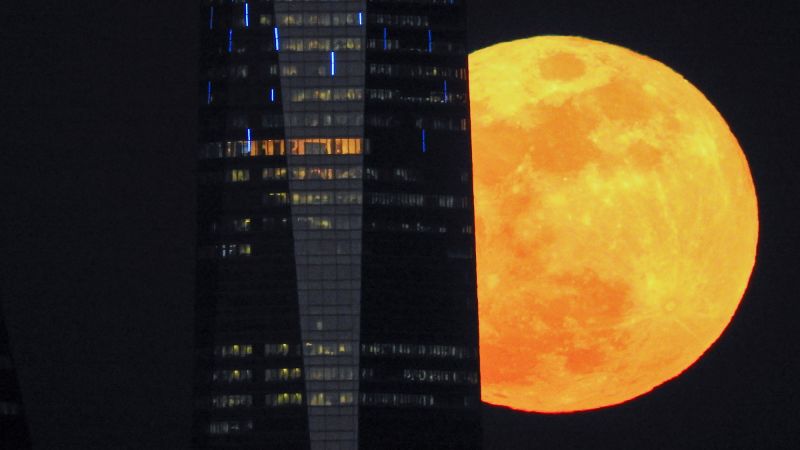
As the calendar flips to 2026, the universe offers an immediate, captivating spectacle: a celestial double feature. January is set to host the first full moon of the year, affectionately known as the Wolf Moon, coinciding with the generally prolific Quadrantid meteor shower. While this sounds like an astronomer's dream, a fascinating paradox emerges: the very brilliance of this initial lunar event, amplified by its 'supermoon' status, will paradoxically challenge our ability to fully appreciate the meteor shower it shares the night with.
The Dazzling Return of the Wolf Supermoon
The Wolf Moon, steeped in folklore, derives its name from early indigenous traditions noting the increased howling of wolves during the cold, dark nights of midwinter. For 2026, this first full moon carries an added distinction: it will be a supermoon. This occurs when a full moon coincides with the Moon’s closest approach to Earth in its elliptical orbit, making it appear significantly larger and up to 30% brighter than an average full moon. Such an astronomical alignment transforms an already prominent lunar event into a truly spectacular display, bathing the nocturnal landscape in an almost ethereal, silvery glow. For stargazers and casual observers alike, the Wolf Supermoon promises an unforgettable start to the new year, demanding attention as it dominates the sky.
The Elusive Grandeur of the Quadrantids
On the other side of this celestial equation lies the Quadrantid meteor shower, an event often heralded as one of the year's most intense, frequently rivaling the Perseids and Geminids in peak activity. Unlike most meteor showers which originate from cometary debris, the Quadrantids are unique, believed to derive from the asteroid 2003 EH1. This shower is renowned for its sharp, brief peak, sometimes lasting only a few hours, during which observers under ideal conditions can witness dozens, sometimes even hundreds, of bright meteors per hour. Many of these meteors are known for their brilliant fireballs, creating fleeting streaks of light across the vast cosmic canvas. Their radiant point lies in the constellation Boötes, near the former constellation Quadrans Muralis, from which they take their name.
The Unfortunate Confluence: Light Versus Dust
The inherent challenge for 2026's Quadrantids is the timing. A supermoon at its brightest acts as a formidable source of natural light pollution. Just as city lights obscure fainter stars, the intense glow of a full supermoon will significantly wash out all but the brightest Quadrantid meteors. The delicate trails of cosmic dust, typically visible against a truly dark backdrop, will struggle to pierce through the lunar luminescence, making the peak hours of the shower a frustrating quest for many.
This scenario highlights a fundamental principle of observational astronomy: the crucial role of dark skies. Whether battling urban light pollution or the overwhelming brightness of our nearest celestial neighbor, a clear, dark environment is paramount for discerning faint astronomical phenomena. The 2026 Quadrantids serve as a poignant reminder that even natural beauty can, at times, impede another form of natural beauty.
Optimizing Your Viewing Experience Despite the Odds
Despite the luminous challenge, dedicated observers aren't entirely without hope. Strategic planning can still offer glimpses of the Quadrantids' brilliance. The key lies in understanding the moon's position and the shower's peak times. If the meteor shower's peak occurs before moonrise or after moonset, a window of opportunity might emerge. Furthermore, finding a viewing location with an unobstructed view of the sky, away from any additional artificial light sources, remains crucial. While a supermoon is undeniably bright, positioning oneself so the moon is just outside one's direct field of vision for meteor watching can offer a slight advantage.
Looking Beyond 2026: The Enduring Allure of the Night Sky
The celestial "double feature" of January 2026, with its inherent observational conflict, underscores the dynamic and sometimes contradictory nature of our universe. It serves as a powerful reminder of the delicate balance required for truly spectacular astronomical viewing. While one event might dim another, each phenomenon – the majestic supermoon and the fleeting meteor shower – carries its own unique charm and scientific significance.
As we navigate the year ahead, the 2026 night sky promises a rich tapestry of events, each inviting us to pause, look up, and connect with the cosmos. This initial display, challenging as it may be, sets a tone for a year of astronomical discovery, urging us to appreciate the subtle dance of light and shadow, and the profound beauty that unfolds above us, regardless of the viewing conditions.