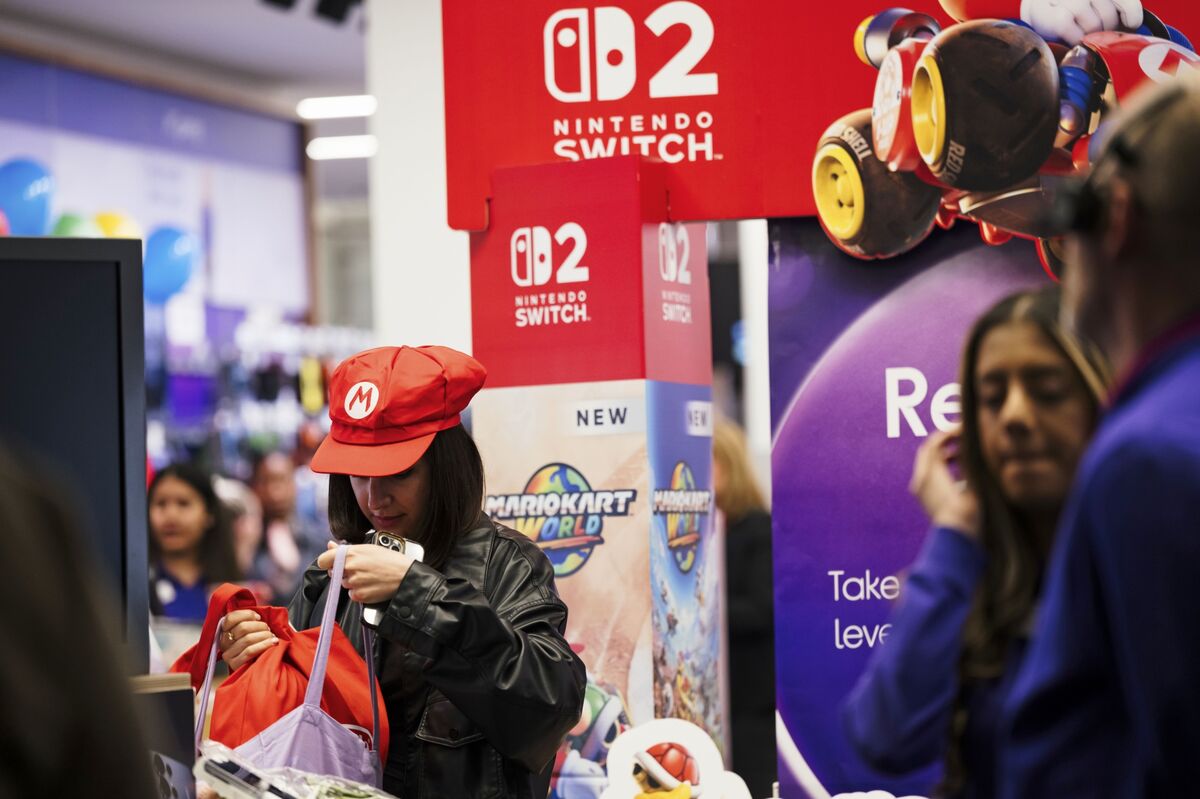
Nintendo's Looming Crucible: Why 2026 Will Define Its Future
By NovaPress Editorial Team
The year 2026 might seem distant, but in the fast-paced world of technology and entertainment, it's just around the corner, especially for a titan like Nintendo. As highlighted by Takashi Mochizuki and Vlad Savov in Bloomberg's "Tech In Depth" series, the iconic Japanese gaming company is facing an existential reckoning. After the unprecedented, near-decade-long success of the Nintendo Switch, the pressure is mounting for Nintendo to not just innovate, but to prove its enduring relevance in an increasingly diversified and competitive gaming landscape.
The Switch's Shadow: A Legacy to Transcend
Launched in 2017, the Nintendo Switch defied expectations, blending the versatility of a portable handheld with the power of a home console. It became a cultural phenomenon, selling over 130 million units worldwide and revitalizing Nintendo's fortunes after the Wii U's struggles. Its success was fueled by an ingenious hybrid design and a relentless stream of first-party masterpieces like The Legend of Zelda: Breath of the Wild, Super Mario Odyssey, and Animal Crossing: New Horizons. However, seven years into its lifecycle, the Switch's hardware is showing its age, struggling to keep pace with the graphical demands of modern gaming. While its unique proposition and strong IP continue to drive sales, the market, and crucially, investors, are beginning to look beyond its current reign.
The Inevitable Successor: Innovation Under Immense Pressure
The question isn't if a successor is coming, but when, and what form it will take. By 2026, a new Nintendo console will undoubtedly be the company's central pillar. The challenge lies in crafting a device that can innovate beyond the Switch's paradigm without abandoning its core strengths. Will Nintendo double down on the hybrid concept with enhanced processing power and graphical capabilities? Or will they pivot entirely, perhaps exploring new control schemes, cloud integration, or VR/AR possibilities? The historical trajectory of Nintendo is replete with both groundbreaking successes (Wii, Switch) and missteps (Virtual Boy, Wii U). The next console must not only capture the imagination of its loyal fanbase but also attract new players and developers who demand cutting-edge technology.
Navigating a Fractured Gaming Ecosystem
The gaming world of 2026 will be even more diverse. Sony's PlayStation and Microsoft's Xbox will have matured further into their current generations, pushing boundaries in raw power and ecosystem integration. PC gaming continues to thrive, while mobile gaming dominates in sheer user numbers. Beyond these, cloud gaming services are evolving, and the metaverse concept, however nascent, hints at new digital frontiers. Nintendo's traditional strategy has been to "march to the beat of its own drum," offering unique experiences rather than competing directly on specs. While admirable, this approach becomes increasingly risky as technological convergence blurs lines. Nintendo must find a way to offer a distinct, compelling value proposition that resonates amidst a cacophony of entertainment options.
The Power of IP: Refreshing the Classics vs. Forging New Paths
A significant part of Nintendo's enduring appeal lies in its unparalleled roster of beloved intellectual properties: Mario, Zelda, Pokémon, Metroid, Animal Crossing, and more. These franchises are evergreen, consistently delivering blockbuster sales and critical acclaim. However, relying solely on established IPs, no matter how iconic, risks creative stagnation. By 2026, the demand for fresh experiences and innovative twists on familiar formulas will be paramount. Can Nintendo introduce compelling new franchises that capture the zeitgeist, akin to how Splatoon emerged as a fresh IP for the Wii U and Switch era? Or will they continue to refine and expand their existing universes, perhaps exploring new genres or cross-media ventures with even greater zeal? The balance between honoring tradition and embracing novelty will be delicate.
Investor Confidence and the Road Ahead
Beyond consumer sentiment, investor confidence will be a critical factor. The stock market reacts sharply to perceived innovation and growth potential. By 2026, shareholders will expect clear evidence of Nintendo's long-term vision and its strategy to maintain profitability and market leadership in a post-Switch world. This isn't just about selling hardware; it's about ecosystem growth, digital sales, subscription services, and potentially expanding into new entertainment sectors beyond traditional gaming. The coming years will be a period of intense scrutiny, where every decision, from hardware design to software pipelines, will be analyzed for its potential impact on Nintendo's future trajectory.
In essence, 2026 represents a crucible for Nintendo. It's an opportunity to reaffirm its position as a unique, innovative force in the global entertainment industry. The challenges are formidable: an aging flagship product, intense market competition, and the perennial pressure to invent the next big thing while staying true to its core identity. As Mochizuki and Savov suggest, Nintendo has everything to prove again. The world will be watching to see if the House of Mario can once more surprise, delight, and define the future of play.