A New Dawn or Diplomatic Gambit? Israel's Recognition of Somaliland Reshapes Horn of Africa
By The NovaPress Editorial Board
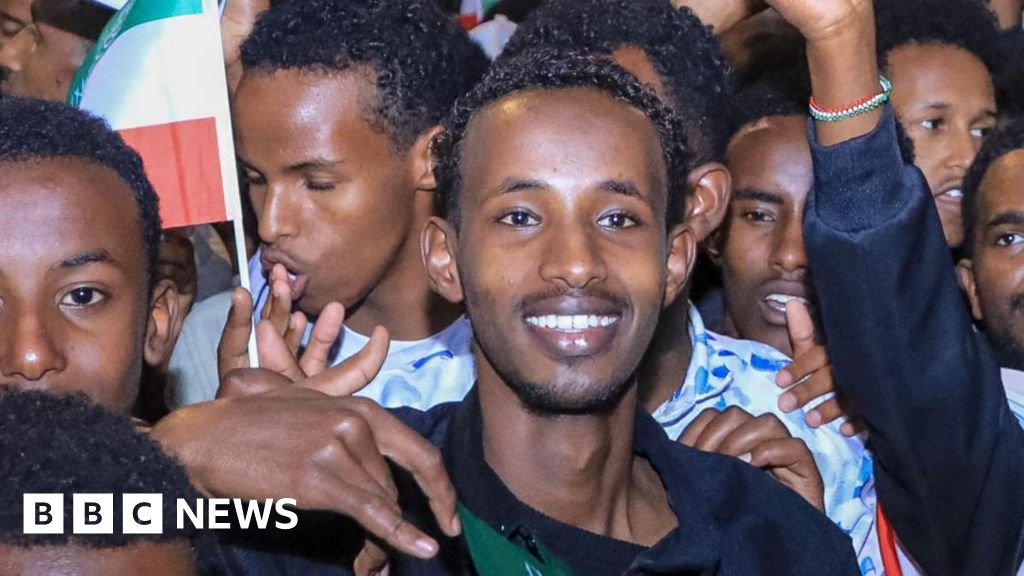
In a move that has sent ripples across the Horn of Africa and the broader international community, Israel has formally recognized Somaliland as an independent state. This controversial decision has been met with jubilant celebrations in Somaliland's capital, Hargeisa, where residents have long yearned for global legitimacy. For decades, Somaliland, a self-declared state with robust democratic institutions and relative stability, has navigated the complexities of international diplomacy without official recognition. Israel's unexpected declaration not only upends the status quo but also sparks a critical debate: Is this a triumph for self-determination, or a strategic geopolitical maneuver with far-reaching consequences?
Somaliland's Uncharted Path: A De Facto State's Quest for Legitimacy
Somaliland's journey is unique among aspiring nations. A former British Protectorate, it gained independence in 1960, only to voluntarily unite with the Italian-administered Trust Territory of Somaliland to form the Somali Republic. However, decades of marginalization, civil war, and the brutal crackdown under Siad Barre's regime led to Somaliland's re-declaration of independence in 1991, following the collapse of the central Somali government.
Since then, Somaliland has built a functioning state from the ground up. It boasts its own currency, a well-organized military, an independent judiciary, and a vibrant, if imperfect, multi-party democracy that has seen peaceful transfers of power. Despite this impressive track record of self-governance, peace, and security in a notoriously unstable region, Somaliland has remained largely unrecognized, viewed by the international community as an autonomous region of Somalia. This lack of recognition has stifled foreign investment, limited access to international aid, and excluded Somaliland from critical global platforms, making its aspirations for full statehood an enduring, uphill battle.
Israel's Bold Gambit: Unpacking the Motives
Israel's decision to recognize Somaliland is a calculated risk, rich with geopolitical implications. Several factors could be driving this controversial move:
- Strategic Location and Red Sea Security: Somaliland's strategic position along the Gulf of Aden and the Bab el-Mandeb Strait, a vital chokepoint for global shipping and trade, is undeniable. Control or influence over the port of Berbera offers significant leverage for maritime security and trade routes, particularly in an era of heightened Red Sea tensions. For Israel, securing alliances in this critical maritime corridor could enhance its own strategic depth.
- Reviving the 'Periphery Doctrine': Historically, Israel has sought alliances with non-Arab states in the Middle East and Africa to counter hostile neighbors. Recognizing Somaliland could be seen as a modern application of this 'periphery doctrine,' fostering ties with a non-Arab entity in a strategically important region.
- Economic Opportunities and Resources: Somaliland possesses untapped natural resources, including potential oil and gas reserves, and offers significant trade and investment opportunities. Early recognition could position Israeli firms advantageously in these nascent markets.
- Diplomatic Breakthrough and Internal Politics: For Israel, this recognition could be framed as a diplomatic coup, demonstrating its ability to forge new alliances and reshape regional dynamics, potentially bolstering its standing domestically and internationally amidst other diplomatic challenges.
- Counter-Influence: The move could also be a subtle play to counter the influence of other regional powers, such as Turkey and Gulf states, which have deepened their engagement with Somalia.
The Repercussions: Shifting Sands in the Horn of Africa
The immediate aftermath of Israel's recognition is predictable but its long-term impact is less certain. Somalia has vehemently condemned the decision as a blatant violation of its sovereignty and territorial integrity, further complicating already strained relations with Somaliland. Mogadishu is expected to lobby aggressively within the African Union and the Arab League to reject the recognition, appealing to the principle of respecting colonial-era borders.
The international community's response will be crucial. Many nations, wary of setting a precedent that could encourage other secessionist movements, may adopt a cautious 'wait and see' approach. However, if major global players follow suit, or if the recognition spurs significant investment and development in Somaliland, it could fundamentally alter the region's geopolitical landscape.
This development could also heighten regional tensions, potentially drawing in other actors with vested interests in the stability and political alignment of the Horn of Africa. The fragile peace in the region, already threatened by various conflicts and insurgencies, could face new challenges as alliances shift and rivalries intensify.
Looking Ahead: A Risky Bet or a Visionary Leap?
Israel's recognition of Somaliland is a watershed moment. For Somalilanders, it offers a glimmer of hope that their decades-long struggle for self-determination might finally bear fruit. For Israel, it is a bold strategic move, aiming to secure new allies and bolster its influence in a critical part of the world.
Whether this gambit proves to be a visionary leap towards a new era of regional stability and mutual prosperity, or a risky bet that further destabilizes an already volatile region, remains to be seen. What is clear, however, is that the geopolitical map of the Horn of Africa has just been redrawn, and the world is now watching to see where the new lines will lead.