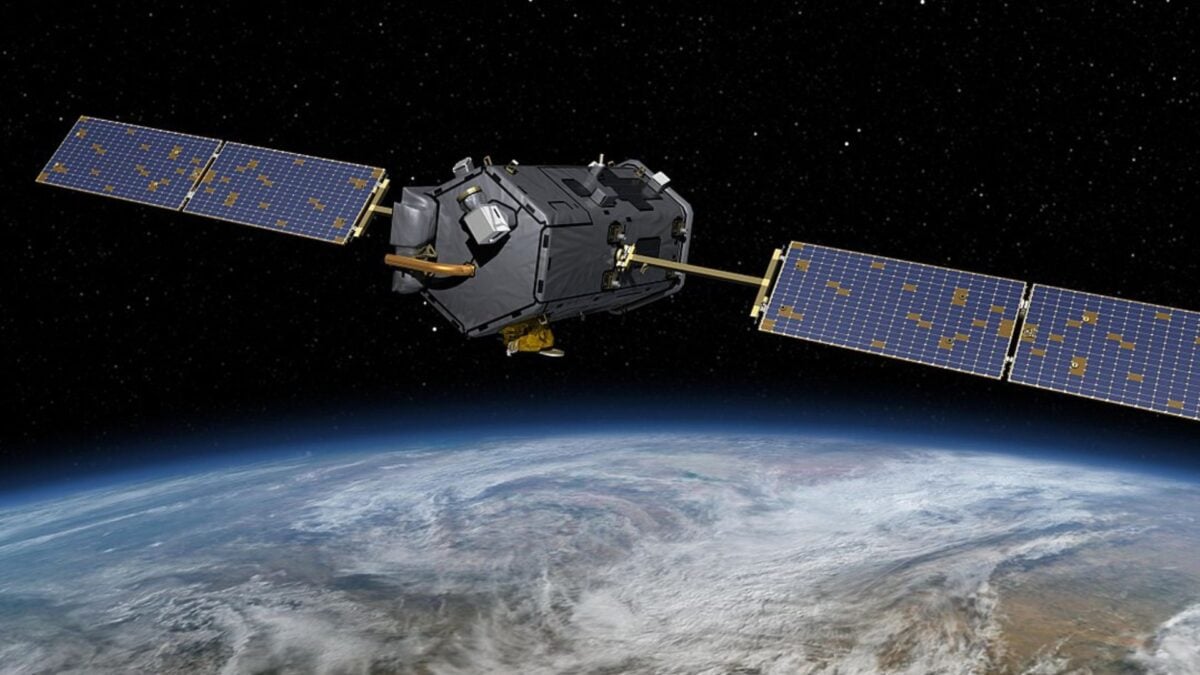
The Unseen Threat: How Deorbiting Satellites Imperil Our Ozone Layer – And the Radical New Design Solution
As the celestial ballet of satellites intensifies, a silent environmental crisis looms. Researchers are now proposing a revolutionary shift in space engineering to protect Earth's vital atmospheric shield.
A Sky Full of Solutions, A Wake of Pollution
For decades, humanity has launched an ever-growing armada of satellites into orbit, transforming communication, navigation, and observation. But what goes up, must eventually come down. Each year, hundreds, soon to be thousands, of these technological marvels reach the end of their operational lives. Their prescribed fate? A fiery re-entry into Earth's atmosphere, where they are designed to burn up, ideally disintegrating into harmless particles. Or so we thought.
Recent scientific scrutiny, however, paints a concerning picture. This controlled demolition isn't as benign as once believed. The metallic components and advanced materials of deorbiting satellites, when incinerated at extreme temperatures, release a cocktail of chemicals – notably aluminum oxide, among others – directly into the stratosphere. This is the very same atmospheric layer home to the ozone shield, our planet's crucial defense against harmful ultraviolet (UV) radiation from the sun.
The Invisible Enemy: Satellite Debris and Ozone Depletion
The problem is escalating. With the proliferation of massive satellite constellations like SpaceX's Starlink, OneWeb, and Amazon's Project Kuiper, the number of objects regularly deorbiting and burning up is set to skyrocket. Estimates suggest that within a decade, we could see upwards of 1,000 to 1,500 satellites re-entering annually. Each event, while individually small, contributes to a cumulative environmental burden.
Scientists have drawn parallels between the impact of satellite re-entry chemicals and other stratospheric pollutants known to deplete ozone. Aluminum oxide particles, for instance, can act as catalysts, accelerating the chemical reactions that break down ozone molecules. The long-term implications are severe: a weakened ozone layer means increased exposure to UV radiation, leading to higher rates of skin cancer, cataracts, and potential damage to ecosystems.
The Radical Proposal: Indestructible Satellites?
Faced with this growing environmental dilemma, researchers are now advocating for a radical paradigm shift: satellites designed not to burn up, but to be "indestructible" – or at least, significantly more resilient to atmospheric re-entry. This doesn't necessarily mean launching unyielding monoliths; rather, it implies a fundamental re-evaluation of materials, design, and end-of-life strategies.
The core idea is to prevent the widespread aerosolization of harmful chemicals in the upper atmosphere. Several approaches are being explored:
- Controlled Re-entry & Retrieval: Designing satellites to survive re-entry intact for targeted retrieval and recycling on Earth. This would involve robust heat shields and aerodynamic designs for precision landing.
- Orbital Servicing & Recycling: Developing technologies for in-orbit refueling, repair, or even dismantling and recycling components by robotic servicers. This would keep materials out of the atmosphere entirely.
- Biodegradable/Non-toxic Materials: Exploring new composite materials that, if they must burn up, do so without releasing harmful ozone-depleting substances.
- Modular Design: Satellites built in components that can be individually replaced or upgraded in orbit, extending lifespan and reducing the need for full satellite disposal.
Challenges and the Path Forward
Implementing such a revolutionary change presents formidable challenges. The cost of designing, building, and launching "indestructible" or retriever-friendly satellites would undoubtedly be higher initially. Technological hurdles related to materials science, precision re-entry, and in-orbit robotics are significant. Moreover, international cooperation will be paramount to establish new standards and regulatory frameworks for sustainable space operations.
Yet, the stakes are too high to ignore. Just as early aerospace engineers adapted designs to mitigate environmental impact from aircraft, the burgeoning space industry must now confront its own carbon footprint, or more accurately, its "ozone footprint." The vision of a sustainable space economy hinges on innovative solutions that balance humanity's drive for technological advancement with our responsibility to protect our home planet.
The proposition to make satellites "indestructible" is more than a technical fix; it's a call for a profound shift in our relationship with space. It recognizes that even the most distant human activities have terrestrial consequences, and that true progress lies in integrating environmental stewardship into every frontier we explore.