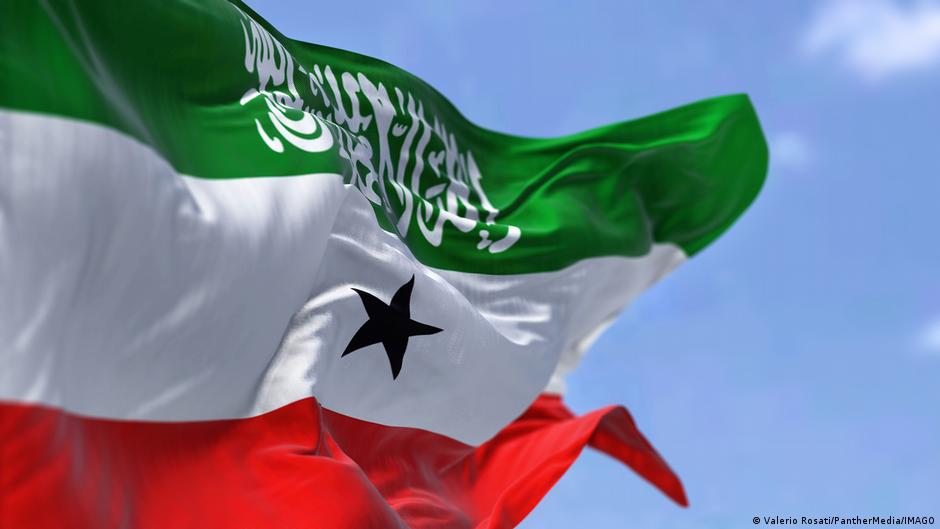
A single diplomatic act has sent ripples across continents, threatening to destabilize an already volatile region. Israel's unprecedented recognition of Somaliland as an independent state marks a significant departure from long-standing international norms, sparking immediate and sharp condemnation from Somalia, the European Union, and a chorus of African and Arab nations. This bold move by Jerusalem not only challenges Somalia's territorial integrity but also ignites a complex geopolitical firestorm with far-reaching implications for sovereignty, regional stability, and international diplomacy.
A History of Contested Identity
Somaliland, a self-declared state on the Gulf of Aden, has operated with de facto independence since 1991, following the collapse of Somalia's central government. While it boasts its own government, currency, and military, and has maintained relative peace and democratic transitions, it has remained largely unrecognized by the international community, which largely adheres to the principle of preserving the territorial integrity of existing states – especially African Union members. Its claims to independence are rooted in its distinct colonial history under British rule, separate from the Italian Somaliland that formed the bulk of modern Somalia.
Jerusalem's Strategic Gambit
The timing of Israel's recognition is crucial. Analysts suggest several strategic motivations behind this controversial decision. Firstly, establishing diplomatic ties with Somaliland could offer Israel a strategic foothold in the Horn of Africa, particularly along the vital Bab el-Mandeb Strait, a chokepoint for global shipping between the Red Sea and the Indian Ocean. This could enhance Israel's intelligence gathering and counter-terrorism capabilities in a region plagued by instability and extremist groups.
Secondly, it could be seen as an attempt to expand the "Abraham Accords" paradigm, seeking new diplomatic partners beyond the traditional Arab world and potentially further isolating Iran. By forging ties with a non-Arab Muslim entity that has been seeking recognition for decades, Israel may be hoping to demonstrate its capacity for building diverse alliances. Lastly, it could also be a calculated move to shift international focus and garner support from a new quarter amidst ongoing regional conflicts.
Sovereignty Under Siege
For Somalia, Israel's recognition is a profound violation of its sovereignty and a direct threat to its national unity. Mogadishu has swiftly condemned the move as an act of aggression and a flagrant breach of international law, vowing to defend its territorial integrity "by all legal means." This diplomatic crisis threatens to undermine the fragile stability Somalia has slowly been building, potentially diverting resources and attention from its ongoing fight against Al-Shabaab and its state-building efforts.
The European Union, a major donor and partner to Somalia, has urged "calm and restraint," reiterating its strong support for Somalia’s unity, sovereignty, and territorial integrity. The EU's stance underscores the international community's general apprehension about redrawing borders in Africa, a continent still grappling with post-colonial legacy issues and where the principle of inviolable borders has long been a cornerstone of regional stability.
A Domino Effect?
The ramifications of Israel's decision extend far beyond the immediate parties. Within Africa, the recognition sends a chilling message to other nations facing secessionist movements. The African Union (AU) has historically upheld the sanctity of colonial-era borders to prevent further fragmentation and conflict. A break from this principle could embolden groups in other regions, potentially igniting new crises across the continent.
In the Middle East, the move is likely to exacerbate existing tensions. Arab states, already critical of Israel's policies, will view this as another provocative act, further complicating regional diplomacy. Turkey and Iran, both with growing interests in the Horn of Africa, are also likely to react, potentially escalating their proxy competition in the region.
Navigating a Precarious Future
The path forward is fraught with uncertainty. Somalia is expected to mount a robust diplomatic offensive to reverse Israel's recognition and rally international support for its territorial claims. This could involve lobbying the UN Security Council, the African Union, and other global bodies. Somaliland, on the other hand, will celebrate this breakthrough as a validation of its long struggle for self-determination, potentially using it as leverage to seek further recognition from other nations.
The international community now faces a delicate balancing act: how to uphold international law and respect national sovereignty while acknowledging the realities of Somaliland's de facto existence. The risk of heightened tensions, diplomatic isolation, and even direct conflict in the already fragile Horn of Africa cannot be overstated. Israel's move, while strategically motivated, has undoubtedly opened a new, unpredictable chapter in the geopolitics of the region, demanding careful navigation from all stakeholders.
As the dust settles from this diplomatic tremor, the world watches to see if Israel's gamble will pay off, or if it will instead unleash a torrent of instability. The principles of sovereignty and self-determination are on a collision course, and the outcome in the Horn of Africa will set a precedent for future international relations.