Antarctica's Ancient Warning: The 9,000-Year-Old Blueprint for Future Sea Level Rise
NovaPress Editorial Board
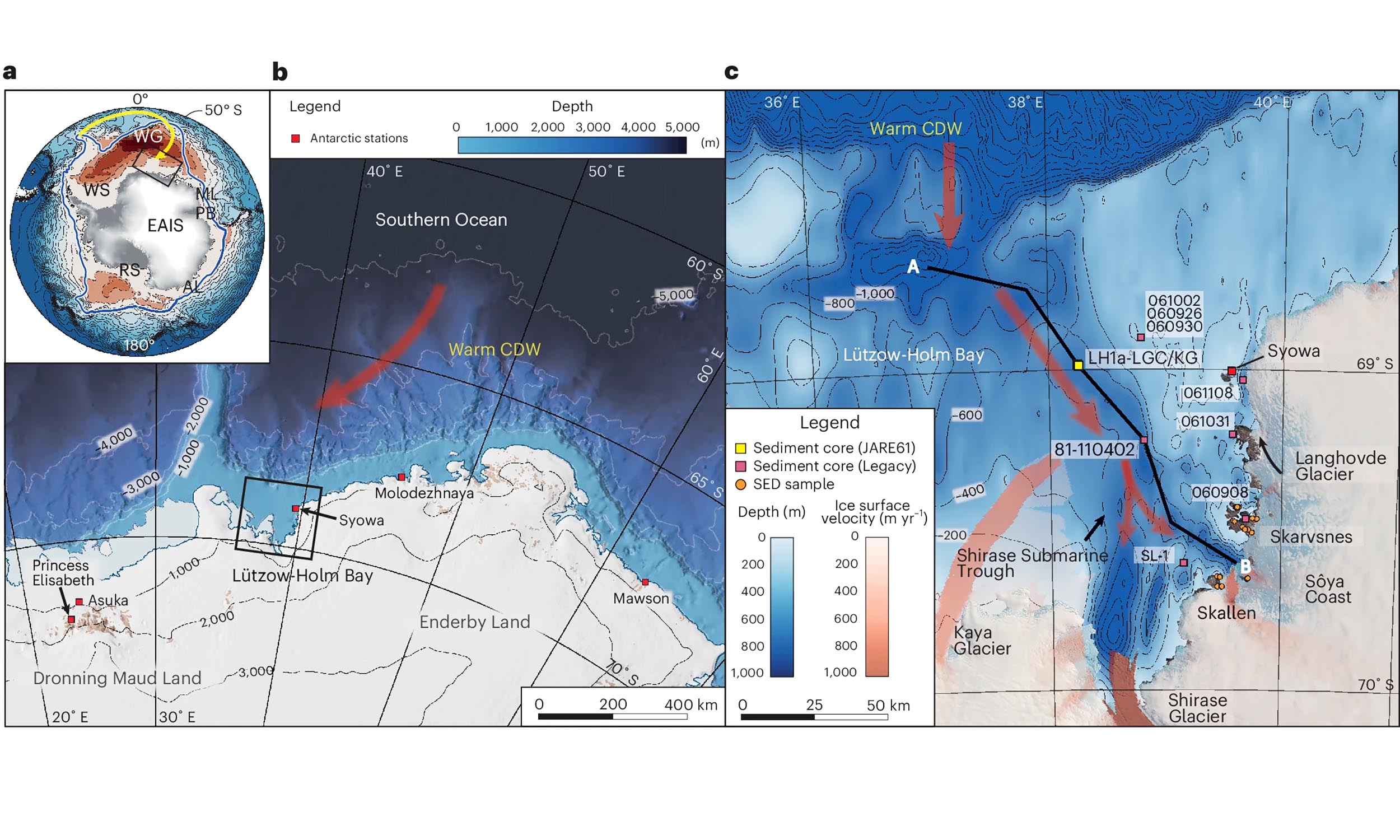
A chilling new study from Earth.com reveals a stark parallel between ancient climate events and today's rapidly changing world. Approximately 9,000 years ago, a significant portion of the East Antarctic Ice Sheet (EAIS) underwent an astonishingly fast collapse, a seismic event triggered by warmer ocean currents. This discovery is not merely a historical footnote; it serves as a critical, ominous warning about the potential trajectory of our planet's climate and the future of global sea levels.
The Unsettling Echoes of an Ancient Thaw
For decades, the East Antarctic Ice Sheet was often considered the more stable, less vulnerable counterpart to the rapidly melting West Antarctic Ice Sheet. Its sheer size and elevation suggested a resilience that made rapid collapse seem unlikely. However, this new research challenges that perception directly. The study's focus on a past collapse of the EAIS offers undeniable evidence that even this colossal body of land ice is susceptible to rapid disintegration under specific, eerily familiar conditions.
The key driver behind this ancient event was the infiltration of warm ocean water beneath the ice sheet. This warmth melted the ice from below, destabilizing its grounding lines – the critical points where the ice transitions from resting on bedrock to floating on the ocean. Once these grounding lines retreated past certain thresholds, the collapse accelerated, indicating a non-linear response to warming that has profound implications for our understanding of ice sheet dynamics.
Climate Conditions: Then and Now
What makes this research particularly alarming is the striking similarity between the climate conditions 9,000 years ago and those we observe today. During that ancient period, global temperatures were experiencing natural fluctuations, but crucially, regional ocean currents brought warmer waters to Antarctica's periphery. Scientists have identified that these past warm currents, similar to today's human-driven ocean warming, had the capacity to unlock rapid ice sheet collapse.
Today, satellite data and oceanographic surveys consistently show an increase in the temperature of the Southern Ocean, particularly in areas adjacent to the Antarctic coastline. These warmer waters are increasingly encroaching upon ice shelves and subglacial environments, mimicking the very conditions that precipitated the ancient collapse. The modern context, however, introduces an unprecedented rate and scale of warming driven by anthropogenic greenhouse gas emissions, suggesting that future collapses could be even more widespread and devastating.
Implications for Future Sea Level Rise
The most pressing takeaway from this research concerns future sea level rise. A rapid collapse of even a part of the EAIS, which holds enough ice to raise global sea levels by tens of meters, would be catastrophic. Current models for sea level rise often incorporate conservative estimates for the EAIS's contribution, assuming its relative stability. This new evidence demands a re-evaluation of those models, suggesting that the upper bounds of sea level rise predictions might need significant adjustment.
Understanding the mechanisms of this ancient collapse — how warm ocean currents initiated and accelerated the disintegration — provides invaluable data for refining climate models. It highlights the critical role of ocean-ice interactions, often a complex and difficult variable to predict accurately. The past, in this instance, serves not just as a warning, but as a laboratory for future scenarios, offering insights into potential tipping points and feedback loops that could accelerate ice loss beyond current projections.
Facing the Future: A Call to Action
The findings from Earth.com underscore an urgent truth: the stability of even the most massive ice sheets is not guaranteed in a warming world. The ghost of an ancient collapse, driven by conditions analogous to our present, looms large over our future.
As Editor-in-Chief of NovaPress, I believe this research demands immediate and sustained attention. It's a stark reminder that while the pace of climate change may seem gradual on a human timescale, natural systems can respond with terrifying speed once critical thresholds are breached. Mitigating greenhouse gas emissions and investing in robust climate research are not merely environmental concerns; they are fundamental imperatives for safeguarding coastal communities, global economies, and the stability of our planet for generations to come. The lessons from 9,000 years ago are clear: we ignore them at our peril.