Beyond the Horizon: What an Astronaut's Lunar Halo Photo Reveals About Earth's Atmospheric Secrets
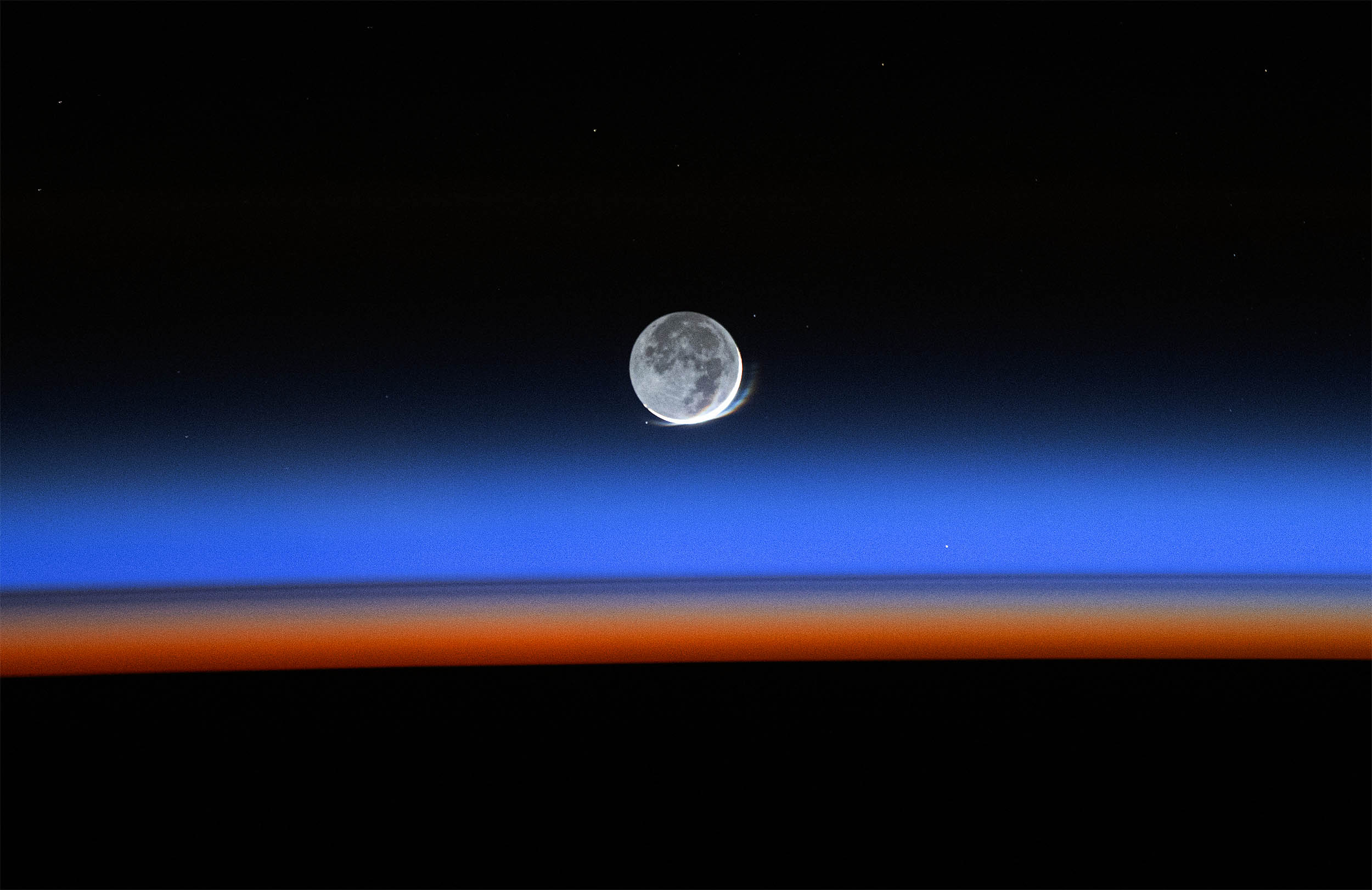
The vast expanse of space offers a unique canvas for observing Earth, and occasionally, it grants us a glimpse into phenomena usually reserved for our terrestrial perspective. Recently, an astronaut aboard the International Space Station (ISS), orbiting high above the Indian Ocean, captured a breathtaking image that not only showcased the moon's ethereal glow but also revealed a stunning "lunar halo." This isn't just a beautiful photograph; it's a profound window into the complex and often invisible workings of our planet's atmosphere, offering insights into atmospheric optics, ice formation, and the invaluable role of orbital observation.
Understanding the Lunar Halo: A Dance of Light and Ice
A lunar halo, much like its solar counterpart, is an optical phenomenon produced by light interacting with ice crystals suspended in the atmosphere. Unlike rainbows, which result from water droplets refracting and reflecting sunlight, halos are typically formed by hexagonal ice crystals in high-altitude cirrus clouds. As moonlight (or sunlight) passes through these precisely shaped crystals, it is refracted at a specific angle, usually 22 degrees, creating the characteristic luminous ring or arc around the light source. From Earth's surface, these halos are a relatively common, albeit beautiful, sight, hinting at the presence of invisible ice formations miles above us.
A Unique Vantage Point: Halos from Orbit
What makes this particular observation truly extraordinary is its vantage point: space. While observers on Earth see the halo projected against the backdrop of the sky, the astronaut on the ISS witnessed it from above, looking down through layers of the atmosphere. This perspective offers several critical scientific advantages:
- Direct Atmospheric Imaging: The photograph likely captures not just the halo, but also the broader atmospheric conditions and cloud structures responsible for its formation, providing a unique vertical profile of the involved ice crystals.
- Global Distribution Data: Observations from the ISS contribute to a global understanding of where and when such high-altitude ice clouds form, helping atmospheric scientists map their distribution and frequency.
- Validating Models: These rare orbital glimpses can help validate and refine atmospheric models that predict the distribution and properties of ice crystals, crucial for climate studies and weather forecasting.
- Rare Optical Phenomena: The description mentions "rare optical phenomena," suggesting the astronaut may have captured more than just a standard 22-degree halo, possibly parhelia (moon dogs), arcs, or other complex ice crystal formations that are even less common.
The ISS: An Unparalleled Earth Observatory
The International Space Station, often celebrated for its microgravity research and advancements in human spaceflight, is also an indispensable platform for Earth observation. Equipped with a suite of sophisticated instruments and offering an unparalleled human perspective, the ISS provides continuous, long-term monitoring of our planet. From tracking hurricanes and deforestation to studying ocean currents and atmospheric composition, the data collected from the ISS is vital for understanding Earth's dynamic systems. This photograph of a lunar halo serves as a poignant reminder of how even seemingly simple observations from space can contribute to a richer, more nuanced understanding of our home world's intricate environmental processes.
Future Implications: Beyond Earth's Veil
The study of atmospheric optics from an orbital perspective has implications that extend beyond our planet. As humanity ventures further into the solar system, understanding how light interacts with the diverse atmospheres of other celestial bodies becomes increasingly important. Could similar optical phenomena occur in the methane clouds of Titan or the tenuous carbon dioxide atmosphere of Mars? Observations like the lunar halo from the ISS provide foundational knowledge for future missions designed to characterize exoplanet atmospheres, where the presence and properties of aerosols and ice crystals could offer clues about habitability and atmospheric evolution.
Conclusion: A Glimpse into the Invisible
The astronaut's stunning photograph of a lunar halo is more than just a captivating image; it is a testament to the beauty and complexity of Earth's atmosphere, and the unique insights gained from observing our planet from space. It reminds us that even familiar phenomena can reveal new secrets when viewed from a different perspective. As NovaPress continues to explore the frontiers of science, we celebrate these moments where art and science converge, inspiring wonder and driving our relentless pursuit of knowledge about the cosmos and our place within it.