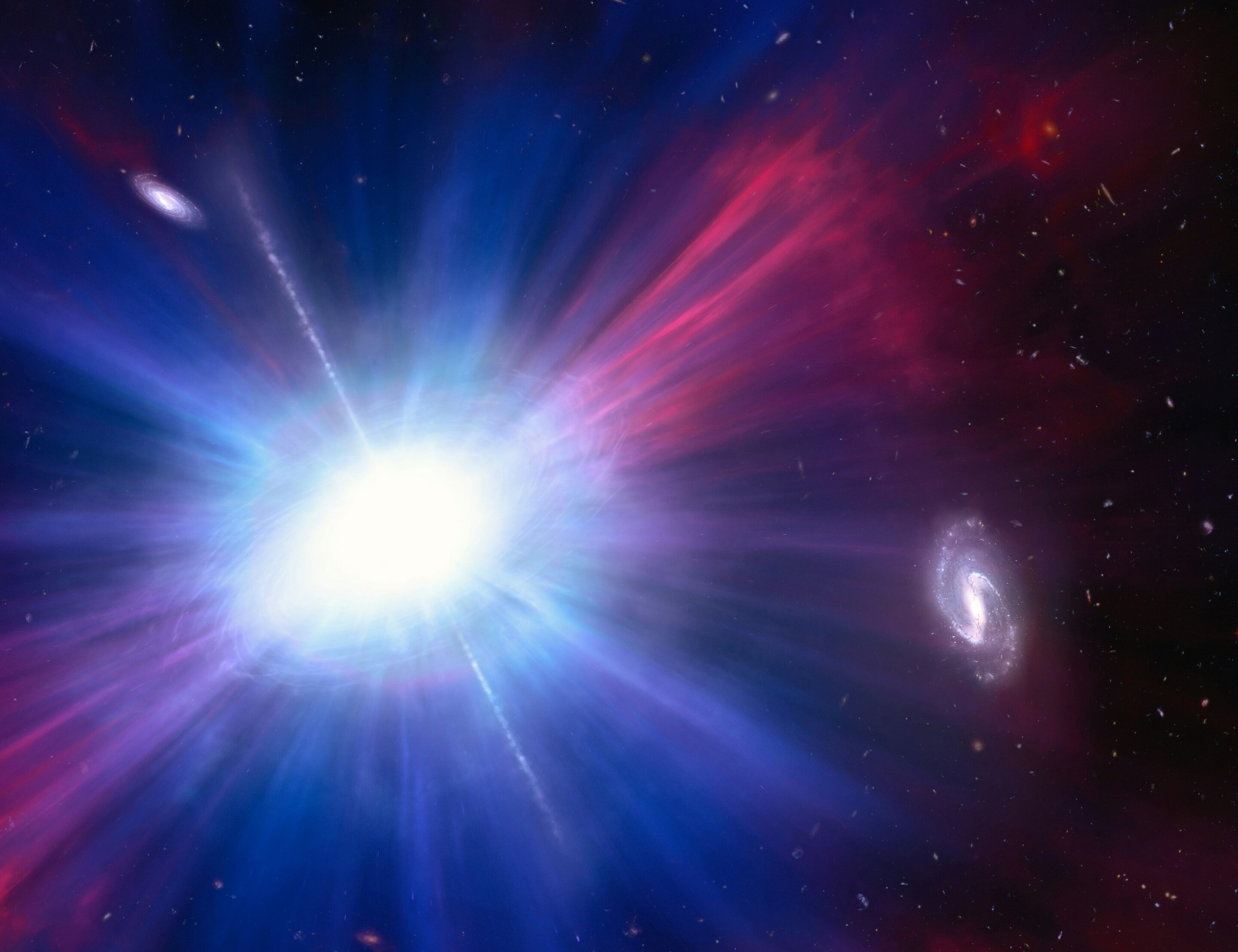
Echoes from the Dawn: JWST Captures Ancient Supernova, Illuminating the Universe's Infancy
In a monumental achievement that pushes the boundaries of cosmic observation, an international consortium of astronomers, leveraging the unparalleled capabilities of the James Webb Space Telescope (JWST), has detected a supernova at an unprecedented cosmic distance. This explosive stellar death, occurring in the universe's nascent stages, offers a rare, fiery glimpse into an era previously shrouded in mystery, promising to rewrite our understanding of early cosmic evolution.
A Glimpse into the Cosmic Cradle
The detection of this ancient supernova marks a significant "first" in our quest to probe the early universe. Supernovae, the cataclysmic finales of massive stars, are not merely spectacular light shows; they are crucial engines of cosmic change. These explosions forge and disperse heavy elements – the building blocks of planets, life, and even future stars – across the cosmos. Observing one from such a vast distance means we are effectively looking back in time, witnessing an event that unfolded billions of years ago, when the universe was a fraction of its current age.
The immense distance to this particular supernova makes its light incredibly faint and stretched into the infrared spectrum due to the universe's expansion. This is precisely where the JWST shines. Designed specifically to detect infrared light with exquisite sensitivity, the JWST acts as a cosmic time machine, capable of piercing through vast expanses of space and time to capture the earliest photons emitted after the Big Bang.
The Power of Webb: Beyond the Veil of Time
Prior to JWST, such distant supernovae were largely theoretical or at the very fringes of detection. Traditional telescopes struggled to collect enough light and to discern it from the background noise, especially as the light shifted from visible to infrared wavelengths. JWST's giant, segmented mirror and its suite of cutting-edge infrared instruments, including the Near-Infrared Camera (NIRCam) and Mid-Infrared Instrument (MIRI), have unlocked this new observational frontier. By capturing the faint, redshifted glow of this supernova, astronomers can now analyze its light curve, spectrum, and the properties of its host galaxy, even if the latter remains incredibly dim.
This breakthrough is more than just an astronomical record; it's a testament to human ingenuity and our relentless pursuit of knowledge. It validates JWST's foundational design and mission, confirming its unparalleled ability to explore the universe's earliest epochs and providing invaluable data that was once unimaginable.
Implications for Early Universe Evolution
The detection of this ancient supernova holds profound implications for several branches of cosmology and astrophysics:
- Star Formation Rates: The frequency and types of supernovae observed in the early universe can directly inform models of how quickly stars were forming and dying. A higher rate of massive stellar deaths suggests a period of robust star formation shortly after the universe cooled enough for stars to ignite.
- Element Enrichment: Supernovae are the primary factories for elements heavier than hydrogen and helium. By studying the remnants and light signatures of these early explosions, scientists can trace the universe's chemical evolution, understanding how quickly the cosmos became enriched with the elements necessary for planets and life.
- Galaxy Evolution: The host galaxy of such an ancient supernova, though faint, can provide clues about the first galaxies. Were they small, clumpy structures? How did their stellar populations differ from those in the modern universe? Supernovae can also trigger or quench star formation within their host galaxies, influencing their subsequent evolution.
- Cosmological Parameters: Type Ia supernovae, often used as "standard candles" for measuring cosmic distances and the universe's expansion rate, might have different properties in the early universe. While this detected supernova might be a core-collapse type, future JWST observations could identify Type Ia supernovae, helping refine our cosmological models and understanding of dark energy.
The Future Illuminated
This discovery is undoubtedly just the beginning. With JWST’s ongoing mission, astronomers anticipate detecting more such distant supernovae, building a robust statistical sample that will paint a clearer picture of stellar evolution and element distribution in the early cosmos. Each new detection will add another pixel to our cosmic portrait, refining our understanding of how the universe transitioned from a primordial soup of hydrogen and helium to the complex, star-filled expanse we observe today.
As NovaPress, we stand in awe of this remarkable achievement. The James Webb Space Telescope continues to exceed expectations, not just in its scientific output, but in its ability to ignite curiosity and wonder about our origins. This ancient supernova, a fleeting flash of light from the cosmic dawn, serves as a powerful reminder of the universe's profound history and the boundless potential of human exploration.