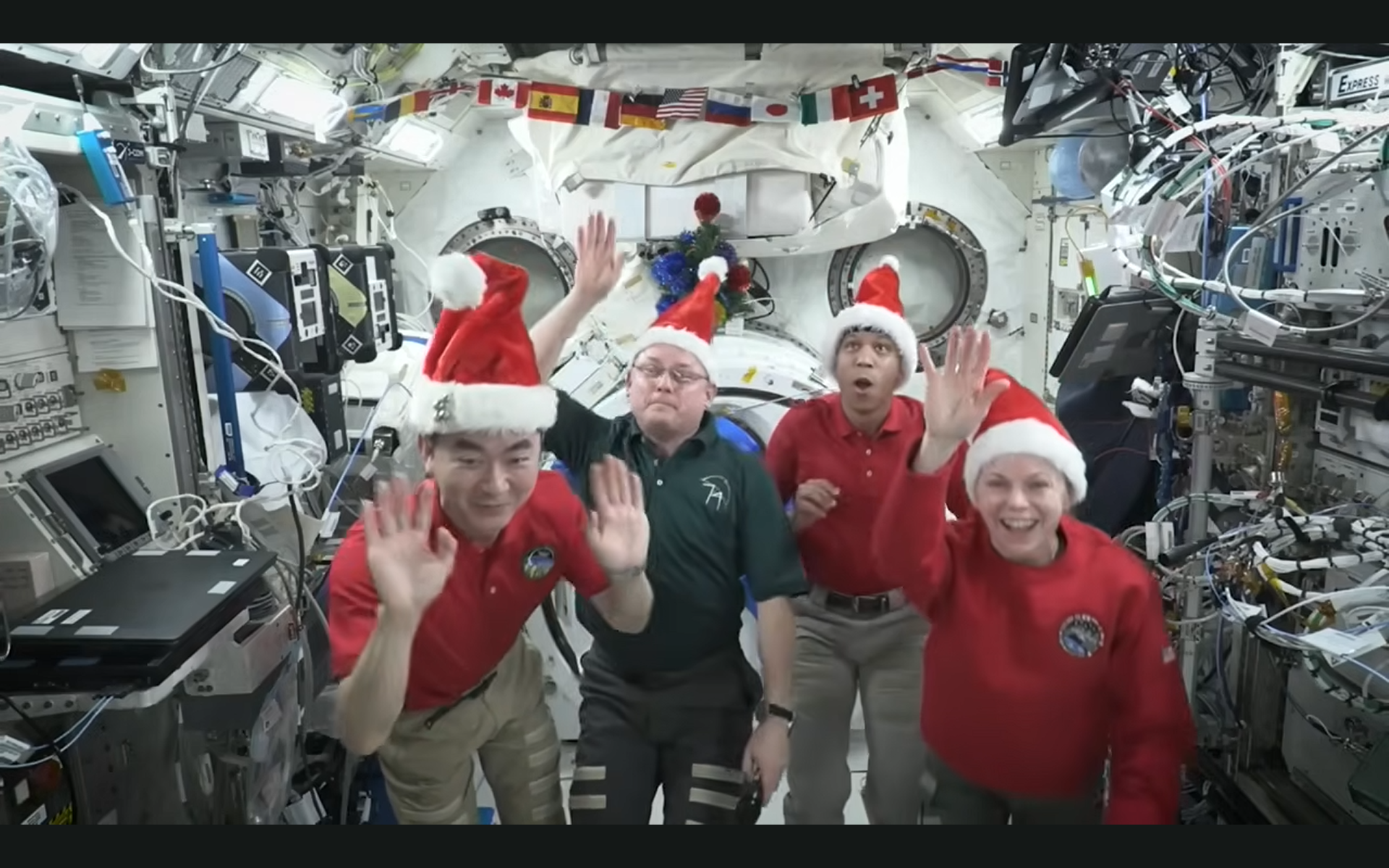
Higher Than Santa: The Enduring Spirit of Christmas Aboard the ISS
Every year, as the festive season descends upon Earth, billions gather with loved ones, surrounded by familiar traditions. Yet, hundreds of miles above, a select few experience a holiday unlike any other. This year, four astronauts aboard the International Space Station (ISS) beamed down their Christmas wishes, playfully remarking, "I think we may be orbiting a little higher than Santa." Far from home, these orbital residents are not merely enduring the holidays; they are actively shaping new traditions, demonstrating the profound resilience and adaptability of the human spirit in the most extraordinary circumstances.
A Beacon of Humanity's Reach: The Psychology of Orbital Celebrations
While the phrase "home for Christmas" holds a deep emotional resonance, for astronauts on long-duration missions, home is momentarily a speck of blue and white below. The act of celebrating Christmas, complete with makeshift stockings hung by the airlock and messages of cheer, is far more than a simple gesture. It's a critical psychological anchor. In the isolated, high-pressure environment of space, maintaining a connection to terrestrial routines and cultural touchstones is vital for mental well-being and crew cohesion. These celebrations serve as potent reminders of what they are working for and the human family awaiting their return. They combat the psychological toll of isolation, fostering a sense of normalcy and shared humanity.
From Earth to Orbit: The Evolution of Space Traditions
Christmas in space is not a new phenomenon. Astronauts and cosmonauts have, for decades, found ingenious ways to mark holidays and milestones. Early missions saw small, personal tokens of celebration, often kept private. However, with the advent of the ISS and constant human presence in orbit, these celebrations have become more public, transforming into powerful conduits for global engagement. The ability to send live video messages, share photos of zero-g festivities, and communicate directly with families on Earth has revolutionized how these traditions are maintained and shared. It underscores the incredible technological advancements that allow for such intimate connections across the vastness of space.
Inspiring the Next Generation: The Public Face of Space Exploration
Beyond the immediate benefits to crew morale, these festive dispatches from orbit play a crucial role in public outreach. A video of astronauts enjoying a weightless Christmas dinner or playfully demonstrating how presents float serves as a powerful, relatable narrative. It demystifies space travel, making it less an abstract scientific endeavor and more a human one. Such content captures the imagination of children and adults alike, inspiring interest in STEM fields and future space careers. It reinforces the idea that space exploration is not just about rockets and science, but also about human experience, joy, and the expansion of our collective horizons.
Looking Ahead: Holidays on the Moon and Mars
As humanity sets its sights on returning to the Moon and eventually venturing to Mars, the lessons learned from ISS holiday celebrations will become even more critical. Future missions will involve even longer durations and greater distances from Earth, amplifying the challenges of isolation and psychological well-being. How will a Martian crew celebrate Christmas with a 20-minute communication delay? What new traditions will emerge on a lunar outpost? The answers lie in further research into human factors in space, but also in embracing the fundamental human need for connection and ritual. The current astronauts on the ISS are not just celebrating Christmas; they are laying the groundwork for how future generations of explorers will maintain their humanity on alien worlds.
A Universe of Connection
The image of astronauts hanging stockings by an airlock, orbiting "higher than Santa," is more than a charming anecdote. It's a poignant reminder of our innate drive to find meaning and joy, even at the very edge of human experience. It signifies that no matter how far we travel, the human spirit, with its capacity for tradition, connection, and hope, remains an unshakeable constant. As the stars twinkle both above and around them, these spacefarers embody the true spirit of exploration – not just of the cosmos, but of the boundless resilience of humanity itself.