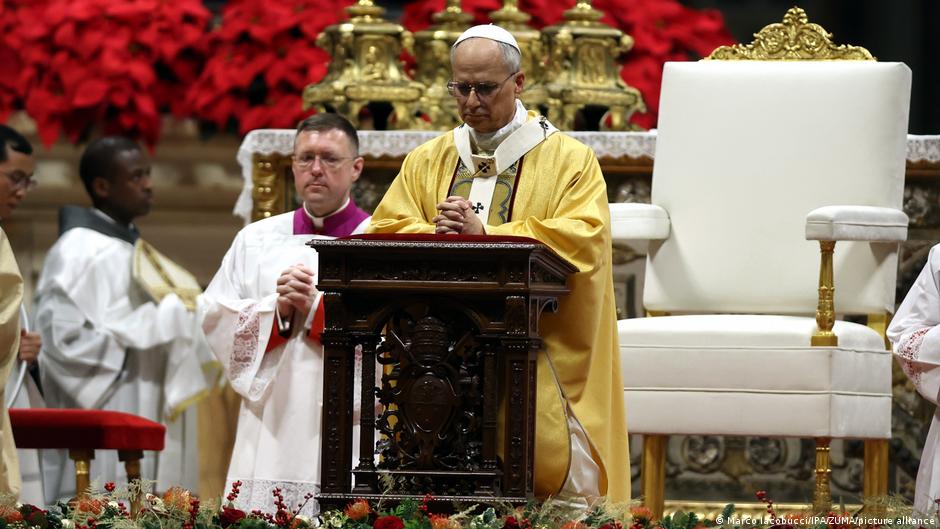
Echoes from Bethlehem: Pope Leo XIV Decries 'Distorted Economy' as World Grapples with War and Reflection
By NovaPress Editorial Board
In a world still reeling from conflict and uncertainty, Pope Leo XIV delivered a poignant message during his inaugural Christmas Eve Mass as pontiff. From the sacred grounds of Bethlehem, a city synonymous with peace and hope, the Pope decried a "distorted economy," a powerful statement that resonated far beyond the hallowed walls of the Nativity. This pronouncement comes as Christians flocked back to Bethlehem, emerging from what was described as "two years of darkness"—a direct reference to the devastating war in Gaza.
Bethlehem's Resurgence: A Fragile Hope
The scene in Bethlehem was one of cautious jubilation and profound reflection. After years marked by the shadow of the Gaza conflict, the return of pilgrims signals a desperate longing for normalcy and spiritual solace. The phrase "two years of darkness" underscores the immense human cost and the deep scars left by the conflict, not just on the immediate region but on the global consciousness. For many, Christmas in Bethlehem is more than a tradition; it's a defiant act of faith and a yearning for a world where peace can truly take root. The vibrant presence of worshippers serves as a stark reminder of the resilience of the human spirit, even as the region remains acutely aware of the fragility of peace.
The Pontiff's Unsettling Diagnosis: A "Distorted Economy"
Pope Leo XIV's critique of the "distorted economy" is a powerful continuation of the Church's long-standing tradition of advocating for social justice and economic equity. This isn't merely an abstract theological point; it's a direct challenge to the structures and policies that perpetuate inequality, poverty, and instability. In a global landscape where inflation, supply chain disruptions, and the immense financial burden of conflicts like the one in Gaza exacerbate pre-existing vulnerabilities, the Pope's words serve as a moral compass. A "distorted economy" implies systems that prioritize profit over people, that deepen the chasm between the rich and the poor, and that fail to account for the true human and environmental costs of unchecked growth. His message urges leaders and individuals alike to critically examine how current economic models contribute to, rather than alleviate, suffering.
Political Reflections: Leadership in Challenging Times
The Pope's spiritual call for re-evaluation finds an echo, albeit from a different vantage point, in the secular realm. German Chancellor Friedrich Merz, acknowledging the "challenges of his first year in office," urged his compatriots to "pause, reflect, and draw strength over Christmas." This sentiment, while focused on domestic German concerns, speaks to a broader global reality. Leaders worldwide are grappling with complex crises—from geopolitical tensions and economic headwinds to climate change and social unrest. Merz's call for reflection isn't just about personal well-being; it's an implicit recognition of the immense pressures on governance and the need for thoughtful, considered action in an increasingly volatile world. His message, much like the Pope's, suggests that true strength and effective leadership stem from a deeper understanding and a moment of collective pause to re-align priorities.
Intersections of Faith, War, and Economics
The convergence of these messages—the Pope's economic indictment, the return to a post-conflict Bethlehem, and a world leader's call for reflection—highlights the inextricable links between faith, war, and economic stability. Conflict, as seen in Gaza, doesn't just devastate lives; it shatters economies, disrupts trade, displaces populations, and diverts resources from essential development. These "distortions" are not accidental; they are often direct consequences of political decisions and systemic failures. The moral imperative, as articulated by Pope Leo XIV, is for a global economy that serves humanity, not the other way around. This requires not only charity and aid but a fundamental re-thinking of economic justice, equitable resource distribution, and sustainable peace-building efforts.
Looking Ahead: A Call to Action and Transformation
As the Christmas season concludes, the words from Bethlehem and Berlin linger. Pope Leo XIV's inaugural Christmas message sets a clear tone for his pontificate, signaling a proactive engagement with the pressing socio-economic issues of our time. The world watches to see how this spiritual challenge will be met by political and economic leaders. Will the "distorted economy" be re-calibrated towards greater justice and sustainability? Will the lessons of "two years of darkness" lead to genuine peace in the Middle East and beyond? The call to pause, reflect, and draw strength is not merely an invitation for personal introspection but a profound plea for collective action to transform a world grappling with its most profound challenges.