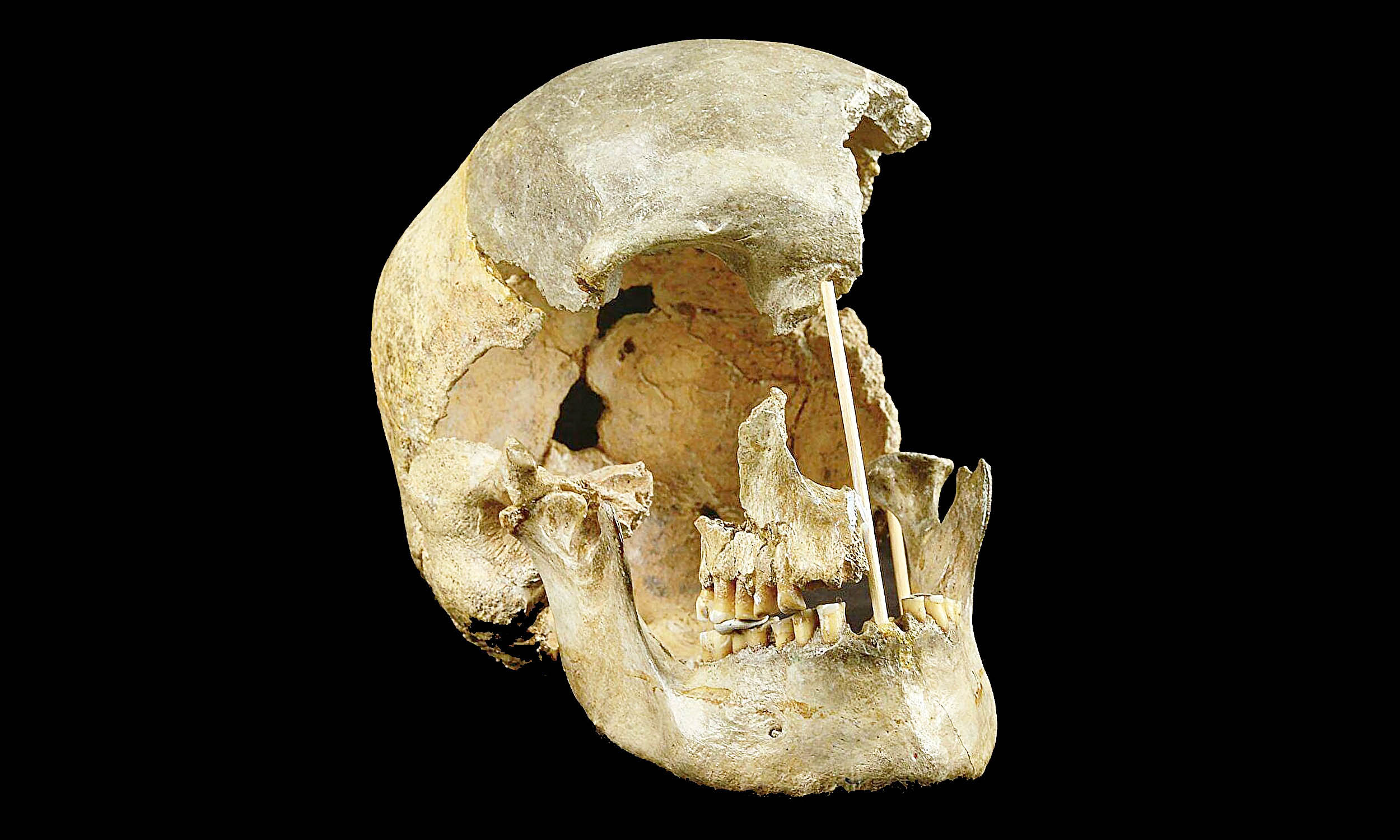
The Ghost Lineage: Unraveling the 80-Generation Mystery of Europe's Vanished LRJ Group
Deep within the labyrinthine passages of human history, where the flickering light of archaeological discovery often casts long, enigmatic shadows, lies the tale of the LRJ Group. Roughly 45,000 years ago, as the Last Ice Age gripped the Eurasian continent, a new wave of modern humans, dubbed the LRJ Group, ventured from Africa into the heart of Europe. For what scientists estimate to be approximately 80 generations – a significant span of roughly 2,000 years – these early pioneers thrived, intermingled with the resident Neanderthals, and left their subtle genetic imprints. Then, as mysteriously as they appeared, they vanished forever. Their disappearance presents one of the most compelling unsolved puzzles in human prehistory, challenging our understanding of early human resilience, adaptation, and the complex tapestry of our genetic heritage.
Arrival and Establishment: Europe's Early Moderns
Originating from Africa, the LRJ Group's migration into Europe around 45,000 years ago marked a pivotal moment in the continent's prehistoric narrative. These pioneers were not merely transient wanderers; evidence suggests they established a significant presence, adapting to the challenging environments of Late Pleistocene Europe. While archaeological indicators for this specific group are still being pieced together, advanced genetic analysis has been instrumental in tracing their distinct lineage and confirming their arrival and spread across various regions.
Coexistence and Intermingling with Neanderthals
The Europe that the LRJ Group encountered was not empty. It was home to the Neanderthals, archaic humans who had successfully inhabited the continent for hundreds of thousands of years. Far from a simple replacement narrative, genetic studies reveal a more nuanced interaction: the LRJ Group intermingled with Neanderthals. This genetic exchange adds layers of complexity to the human family tree, demonstrating periods of coexistence, potential cultural exchange, and even successful reproduction between distinct human groups. Such findings challenge older models of singular human migration and highlight the dynamic and often intertwined lives of early human populations.
The Enigma of 80 Generations and the Environmental Crucible
The longevity of the LRJ Group in Europe – approximately 80 generations, or roughly 1,600 to 2,000 years – speaks to their initial adaptability. Yet, this period coincided with the Last Ice Age, a time of profound climatic volatility and environmental stress. Glacial expansion, plummeting temperatures, and drastic shifts in flora and fauna would have exerted immense pressure on all inhabitants. Resource scarcity, increased competition for prime hunting grounds, and the sheer challenge of survival in an unforgiving climate likely tested the limits of the LRJ Group's resilience.
The Vanishing Act: Theories and Hypotheses
The definitive reason for the LRJ Group's complete disappearance remains one of paleontology's most tantalizing mysteries. Several hypotheses attempt to explain their vanishing act:
- Climate Catastrophe: A particularly severe cold snap or rapid environmental shift could have decimated their populations, pushing them beyond a critical threshold.
- Competition: Subsequent waves of anatomically modern humans, possibly better adapted or with different technologies, might have outcompeted them for resources.
- Disease: The introduction of novel pathogens, either from later human groups or environmental sources, could have had a devastating impact on a genetically isolated population.
- Genetic Bottleneck: Prolonged small population sizes could have led to a severe loss of genetic diversity, making them vulnerable to environmental changes and reducing their long-term viability.
What is clear is that their disappearance was remarkably complete, leaving no discernible genetic trace in subsequent European populations. They are, in essence, a ghost lineage – a branch on the human family tree that blossomed briefly before being pruned away.
Implications for Human Evolution and Our Understanding of Prehistory
The story of the LRJ Group offers profound insights into the intricate journey of human evolution. It underscores that the 'Out of Africa' expansion was not a singular, linear progression but a complex series of migrations, expansions, retractions, and extinctions. Their fate reminds us of the inherent fragility of early human populations, even those that demonstrate initial success and adaptability. It compels us to view our own survival not as an inevitability, but as the fortunate outcome of countless successful adaptations, lucky breaks, and the persistence of resilient lineages.
The story of the LRJ Group is a poignant reminder that not all pioneering ventures into new territories lead to enduring legacies. Their 80 generations in Europe, marked by interaction with our Neanderthal cousins and adaptation to a changing world, represent a significant, albeit ultimately extinguished, chapter in human history. As genetic sequencing and archaeological techniques become ever more sophisticated, perhaps the lingering shadows of the LRJ Group will yield more of their secrets, offering invaluable insights into the myriad paths our ancestors took, and the forces that shaped, and sometimes erased, them from the grand narrative of humanity. Their silent disappearance compels us to look beyond simplistic evolutionary models and appreciate the immense complexity and precariousness of our journey through deep time.