Russia's Centrifugal Leap: The Dawn of Artificial Gravity in Space?
For decades, the dream of humanity living and working comfortably beyond Earth's protective embrace has been shadowed by a persistent, debilitating reality: microgravity. The weightless environment, while a marvel for scientific research, exacts a heavy toll on the human body – bone density loss, muscle atrophy, cardiovascular issues, and more. Now, a groundbreaking patent secured by Russia's state-owned Energia rocket company proposes a radical solution, one that could redefine the future of long-duration space travel: artificial gravity.
A Spinning Solution to a Weighty Problem
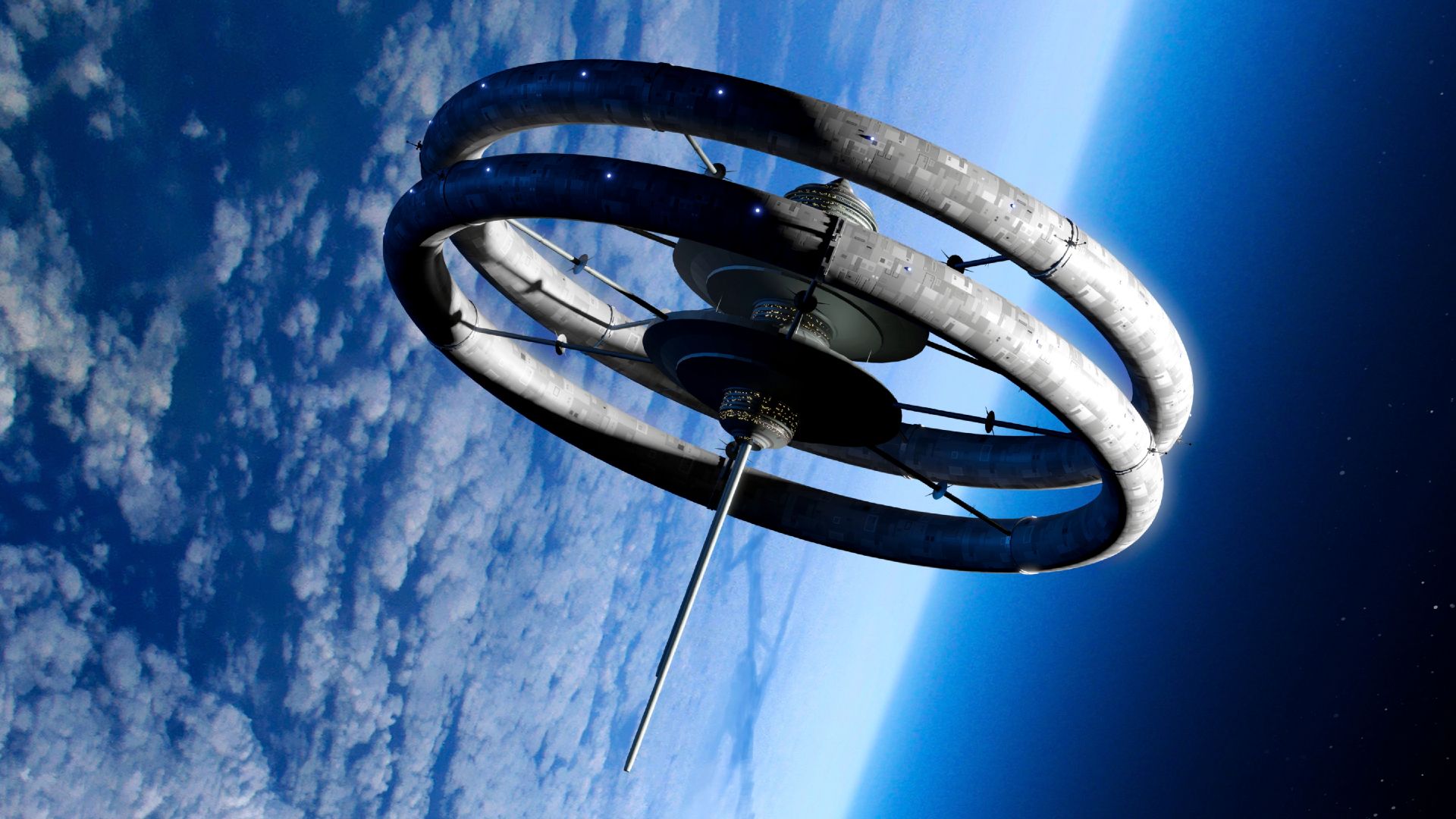
The recently patented spacecraft architecture is elegantly simple in its core concept, yet profoundly complex in its engineering. According to the patent details, habitable modules would be designed to rotate around a central axis. This rotational motion isn't for show; it's the mechanism for generating an outward-pushing centrifugal force, which, for the crew within, would simulate the sensation and effects of gravity.
This isn't a new idea – the concept has captivated science fiction writers and scientists alike for over a century, from Konstantin Tsiolkovsky's early musings to the iconic spinning stations of films like 2001: A Space Odyssey. However, Russia's patent represents a significant step from theoretical concept to a formalized, patented design by a major space agency, pushing it closer to tangible reality. Energia, a cornerstone of Russia's space industry, holds a deep legacy in space station design, having been instrumental in the Mir station and components of the International Space Station (ISS).
Why Artificial Gravity is a Game-Changer
The implications of successfully implementing artificial gravity are nothing short of revolutionary. Long-duration missions, such as those planned for Mars or sustained lunar habitation, are currently limited by human physiological endurance. Astronauts returning from even six-month stints on the ISS require extensive rehabilitation to regain bone and muscle mass lost to microgravity.
With artificial gravity, these physiological deterrents could be significantly mitigated, if not eliminated. Crews could maintain their physical health and operational effectiveness for much longer periods, reducing the risk of illness and injury. This would open doors to:
- Extended Mars Missions: Enabling multi-year journeys with healthier, more productive crews.
- Permanent Space Habitats: Facilitating the construction and long-term occupancy of orbiting stations or lunar/Martian bases where humans could live and work indefinitely.
- Space Tourism & Industry: Making space travel accessible and more comfortable for a wider range of people, fostering new industries beyond Earth.
- Deep Space Exploration: Allowing humanity to venture further into the solar system with greater confidence in crew well-being.
Challenges on the Horizon
While the patent is a beacon of hope, the path to a fully functional artificial gravity station is fraught with formidable engineering and logistical challenges. Designing a spacecraft robust enough to withstand continuous rotation, large enough to provide a comfortable living volume, and stable enough to prevent unwanted wobbles or oscillations is immensely complex. Powering such a system, ensuring its long-term reliability, and safely launching its components into orbit will require significant technological advancements and financial investment.
Furthermore, the human element introduces another layer of complexity. While centrifugal force can simulate gravity, the rotational environment itself might induce motion sickness or other disorientation issues for crew members. The precise speed and radius of rotation needed to create comfortable and effective artificial gravity remain subjects of ongoing research.
The New Space Race Dimension
Russia's move adds a fascinating new dimension to the burgeoning international space race. While nations like the U.S., China, and the European Union pursue their own ambitious space agendas, the emphasis on artificial gravity could position Russia at the forefront of human habitability in deep space. This patent isn't just about a technical design; it's a strategic declaration of intent, signaling Russia's commitment to overcoming one of space exploration's most persistent hurdles.
A Future of Gravitational Possibilities
The patent for an artificial gravity space station, while still a design on paper, symbolizes a profound shift in our approach to space travel. It moves us from merely surviving in space to thriving there. If Energia and its partners can translate this vision into reality, we may truly be on the cusp of an era where space is not just a destination for short visits, but a sustainable frontier for permanent human settlement. The dream of walking on Mars without losing an ounce of bone density inches closer to becoming a tangible, gravitational reality.