The Perilous Dance: Starlink Incident Exposes the Fragility of Low Earth Orbit
A recent Starlink satellite mishap offers a stark reminder of the looming 'Kessler Syndrome' and the urgent need for sustainable practices in an increasingly crowded cosmic neighborhood.
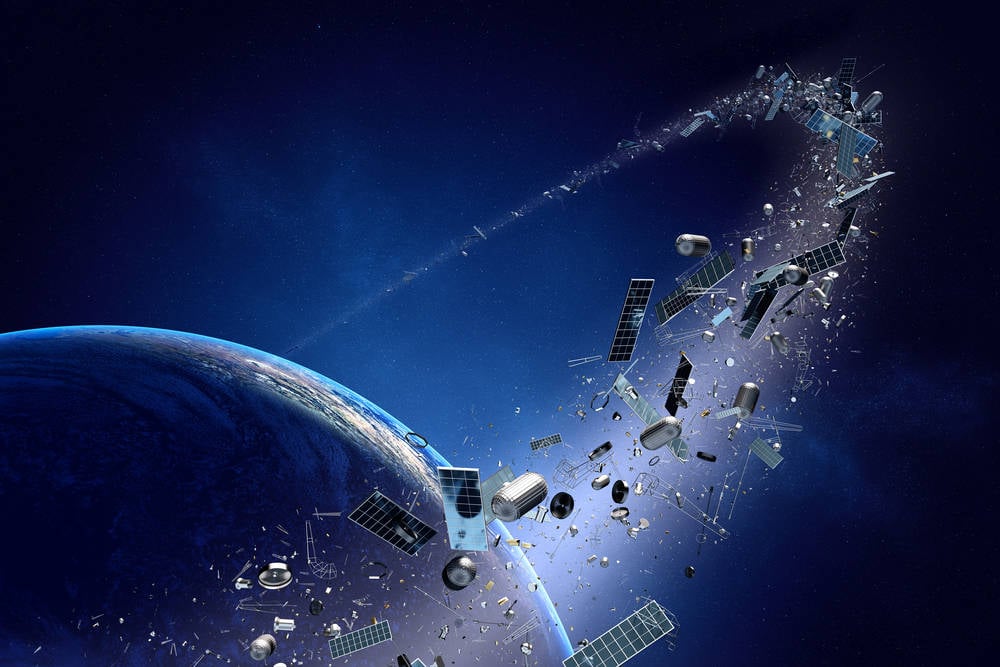
The vacuum of space is anything but empty. In fact, the orbital highways circling our planet are becoming increasingly congested, a reality brought into sharp focus by a recent incident involving a Starlink satellite. While the spacecraft is now destined to burn up harmlessly in the atmosphere within weeks, its momentary venting of propellant and subsequent release of debris served as a chilling, tangible illustration of the 'Kessler Syndrome' – a theoretical scenario where a cascade of collisions could render certain orbital altitudes virtually unusable.
The Incident: A Close Call in the Cosmos
Details remain somewhat sparse, but reports indicate a Starlink satellite experienced an anomaly, leading to the unexpected release of propellant and small fragments of material. Fortunately, the incident did not escalate into a larger collision. Engineers are undoubtedly scrutinizing the telemetry to understand the precise cause, but the mere occurrence highlights the inherent risks of deploying vast numbers of satellites. Each operational satellite, and every piece of debris it sheds, contributes to a complex, high-velocity environment where even the smallest fragment can become a lethal projectile.
Kessler Syndrome: The Looming Shadow
Coined by NASA scientist Donald J. Kessler in 1978, the Kessler Syndrome describes a future where the density of objects in low-Earth orbit (LEO) is so high that collisions generate enough new debris to cause further collisions, creating a self-sustaining chain reaction. Imagine a pane of glass shattering, and each shard then impacting another piece of glass, repeating until the entire window is a cloud of dust. In space, this 'dust' travels at thousands of kilometers per hour, posing an existential threat to operational satellites, human spaceflight, and our ability to access space itself.
The Starlink incident, though minor, is a stark reminder of how quickly such a scenario could begin. With thousands of satellites planned for deployment in mega-constellations by companies like SpaceX, OneWeb, and Amazon's Project Kuiper, the probability of collisions naturally increases. Each of these constellations promises global internet access and other vital services, but at what long-term cost to the orbital environment?
The Mega-Constellation Era: Benefits and Burdens
The push for mega-constellations represents a revolutionary step in connecting the world. Starlink alone aims for tens of thousands of satellites, drastically reducing latency and expanding internet access to underserved regions. However, this progress comes with significant challenges. Managing such a vast fleet, coordinating orbital maneuvers, and ensuring proper deorbiting at end-of-life become monumental tasks. Even with sophisticated autonomous collision avoidance systems, anomalies can and do occur.
Beyond collision risks, there are also concerns about light pollution for astronomers, radio frequency interference, and the sheer volume of re-entering debris. While most satellites are designed to burn up, the cumulative effect of thousands of re-entries and the potential for larger components to survive the atmospheric plunge adds another layer of environmental consideration.
Mitigation and the Path Forward
The space community is acutely aware of these challenges. International guidelines, like those from the Inter-Agency Space Debris Coordination Committee (IADC), recommend satellites deorbit within 25 years of their operational end. However, these are guidelines, not legally binding treaties, and adherence varies. The recent Starlink event underscores the need for:
- Stricter Regulation: A global, legally enforceable framework for debris mitigation, satellite design, and end-of-life procedures.
- Active Debris Removal: Investment in technologies capable of safely removing large, derelict objects from orbit.
- Improved Tracking: Enhanced ground-based and space-based systems to track even small objects in orbit.
- Sustainable Design: Satellites designed for robust deorbiting, minimal debris generation, and resistance to impacts.
- International Cooperation: Collaborative efforts between spacefaring nations and private companies to share data and best practices.
Safeguarding Our Cosmic Future
The Starlink propellant venting incident serves as a potent reminder: access to space is not an infinite resource. It is a shared domain that requires careful stewardship. The benefits of space-based technologies – from climate monitoring and navigation to global communication – are immense, but they are predicated on a sustainable orbital environment.
As we continue our ambitious expansion into space, the lessons from near misses must be heeded. Preventing the Kessler Syndrome is not just about protecting satellites; it's about safeguarding humanity's future in space, ensuring that the final frontier remains open for exploration, innovation, and discovery for generations to come. The dance in orbit is becoming more perilous, and our steps must be precise, coordinated, and responsible.