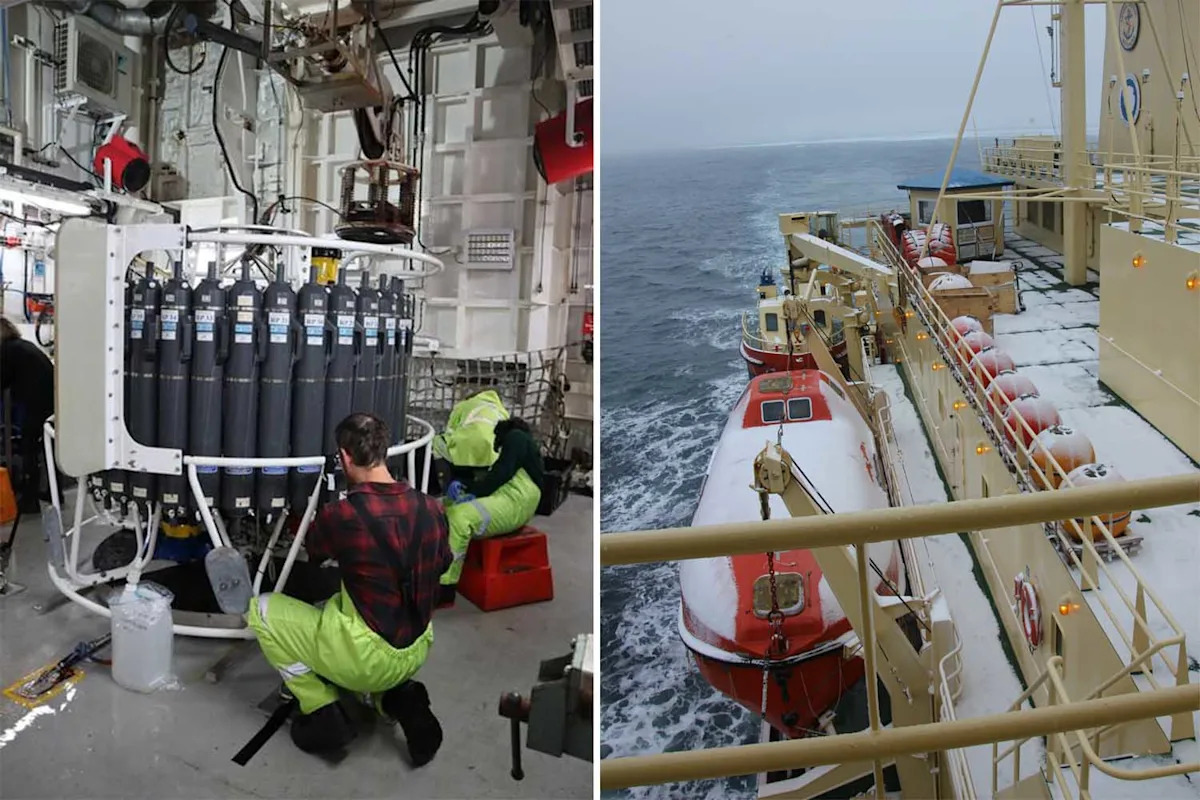
From the remote, icy depths of the Antarctic ocean comes a chilling warning: Australian scientists have sounded the alarm over significant, potentially catastrophic, changes occurring in one of the planet’s most vital, yet least understood, global systems. The discovery, stemming from an investigation into the forces that create the world's densest and coldest water, suggests that a critical component of Earth’s climate regulation system is faltering, with implications that could ripple across every ocean and continent.
Antarctic Bottom Water: The Silent Engine of Global Climate
At the heart of this alarming finding is the Antarctic Bottom Water (AABW) – a colossal, frigid current formed around the Antarctic continent. It is one of the densest water masses on Earth, created when seawater freezes, expelling salt and leaving behind super-cold, super-salty brine. This heavy water then sinks to the abyssal plains, spreading northward and driving a critical component of the global 'ocean conveyor belt' – the thermohaline circulation.
AABW is not merely a deep-sea current; it is a fundamental engine for planetary health. Its slow, relentless flow oxygenates the deepest trenches, distributes nutrients vital for marine ecosystems, and plays an indispensable role in sequestering carbon dioxide from the atmosphere, effectively acting as Earth's deep-sea lung and climate regulator. Known to form in just four remote locations, these 'bottom water factories' are indispensable to maintaining the ocean's delicate balance and, by extension, the global climate.
The Unsettling Discovery: A Catastrophe Unfolding Below
The recent investigation by Australian scientists focused on one of these crucial AABW formation sites. While the full details of their findings are still emerging, the description "catastrophe" and "alarm" accompanying their announcement paint a stark picture. The research points to a significant weakening or alteration in the processes that generate this dense, cold water. If the formation of AABW slows, weakens, or even collapses, the knock-on effects could be profound and irreversible.
Imagine a planet where the deepest parts of the ocean slowly lose their oxygen, becoming vast, anoxic zones hostile to life. Consider a scenario where nutrients, once efficiently circulated, become trapped, starving surface ecosystems. And crucially, contemplate a world where the ocean's capacity to absorb and store atmospheric carbon dioxide is drastically reduced, accelerating global warming.
Ripples Across the Globe: Understanding the Implications
Climate Regulation and Carbon Sequestration
The AABW is a primary mechanism for drawing heat and carbon from the atmosphere into the deep ocean. A reduction in its formation means less heat and carbon are removed, leading to faster warming of the surface ocean and atmosphere. This could trigger positive feedback loops, where warmer temperatures further inhibit AABW formation, creating a dangerous cycle.
Oceanic Health and Biodiversity
From supporting deep-sea biodiversity to influencing fishing grounds thousands of miles away, the health of AABW impacts nearly all marine life. Its role in oxygenating the deep ocean is critical; without it, vast areas could become "dead zones," threatening unique ecosystems and the stability of the food web.
Sea Level Rise and Global Weather Patterns
Changes in deep-ocean circulation can influence ocean heat content, which directly affects thermal expansion and sea level rise. Furthermore, the ocean conveyor belt influences regional weather patterns worldwide. Disruptions to this system could lead to more extreme weather events, altered rainfall patterns, and unpredictable climate shifts across continents.
A Call to Action from the Deep
The scientists' warning is a stark reminder that the impacts of climate change are not confined to the atmosphere or surface waters. The deep ocean, a realm often perceived as stable and remote, is profoundly sensitive to human-induced alterations. The potential "catastrophe" highlighted by the Australian researchers underscores the urgency of understanding these complex deep-ocean dynamics and implementing drastic measures to mitigate climate change.
This discovery serves as a powerful call to action for international collaboration, enhanced deep-sea research, and immediate, substantial reductions in greenhouse gas emissions. The fate of Earth's climate and, indeed, the future of human civilization, might depend on the silent currents flowing thousands of meters below the surface—currents that are now sending us an unambiguous signal of distress.