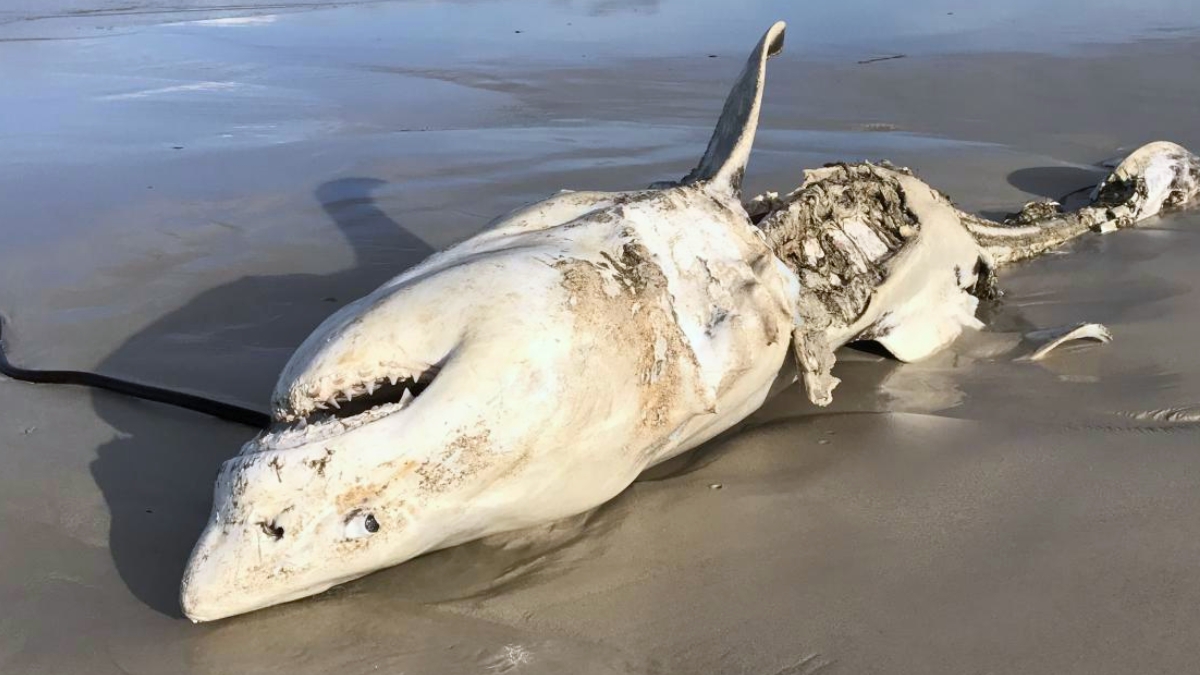
The Unseen Overlords: How Two Predators Sent Great White Sharks Fleeing from Their Habitat
For generations, the great white shark has reigned supreme as the ocean's most formidable predator. Its very name evokes a primal fear, its silhouette a symbol of raw, untamed power beneath the waves. With a sleek, hydrodynamic body built for speed, rows of serrated teeth designed for tearing, and a reputation – deserved or not – for being an indiscriminate hunter, the white shark holds a unique, terrifying place in the human psyche and the marine ecosystem. Yet, a groundbreaking observation has turned this long-held perception on its head, revealing that even the undisputed apex predator can be dethroned and, quite surprisingly, put to flight by the mere presence of just two other creatures.
The Unthinkable Exodus: When Apex Predators Run
Recent scientific findings have documented instances where great white sharks, the kings of their domain, have abruptly abandoned their prime hunting grounds, leaving behind rich feeding opportunities and favorable conditions. This isn't a seasonal migration or a simple change of pace; it's a dramatic, fear-driven exodus. Tracking data revealed that these massive sharks, some weighing over two tons, cleared out of an area within hours, sometimes even minutes, of a specific event. What could possibly inspire such a panicked retreat from an animal that has virtually no natural enemies?
Enter the True Apex: Intelligence and Coordination
The answer, it turns out, lies with the two most intelligent and socially complex predators in the ocean: the orcas, or killer whales. While individual orcas are roughly comparable in size to a large great white, their true power lies in their unparalleled intelligence, sophisticated communication, and highly coordinated hunting strategies. Unlike the great white, which often hunts solo or in loose aggregations, orcas operate in tightly knit pods, employing tactics that border on military precision. They are not merely bigger fish; they are strategic thinkers.
Studies have shown that certain orca pods specialize in hunting large marine mammals, including other sharks. Their method is chillingly effective: they don't necessarily engage in a drawn-out battle. Instead, they often work together to incapacitate the shark, sometimes flipping it upside down to induce tonic immobility – a state of paralysis. Their ultimate goal is often the shark's liver, a highly nutritious organ rich in oils. The sheer audacity and effectiveness of this targeted predation are what send the great whites scattering. It's not just a fight for survival; it's an intelligent, organized assault that the sharks are simply not equipped to counter.
Ecological Ripple Effects and Future Implications
The displacement of great white sharks by orcas has profound implications for marine ecosystems. As top predators, great whites exert significant control over populations of seals, sea lions, and other marine life. When they flee an area, these prey populations can experience a temporary boom, leading to trophic cascades that alter the delicate balance of the food web. This shift could impact everything from local fish stocks to seagrass beds, demonstrating the interconnectedness of all life in the ocean.
Furthermore, these interactions force us to re-evaluate our understanding of fear and survival even at the very top of the food chain. The great white's decision to flee, rather than fight, speaks volumes about the perceived threat and the cost of engagement. It highlights a sophisticated risk assessment capability previously underestimated in these creatures. As climate change continues to alter ocean temperatures and prey distribution, encounters between these two super-predators may become more frequent, leading to unforeseen shifts in marine population dynamics and geographical ranges.
Redefining Marine Hierarchies
The narrative of the great white shark as the ocean's undisputed king needs revision. While undeniably powerful and terrifying, its reign is not absolute. The emergence of orcas as a formidable, intelligent counter-force reveals a more complex and dynamic marine hierarchy. This phenomenon serves as a powerful reminder of the intricate and often surprising relationships that govern life in the deep blue. It challenges our assumptions, deepens our appreciation for marine intelligence, and underscores the continuous evolution of predator-prey dynamics in an ever-changing ocean.
The ocean's depths still hold countless secrets, and every new discovery reshapes our understanding of its magnificent, brutal, and utterly fascinating world.