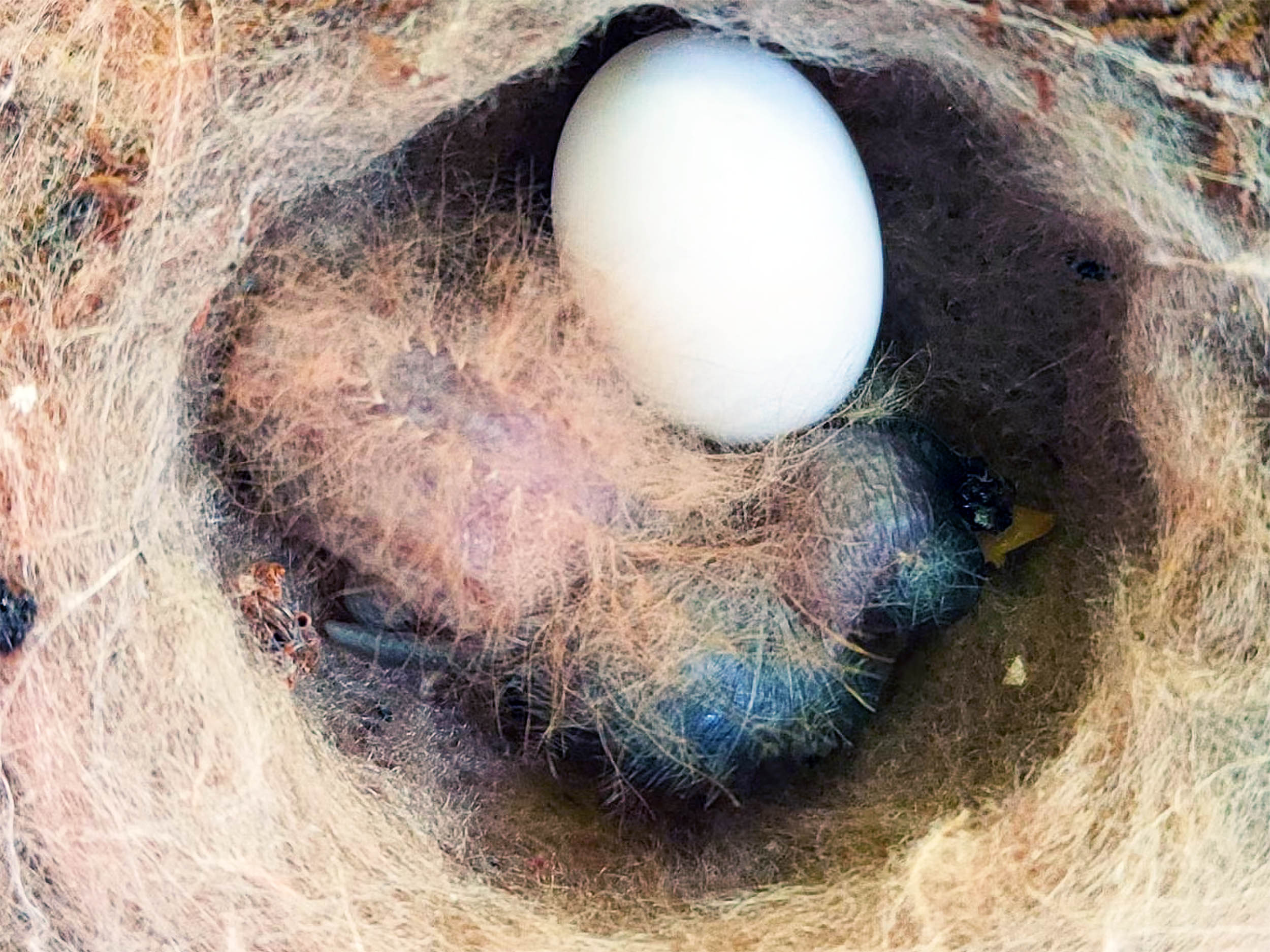
In the vibrant, teeming rainforests of Panama, nature consistently unveils wonders that challenge our understanding of life itself. Yet, even seasoned scientists were unprepared for the latest revelation: a tiny white-necked jacobin hummingbird chick, not yet capable of flight, exhibiting a defense mechanism so audacious, it could be mistaken for science fiction. This isn't a story of camouflage or flight; it's a tale of mimicry so precise and unexpected that it has left the scientific community buzzing – a baby bird expertly impersonating a poisonous caterpillar to ward off a potentially deadly wasp.
A Twist in the Tale of Mimicry
Mimicry in the animal kingdom is a well-documented survival strategy, often celebrated as a pinnacle of natural selection. We're familiar with Batesian mimicry, where a harmless species evolves to resemble a harmful one (like a hoverfly mimicking a bee), or Müllerian mimicry, where multiple harmful species share a similar warning signal. The common thread in most textbook examples involves insects mimicking other insects, or non-venomous snakes mimicking venomous ones. The underlying principle is clear: deter predators by appearing dangerous or unpalatable. But what happens when a warm-blooded vertebrate, a bird no less, flips the script entirely by mimicking a cold-blooded invertebrate, specifically a poisonous caterpillar?
This groundbreaking observation, involving a white-necked jacobin (Florisuga mellivora) chick, shatters conventional understandings. Hummingbirds are known for their dazzling aerial acrobatics and aggressive territorial defense. Their primary defenses typically involve evasion, speed, and sometimes direct confrontation. To discover a nestling, a creature at its most vulnerable, employing such an elaborate and precise form of mimicry is unprecedented and provides fertile ground for new evolutionary theories.
The Unveiling: A Glimpse into the Rainforest's Secrets
The astonishing incident unfolded within the dense foliage of a Panamanian rainforest. Researchers were monitoring a hummingbird nest when a wasp, a common predator of vulnerable nestlings, approached. Instead of remaining still or attempting a futile escape, the tiny chick initiated a series of movements that were anything but bird-like. It thrashed its head from side to side, exposing a distinctive white patch on its belly. Crucially, its head shape and the erratic, undulating movements strikingly resembled those of certain hairy, toxic caterpillars prevalent in the region. The effect was immediate and decisive: the wasp, apparently deceived and deterred by the 'caterpillar', quickly retreated.
This wasn't a one-off anomaly. Subsequent observations confirmed that this behavior was a repeatable, deliberate act of defense. The combination of the chick's specific markings (the white underside contrasting with its dark feathers) and its highly specialized motor patterns created an incredibly convincing illusion. For a creature usually focused on rapid flight and nectar consumption, this sophisticated act of deception represents a monumental leap in our appreciation of avian behavioral plasticity.
Evolutionary Conundrum: How Did This Evolve?
The existence of such a nuanced mimicry raises profound questions for evolutionary biologists. Is this behavior innate, programmed into the hummingbird's genetic code, or is it a learned response? Given the chick's young age, an innate predisposition seems plausible, suggesting a long evolutionary history where selective pressure from predators like wasps favored individuals capable of this mimicry. The resemblance to caterpillars is not generic; it specifically mimics the aposematic (warning) signals of local toxic species, implying a highly adapted co-evolutionary dance.
Furthermore, consider the energy cost and risk involved. For a tiny nestling, every movement is critical for survival and growth. To expend energy on such a dramatic display suggests an immense survival benefit. This behavior likely evolved over countless generations, with imperfect mimics falling prey to predators, leaving only the most convincing illusionists to pass on their genes. It's a testament to the relentless pressure of natural selection and the extraordinary solutions it can forge in the struggle for existence.
Broader Implications: Rewriting the Rules of Interaction
This discovery has far-reaching implications beyond the world of hummingbirds. It compels us to reconsider the boundaries of mimicry and cross-kingdom deception. Could other vertebrates, particularly those in vulnerable life stages, be employing similar, yet undiscovered, strategies? It highlights how much remains unknown about the intricate ecological webs that sustain biodiversity in places like the Amazon and other rainforests, where countless species interact in ways we are only beginning to comprehend.
For conservation efforts, understanding these complex behaviors is crucial. If specific mimicry relies on the presence of certain model species (the poisonous caterpillars), then the decline of those invertebrate populations could inadvertently compromise the survival strategies of species like the white-necked jacobin. It underscores the interconnectedness of ecosystems and the ripple effect that environmental changes can have on even the most specialized adaptations.
The Future of Discovery
The observation of this tiny hummingbird chick has opened a Pandora's Box of research questions. Scientists are now poised to investigate the neurological basis of this behavior, its prevalence across different hummingbird species, the specific caterpillar models being mimicked, and the full spectrum of predators it deters. High-resolution video analysis, genetic studies, and comparative behavioral ecology will be indispensable tools in unraveling this fascinating mystery.
Ultimately, this remarkable discovery serves as a powerful reminder of nature's boundless capacity for innovation. Just when we think we've cataloged and understood the fundamental principles of life, a baby bird in a Panamanian rainforest reminds us that the greatest wonders often hide in plain sight, waiting for keen eyes and open minds to reveal them. The story of the caterpillar-mimicking hummingbird is not just about a bird; it's about the endless ingenuity of evolution itself.