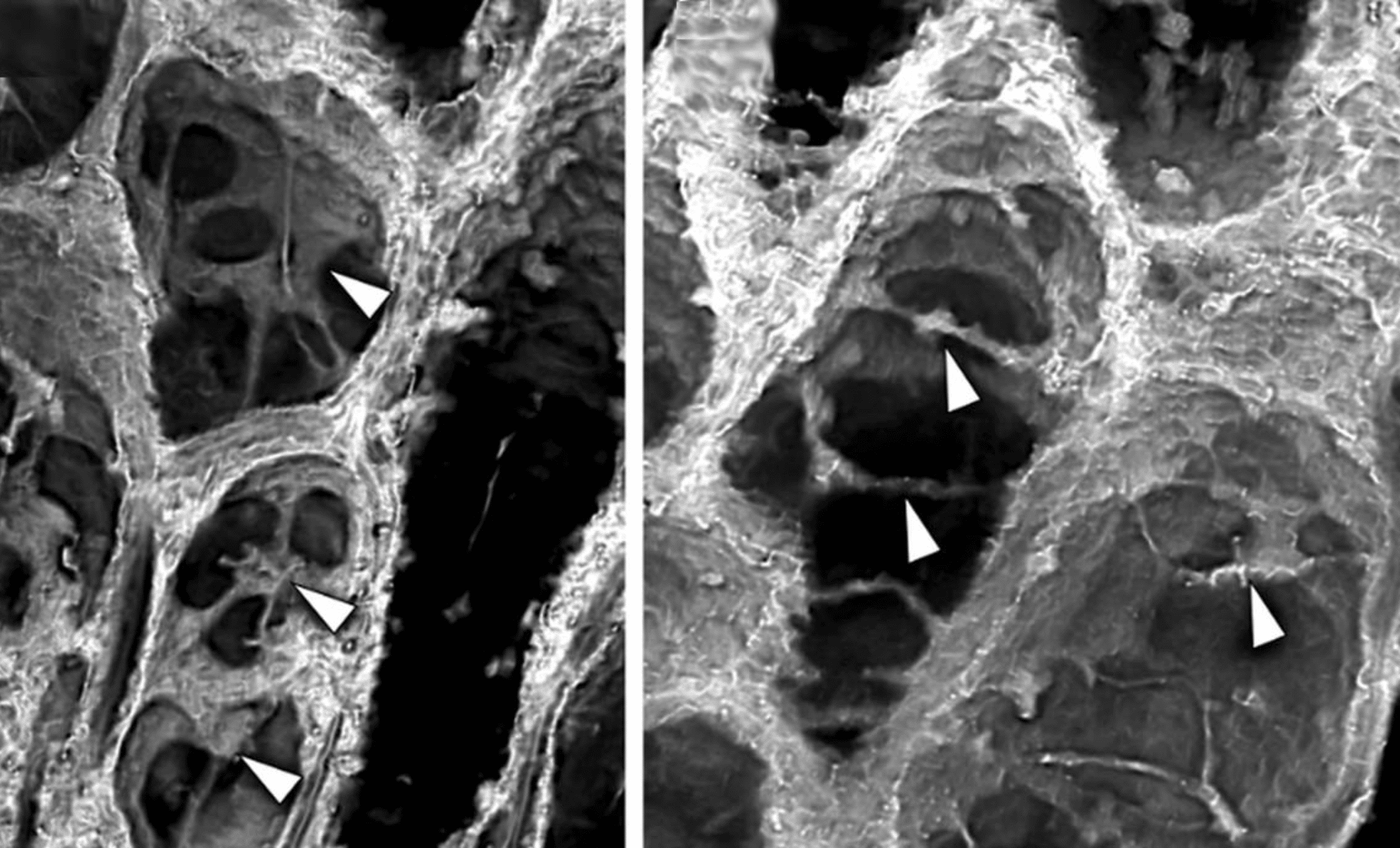
For eons, scientists have pieced together the incredible journey of life from primordial oceans to the diverse ecosystems we witness today. Among the most monumental transitions was the emergence of plants onto land, a move that fundamentally reshaped our planet's atmosphere, geology, and the very possibility of complex terrestrial animal life. Central to this narrative is the mystery of how these pioneering organisms, initially small and unassuming, evolved the capacity for grand vertical growth – transforming into the towering giants that define our forests.
A recent groundbreaking study, published in the esteemed journal New Phytologist, has unveiled a critical piece of this ancient puzzle. Researchers have meticulously analyzed a 400-million-year-old fossil, offering unprecedented insights into the early evolutionary mechanisms that paved the way for large-statured plants. This discovery isn't just an archaeological marvel; it’s a re-evaluation of fundamental botanical principles, pushing the boundaries of our understanding of evolution itself.
The Ancient World: A Pre-Forest Landscape
Prior to the emergence of tall plants, the Earth's landmasses were largely barren, dominated by microbial mats and low-lying flora. The transition from aquatic life presented immense challenges: overcoming gravity, developing structural support, efficient water and nutrient transport over distance, and adapting to UV radiation. Early land plants, often likened to mosses and liverworts, hugged the ground, relying on surface water for reproduction and survival. The leap to significant height was not merely a matter of growing bigger; it required a complete overhaul of biological architecture and physiological processes.
The fossil in question, dating back to the Devonian period, predates the widespread appearance of complex forests. This makes its characteristics particularly illuminating. Scientists have long theorized about the sequence of evolutionary innovations – vascular tissues for water transport, lignin for rigidity, and complex rooting systems – that enabled plants to defy gravity and reach for the sun. This new fossil provides tangible evidence of these adaptations emerging earlier and potentially in different configurations than previously hypothesized.
Unveiling the Mechanisms of Gigantism
The detailed analysis of the 400-million-year-old specimen reveals sophisticated internal structures critical for vertical growth. Unlike simpler contemporary plants, this fossil exhibits an intricate vascular system designed not just for transport, but also for robust structural integrity. Researchers hypothesize that the plant developed advanced strategies to manage water pressure and nutrient distribution over an extended vertical axis, a prerequisite for any substantial growth. The study's authors highlight specific cellular arrangements and tissue patterns that suggest a highly efficient, yet ancient, approach to achieving stature.
One of the most compelling aspects of the research is its implication for the timing and co-evolution of these traits. Was the ability to transport water efficiently a prerequisite for developing structural strength, or did they evolve in tandem? The fossil suggests a more integrated and perhaps iterative process, where early forms of structural reinforcement worked in concert with nascent vascular systems to allow for incremental increases in height. This challenges models that posit a more linear, sequential development of these critical adaptations.
Implications for Modern Science and Future Understanding
This discovery extends far beyond paleobotany. Understanding the fundamental mechanisms that enabled plants to grow tall has profound implications for various scientific fields:
- Ecology and Climate Change: The rise of tall plants dramatically altered Earth's carbon cycle and climate. Forests act as massive carbon sinks, influencing atmospheric CO2 levels. By understanding how this capacity evolved, we gain insights into ancient climate regulation and can better model future climate scenarios.
- Agriculture and Bioengineering: Identifying ancient, resilient mechanisms for structural support and water transport could inspire new approaches in modern agriculture. Could these evolutionary blueprints lead to more drought-resistant crops or plants with enhanced biomass production capabilities?
- Evolutionary Biology: The study refines our understanding of convergent evolution and the adaptability of life. It provides a clearer picture of the selective pressures that favored height and the diverse solutions organisms developed to meet those challenges.
The fossil serves as a powerful reminder that evolution is a perpetual tinkerer, often finding ingenious solutions to environmental pressures. Each ancient leaf, stem, or root fragment holds a chapter of Earth's autobiography, waiting to be deciphered.
A Glimpse into Life's Grand Tapestry
The study of this 400-million-year-old fossil is a testament to the enduring power of scientific inquiry. It not only illuminates a pivotal moment in plant evolution but also underscores the interconnectedness of all life on Earth. From humble aquatic beginnings to the majestic forests that dominate our landscapes, the journey of plants is a saga of innovation, adaptation, and profound impact. As researchers continue to delve into the secrets held within these ancient remnants, we gain a deeper appreciation for the intricate tapestry of life and the incredible forces that shaped our world.