The Shifting Orbits: How Nano-Launchers and Legacy Giants are Reshaping the Global Space Race
The global aerospace industry is in a state of unprecedented flux. From venerable state-backed programs grappling with modern challenges to agile startups pioneering cost-effective access, the landscape of space launch is more dynamic and competitive than ever. This convergence of established powerhouses and disruptive innovators signals a profound shift in how humanity reaches for the stars, democratizing access while intensifying strategic competition.
The Enduring Legacy: Russia's Soyuz and Europe's Ariane 6
For decades, a handful of nations and their robust launch systems have dominated the gateway to orbit. Russia's Soyuz rockets, workhorses of the space age, continue to demonstrate remarkable resilience, even as reports emerge of a "quick fix" needed for a launch pad. This highlights the ongoing operational demands and maintenance cycles inherent in maintaining such complex, long-standing infrastructure. While Soyuz boasts an unparalleled legacy of reliability and versatility, continuous adaptation and flawless execution are paramount in an increasingly scrutinized and competitive environment.
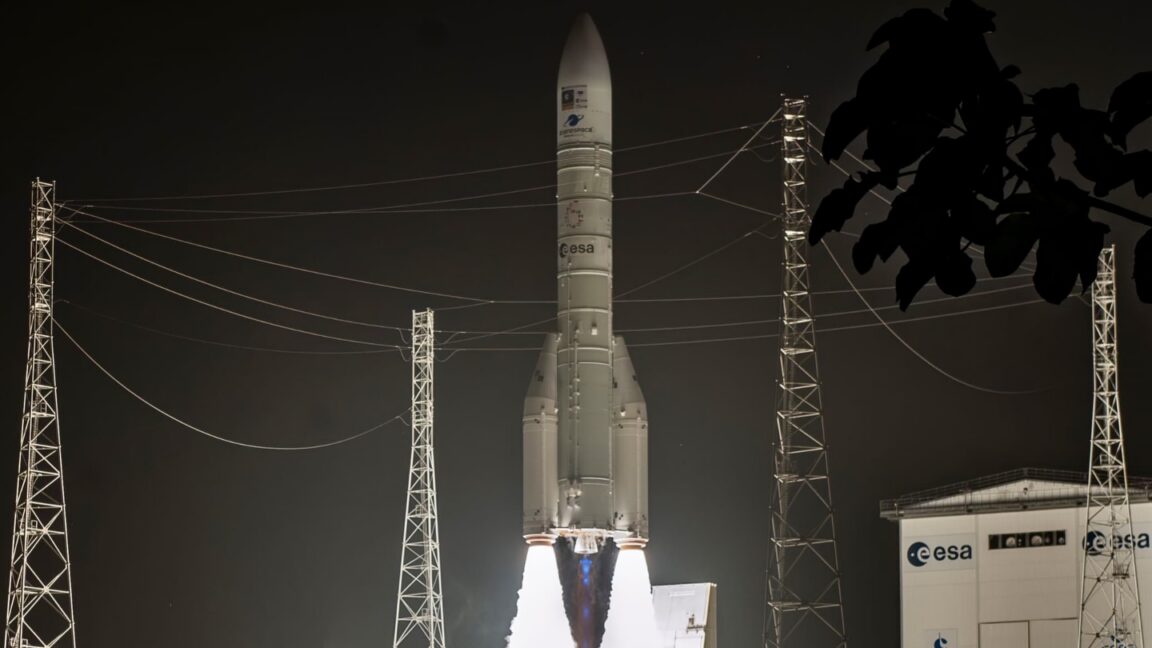
Across Europe, the aspirations for independent space access are crystallizing with the highly anticipated debut of the Ariane 6. Designed to be more flexible and cost-effective than its successful predecessor, Ariane 5, this new heavy-lift launch vehicle is crucial for maintaining Europe's competitive edge and strategic autonomy in space. With its modular design, Ariane 6 aims to address the diverse needs of both government and commercial payloads, positioning Europe to vie for market share against formidable commercial players like SpaceX and other national launch providers. The phrase "aims high" isn't just about orbital altitude; it encapsulates Europe's ambition to remain a leading force in space transportation.
The Nano-Launcher Revolution: Innospace's Agile Debut
While established players refine their strategies and next-generation heavy lifters, a parallel revolution is unfolding at the other end of the launch spectrum. South Korean rocket startup Innospace is poised to make its highly anticipated debut with a new nano-launcher. This emerging class of rockets is specifically engineered to carry extremely small satellites – nanosatellites and cubesats – into orbit.
What is a Nano-Launcher?
Nano-launchers are small, often highly responsive rockets designed to provide dedicated and cost-effective access to space for payloads typically weighing between 1 to 10 kg. Their emergence directly addresses the booming small satellite market, which values frequent, precise, and affordable orbital insertion over shared rides on larger, less flexible vehicles.
The rise of nano-launchers like Innospace's vehicle is a direct response to the explosion of small satellite constellations for applications ranging from Earth observation and telecommunications to Internet of Things (IoT) connectivity. These compact satellites require dedicated launch services that traditional large rockets often cannot provide efficiently or economically. Startups like Innospace are not just building rockets; they are democratizing access to space, fostering innovation within the satellite industry by enabling quicker iteration cycles and lower barriers to entry for new space-based services.
A Future of Diversified Access and Intensified Competition
The contrasting narratives of Russia's maintenance pledges, Europe's ambitious Ariane 6, and Innospace's nano-launcher debut paint a vivid picture of a diversified and increasingly competitive space launch market. The future is not about one-size-fits-all solutions but a rich ecosystem where heavy-lift rockets deliver large infrastructure, medium-lift vehicles serve standard payloads, and agile nano-launchers provide on-demand access for the burgeoning small satellite sector.
This dynamic environment promises to drive further innovation, reduce costs, and accelerate the pace of space exploration and commercialization. For nations, maintaining independent launch capabilities remains a strategic imperative. For commercial enterprises, the diverse options translate into greater flexibility and opportunity. Innospace's entry into this arena is a testament to the fact that the next giants of space might not be measured by the sheer thrust of their engines, but by their agility, innovation, and ability to open new frontiers for humanity, one small satellite at a time.