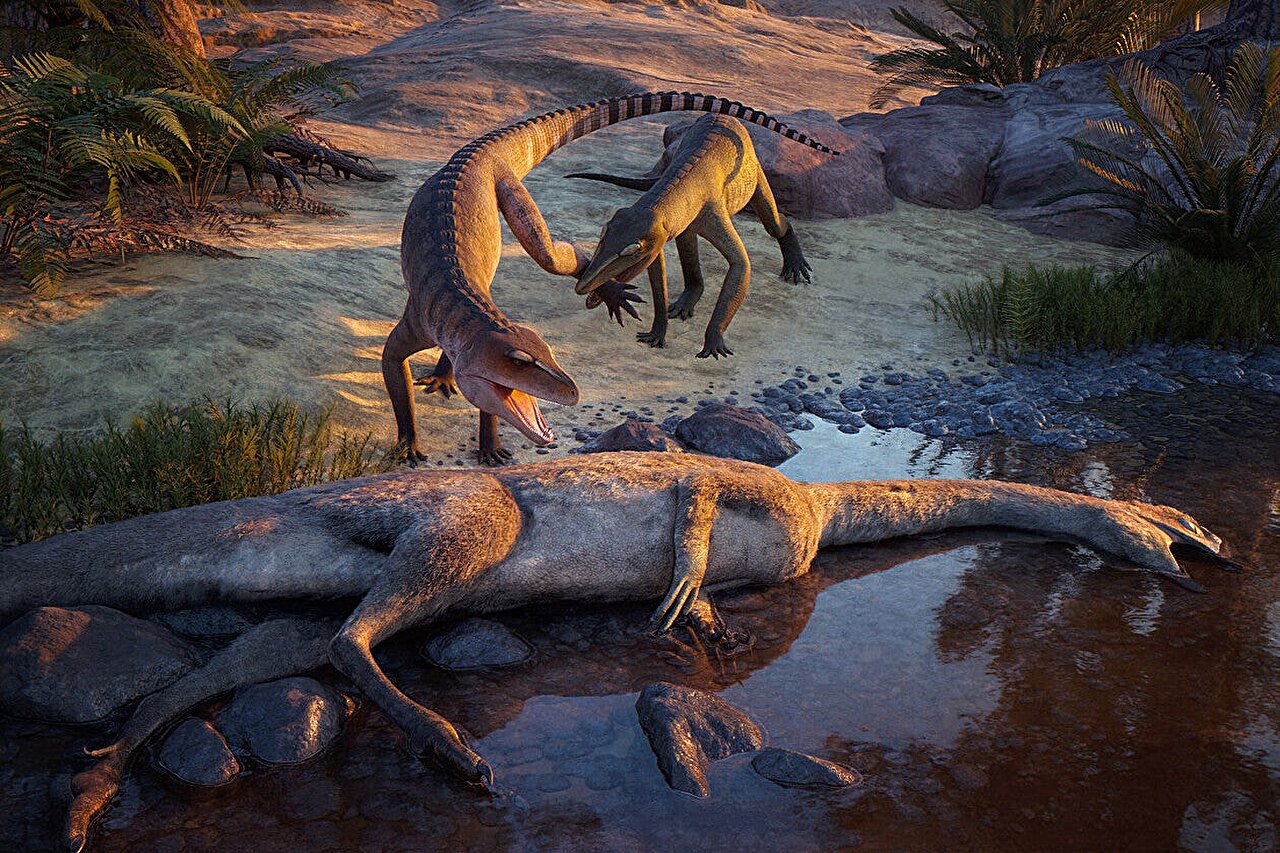
A Glimpse into the Triassic Riverbanks
Deep within the fossil record of northern New Mexico, researchers have unearthed evidence of a formidable predator that roamed the earth 210 million years ago. While modern crocodiles are apex predators of the water, their ancestors were evolving into diverse forms during the Triassic period. The recent identification of a crocodile cousin, distinct from the well-known Hesperosuchus agilis, sheds light on the specialized adaptations that allowed these jackal-sized reptiles to dominate their ecological niche.
Evolutionary Engineering: Built for the Crush
The discovery highlights a remarkable divergence in predatory strategy. Unlike its long-snouted counterparts, this newly identified specimen possessed a robust, reinforced cranial structure designed for crushing large prey. This indicates a higher level of dietary specialization than previously attributed to early crocodylomorphs, suggesting that the competitive landscape of the Triassic was far more cutthroat than fossil evidence previously suggested.
Implications for Paleo-Ecology
By analyzing the biomechanics of these ancient reptiles, paleontologists are gaining a clearer picture of how these creatures competed with early dinosaurs. This find serves as a critical bridge, showing that the reptilian evolution path was not just about size, but about the mechanical efficiency required to survive in a humid, rapidly changing environment. As we continue to re-examine existing specimens, the narrative of the Triassic period continues to shift from a world of primitive beasts to one of complex, specialized survivors.