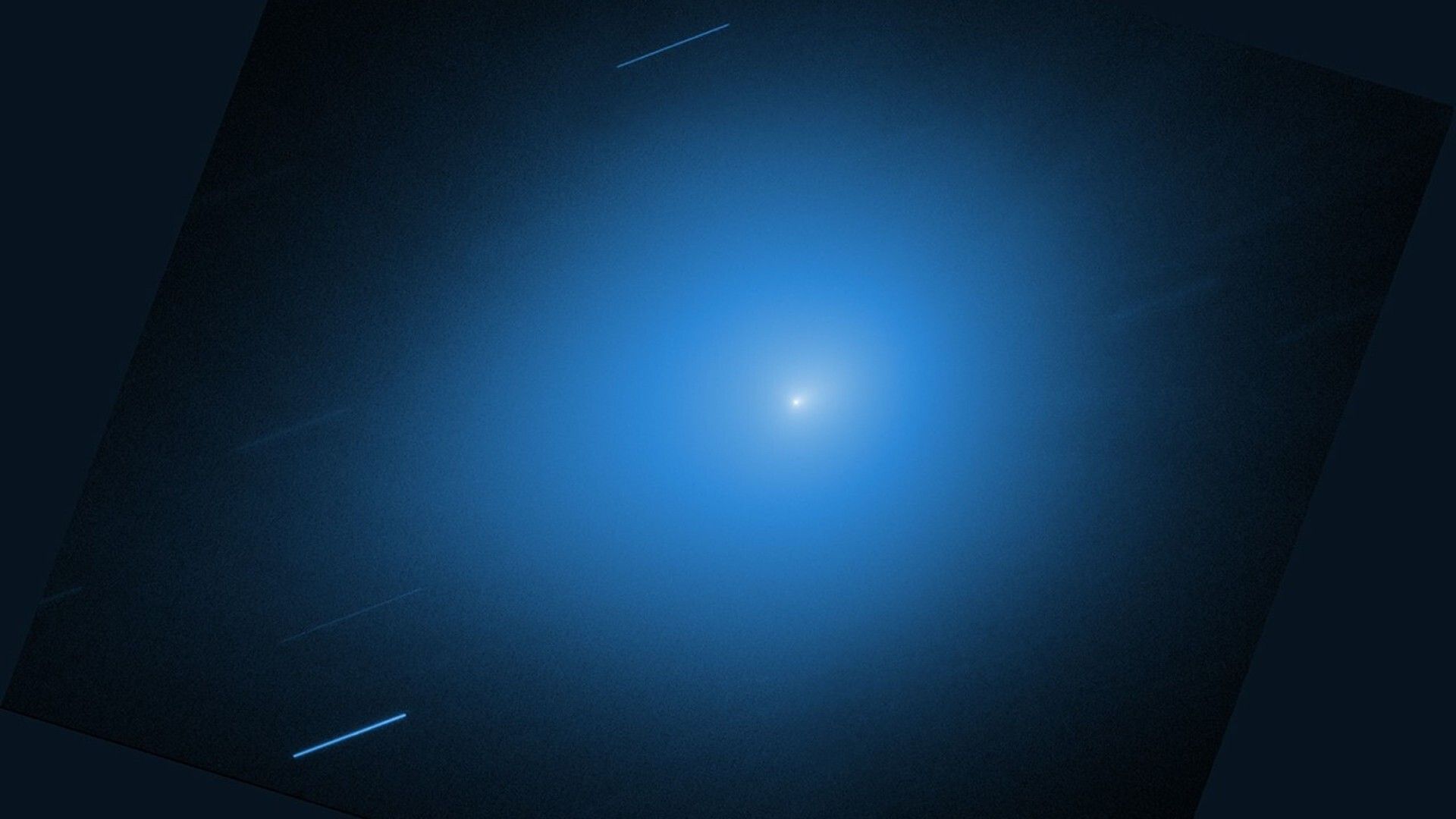
Interstellar Enigma: Unpacking the Delayed Spectacle of Comet 3I/ATLAS's Close Earth Flyby
As Comet 3I/ATLAS makes its historic closest approach, a last-minute livestream postponement sparks questions and ignites scientific anticipation.
A Once-in-a-Lifetime Cosmic Encounter
Today, December 19, 2025, marks a pivotal moment for astronomy enthusiasts and scientists alike. The interstellar comet 3I/ATLAS is making its highly anticipated closest approach to Earth. This celestial visitor, originating from beyond our solar system, offers an unprecedented opportunity to study material from another star system, providing invaluable clues about cosmic formation and evolution.
Discovered earlier this year, 3I/ATLAS was quickly identified as only the third known interstellar object to pass through our solar system, following 'Oumuamua and 2I/Borisov. Its trajectory and composition have been under intense scrutiny, with observatories worldwide dedicating significant resources to tracking its journey. Unlike its predecessors, 3I/ATLAS's close proximity to Earth during the holiday season has captivated public imagination, promising a festive celestial display.
The Unexpected Delay: What Does it Mean?
However, just hours before its closest approach, a planned global livestream of the event was unexpectedly postponed. The announcement, coming on the heels of intense anticipation, has naturally led to speculation. While specifics remain under wraps, initial reports suggest the delay is related to technical adjustments required for optimal data acquisition, rather than any unforeseen complications with the comet itself. Sources close to the observation teams indicate a potential upgrade or recalibration of instruments to capture even more detailed spectral analysis and imagery during this critical window.
This unexpected pause, while frustrating for eager viewers, underscores the intricate and often unpredictable nature of cutting-edge astronomical observation. Preparing for a truly unique event like an interstellar flyby involves a symphony of complex systems, and sometimes, a momentary delay can yield a richer, more profound scientific harvest.
Unlocking the Secrets of Other Star Systems
The scientific stakes couldn't be higher. Interstellar objects like 3I/ATLAS are cosmic time capsules. Their chemical composition, isotopic ratios, and physical characteristics provide direct samples of the conditions and materials present in their home star systems. Studying 3I/ATLAS allows astronomers to compare its 'fingerprint' against that of our own solar system, offering insights into:
- Planetary Formation: Are the building blocks of planets universal, or do they vary significantly between star systems?
- Cometary Evolution: How do comets evolve in different stellar environments? Are there unique ice compositions or organic molecules present?
- The Abundance of Life: By understanding the distribution of complex molecules in interstellar visitors, we can better estimate the prevalence of conditions suitable for life elsewhere in the galaxy.
The data gathered during this flyby, even with a slight delay in public viewing, will contribute to a vast dataset that informs our understanding of galactic ecology and the processes that shape planetary systems across the cosmos.
Looking Ahead: The Future of Interstellar Exploration
The close encounter with 3I/ATLAS reinforces the burgeoning field of interstellar object research. As telescopic capabilities improve and survey missions become more sensitive, the detection of such visitors is likely to become more frequent. This raises exciting prospects for future missions, including potential rendezvous or sample-return probes to capture these fleeting cosmic messengers.
While the livestream may be momentarily on hold, the scientific journey for 3I/ATLAS is just beginning. NovaPress will continue to provide updates as more information becomes available, ensuring our readers are at the forefront of this extraordinary interstellar event. The universe, it seems, always has a few surprises up its sleeve, reminding us of the endless wonders awaiting discovery beyond our earthly confines.