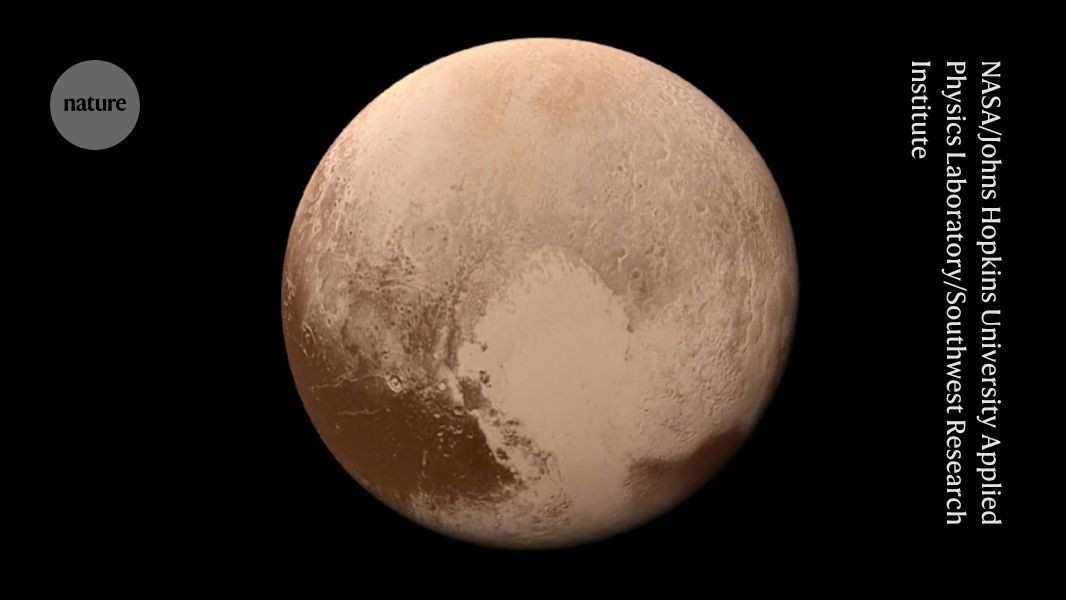
The Cosmic Identity Crisis
In 2006, the International Astronomical Union (IAU) made a decision that sparked a global outcry: reclassifying Pluto as a 'dwarf planet.' Nearly two decades later, the debate is not only alive but is being pushed back into the mainstream by none other than NASA Administrator Bill Nelson. By signaling a potential 'escalation' of this debate, Nelson has reopened a scientific wound that cuts deeper than mere nomenclature.
Defining a Planet
The controversy centers on the IAU's three-pronged definition of a planet: it must orbit the Sun, be spherical due to its own gravity, and have 'cleared the neighborhood' around its orbit. Pluto fails the third requirement, sharing its orbital path with the icy debris of the Kuiper Belt. However, proponents of the 'Pluto is a planet' movement argue that this definition is geocentric and overly restrictive, ignoring the complex geology, atmosphere, and moons that make Pluto a dynamic world worthy of planetary status.
Future Implications
If the scientific community moves to redefine what constitutes a planet, the impact would ripple across textbooks, educational curricula, and our fundamental understanding of the solar system. While some argue that 'planet' is merely a human-made label used for classification, others insist that the status reflects our respect for the complexity of the outer solar system. As NASA leads the charge, we must ask: are we ready to rewrite the solar system's biography?