The Paradox of Our Origins
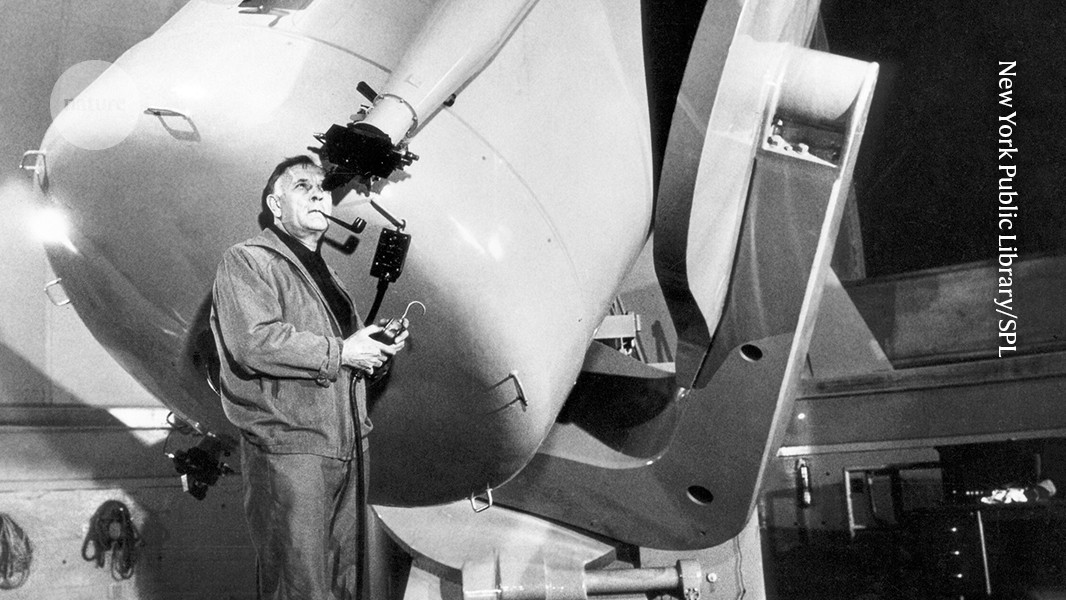
Cosmology sits at a unique intersection of empirical observation and metaphysical inquiry. As noted by Helge Kragh in his latest work, Universe: A Guide to Everything, our understanding of the cosmos has evolved from mere mythological conjecture to a rigorous scientific discipline. The discovery by Edwin Hubble—that distant galaxies are receding from us at velocities proportional to their distance—provided the foundational empirical bedrock for the Big Bang theory. However, this is far from the final word.
The Limits of Empirical Data
The challenge remains that cosmology is unique among the sciences; it deals with a singular object (the Universe itself) that cannot be replicated in a laboratory. While our mathematical models describe the expansion with startling precision, they often skirt the philosophical implications of a 'beginning' or an 'infinity.' When we ask why the universe exists in this specific state, we move beyond the standard model of particle physics and into the realm of interpretation.
Future Implications
As we look toward the future of space exploration and advanced observation technology, we must recognize that cosmology is an inherently incomplete narrative. It is a work in progress that requires not just better telescopes, but a more robust philosophical framework to handle data that frequently defies our intuition. Understanding the universe is, ultimately, a mirror to our own cognitive evolution.