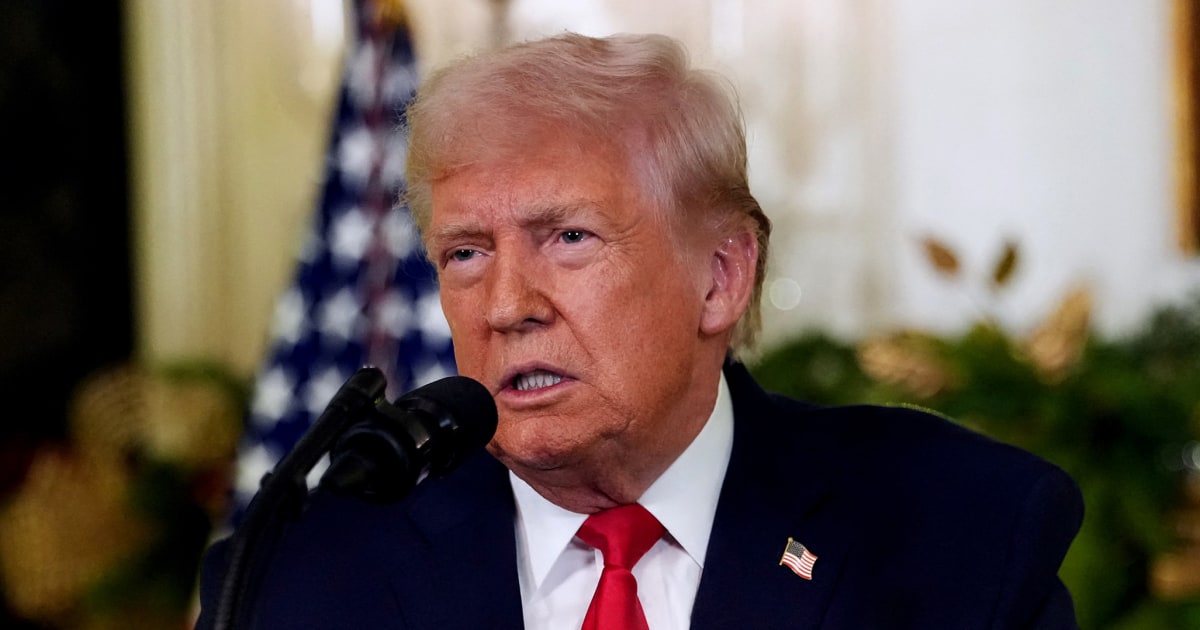
Beyond the Rhetoric: Fact-Checking President Trump's Second Term, Year One
In an era defined by rapid-fire communication and contested narratives, NovaPress takes a critical look at the claims made by President Donald Trump during the first year of his second administration. From the economy to military might and societal shifts, we delve into the verifiable data to separate assertion from reality, providing a comprehensive analysis for our readers.
The Economic Landscape: A Closer Inspection
President Trump's economic assertions frequently painted a picture of unprecedented growth and prosperity. Claims often centered on burgeoning job creation, soaring wages, and a booming stock market, all attributed directly to his administration's policies. However, a granular examination of economic indicators reveals a more nuanced reality. While certain sectors may have shown robust performance, official data from the Bureau of Labor Statistics and the Department of Commerce often presents figures that are "accurate or close" to claims, but sometimes significantly diverge.
For instance, projections on GDP growth might have been optimistic, and while unemployment figures remained low, the rate of wage growth for the average American worker requires deeper contextualization against inflation. Are real wages truly increasing at the touted rates, or are external factors and inflationary pressures eroding purchasing power? Our analysis highlights where the administration's economic narrative aligns with independent data and where it deviates, offering crucial context for understanding the true state of the nation's finances. The long-term implications of these economic statements, whether accurate or exaggerated, include their potential to shape public perception, influence market behavior, and set policy expectations that may or may not be sustainable.
Immigration and Border Security: Data Versus Declaration
Immigration has consistently been a cornerstone of President Trump's policy agenda and public discourse. During his first year in a second term, claims regarding border security, the efficacy of physical barriers, and the economic burden or benefit of immigration continued unabated. NovaPress cross-referenced these statements with data from the Department of Homeland Security and independent research organizations.
We investigated assertions about reductions in illegal crossings, the completion of border infrastructure, and the alleged drain on public resources. The findings often reveal a complex situation where some progress might be undeniable, but the scale or impact is frequently overstated. For example, while some sections of the border wall may have been completed, questions arise about their strategic effectiveness and cost-efficiency. Similarly, discussions around immigration’s economic impact often overlook the contributions of migrant labor and taxation. Understanding these discrepancies is vital for informed policymaking and a balanced public debate, as misleading narratives can fuel division and misallocate resources.
Military Strength and Global Standing: Assessing the Claims
The President's discourse on military might and America's standing on the global stage is another area warranting careful scrutiny. Claims of rebuilding the military, strengthening alliances, and projecting unparalleled power are common. Our analysis involves reviewing defense budgets, strategic arms agreements, and expert assessments from geopolitical analysts.
While increased defense spending might be verifiable, its actual impact on readiness, technological superiority, or troop morale is a more intricate calculation. Furthermore, assertions about America's global influence must be weighed against shifts in international relations, the rise of new global powers, and the stability of traditional alliances. The future implications of these claims extend to international diplomacy, the potential for conflict, and the allocation of national resources, making accurate assessment paramount.
Societal Impact: Beyond the Soundbites
Beyond the hard data of economics and defense, President Trump often made sweeping claims about the societal fabric of the nation. These statements frequently touched on law and order, cultural values, and the overall mood of the country. Fact-checking such broad claims requires a nuanced approach, drawing upon sociological data, crime statistics, and public opinion polls.
For instance, claims about rising crime rates or widespread social unrest need to be compared against FBI Uniform Crime Reporting data and longitudinal studies. Similarly, assertions about national unity or division require careful consideration of polling data and expert analysis on social cohesion. The impact of these societal claims is profound, influencing public trust in institutions, shaping community perceptions, and potentially exacerbating existing social cleavages. An analytical perspective reveals that while some concerns might resonate with segments of the population, the overarching narrative often presents a selective and amplified version of reality.
The Importance of Scrutiny: What Lies Ahead
The first year of any administration is critical, setting the tone and direction for the remainder of its term. President Trump's rapid-fire series of claims, encompassing economic, military, and societal aspects, demand rigorous fact-checking not just for historical accuracy but for their ongoing impact. As NovaPress has demonstrated, while some claims may hold a kernel of truth or be "close," many require significant contextualization or outright correction when measured against verifiable data.
The implications of unverified or exaggerated political rhetoric are far-reaching. They can distort public understanding, impede effective policy-making, and erode trust in both media and government institutions. As we move further into this second administration, NovaPress remains committed to providing our readers with deep analysis, robust context, and an unwavering commitment to the truth, empowering citizens to make informed decisions in an increasingly complex information landscape. The future of democratic discourse hinges on our collective ability to distinguish between persuasive rhetoric and substantiated fact.