Beyond the Podium: Deconstructing Trump's Tariffs, Immigration, and the 2026 Economic Promise
By NovaPress Editorial Board
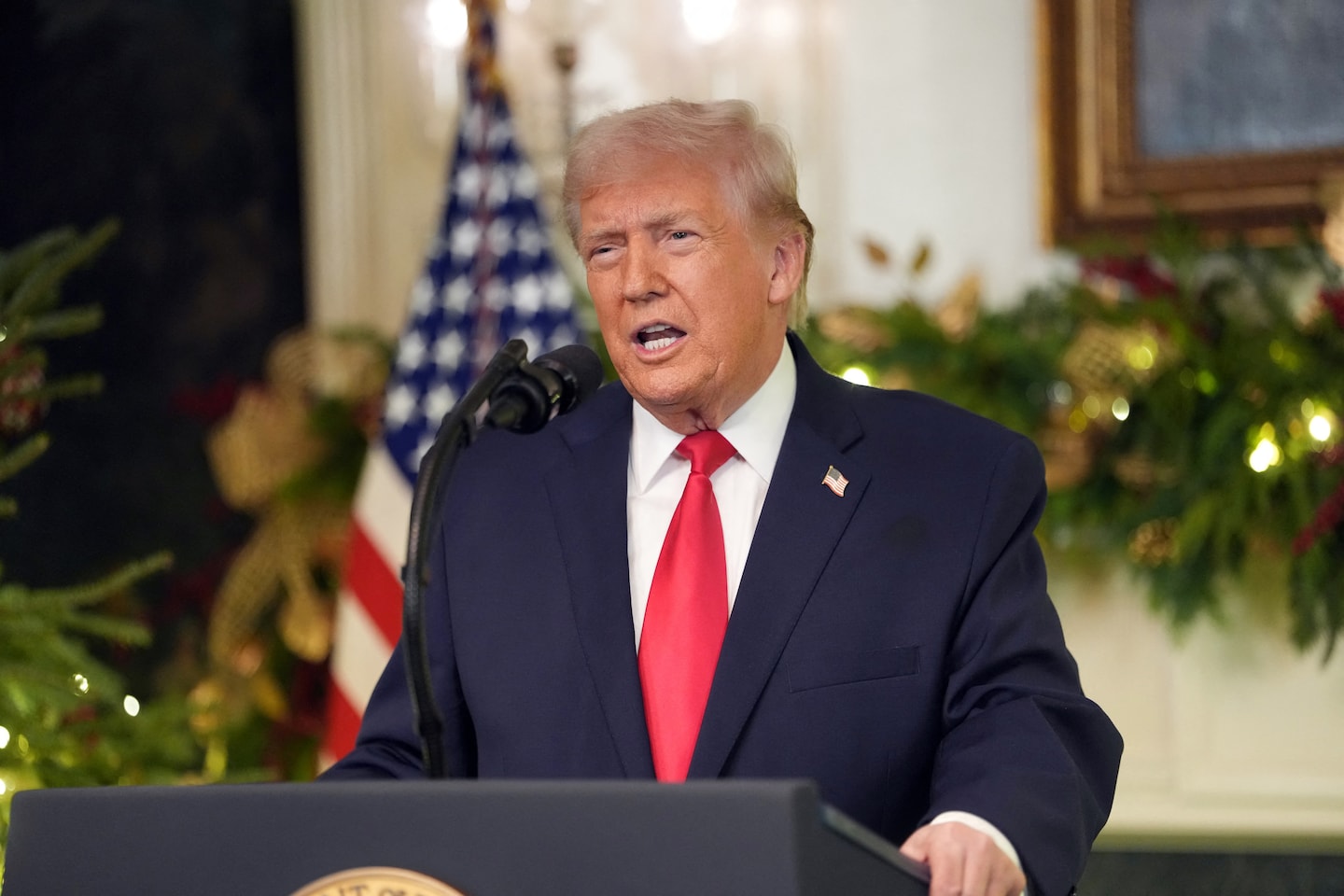
In a national address notably shorter than his often marathon-like public appearances, former President Trump recently delivered a speech that, while concise, was packed with familiar policy stances and a forward-looking economic projection. The address, focusing on his signature tariffs and immigration policies, quickly drew scrutiny for containing what critics described as multiple false statements, alongside a bold promise of a significantly better economy by 2026.
The Enduring Call for Tariffs: Economic Strategy or Political Tool?
At the heart of Trump's economic platform, and prominently featured in his address, is the fervent advocacy for tariffs. Trump reiterated his belief in their power to protect domestic industries, boost manufacturing jobs, and correct perceived trade imbalances. The rationale hinges on the idea that imposing duties on imported goods makes foreign products more expensive, thereby encouraging consumers to buy domestically produced alternatives and incentivizing companies to manufacture within the U.S.
However, the economic community remains deeply divided on the efficacy and long-term implications of such protectionist measures. While tariffs can offer short-term relief to specific industries, their broader impact often includes higher costs for consumers (as import costs are passed on), retaliatory tariffs from other nations hurting export-oriented sectors, and disruptions to global supply chains. A deep analysis of past tariff implementations reveals a complex picture, often demonstrating a mixed bag of outcomes, with some sectors gaining at the expense of others, and overall economic growth potentially stifled by reduced trade volumes. The promise of economic prosperity via tariffs, therefore, demands a careful examination of both its immediate beneficiaries and its wider economic costs.
Immigration Policies: Reinforcing the Border and National Identity
The second pillar of Trump's address focused on immigration, a topic that has consistently been central to his political identity. He highlighted the necessity of stringent border security measures and restrictive immigration policies, framing them as crucial for national security, economic stability, and the preservation of national identity. This rhetoric often resonates with a segment of the population concerned about uncontrolled migration and its perceived societal impacts.
Yet, the discourse around immigration is fraught with humanitarian, economic, and ethical complexities. Critics argue that overly restrictive policies can lead to humanitarian crises at the border, separate families, and stifle economic growth by limiting access to a diverse workforce. Furthermore, the framing of immigration as primarily a security threat often overshadows the potential benefits of immigration, including economic dynamism, cultural enrichment, and demographic rejuvenation. Any comprehensive approach to immigration must balance legitimate security concerns with humanitarian principles and economic realities, a balance that remains elusive in the current political climate.
The Cloud of 'False Statements': Erosion of Trust and Reality
Perhaps the most contentious aspect of Trump's speech, as noted by numerous media outlets and fact-checking organizations, was the presence of what were identified as multiple false statements. While the specific nature of these claims was not detailed in the source, the consistent pattern of presenting unverified or inaccurate information has been a hallmark of his public communication.
The repeated dissemination of false or misleading information poses a significant challenge to democratic discourse. It blurs the lines between fact and fiction, making it difficult for the public to make informed decisions and eroding trust in political institutions and the media. In an era where information travels at light speed, the responsibility of political leaders to adhere to verifiable facts becomes paramount. The normalization of 'alternative facts' can have profound and lasting consequences on the integrity of public debate and the very foundation of an informed citizenry.
The 2026 Economic Promise: A Distant Horizon or Political Ploy?
One of the most striking elements of the address was Trump's promise of a significantly better economy by 2026. While optimistic projections are a common feature of political rhetoric, forecasting economic conditions several years into the future is inherently speculative and subject to a multitude of unpredictable global and domestic factors.
Economic growth is influenced by a complex interplay of monetary policy, fiscal policy, technological innovation, global trade dynamics, geopolitical stability, and consumer confidence. Attributing future prosperity solely to specific past or proposed policies without acknowledging the broader economic ecosystem can be misleading. Such long-term promises can also serve as a strategic political tool, offering a distant goal that defers immediate accountability while galvanizing support. Analyzing the feasibility of such a promise requires a critical look at current economic indicators and an understanding of the multifaceted forces that truly shape economic trajectories.
Conclusion: A Glimpse into the Future of Political Discourse
Trump's recent national address, though brief, offered a concentrated dose of his established political philosophy regarding economy and immigration. It underscored his consistent appeal to protectionist trade policies and strict border controls, themes that continue to resonate with his base. However, the address also highlighted the ongoing tension between political rhetoric and verifiable facts, and the strategic use of long-term economic promises.
As NovaPress, we believe it is crucial to move beyond the soundbites and deeply analyze the implications of such pronouncements. The future of the nation's economy and its societal fabric hinges not just on the promises made from the podium, but on the grounded realities of policy implementation, the integrity of information, and the willingness of the public to critically engage with both.