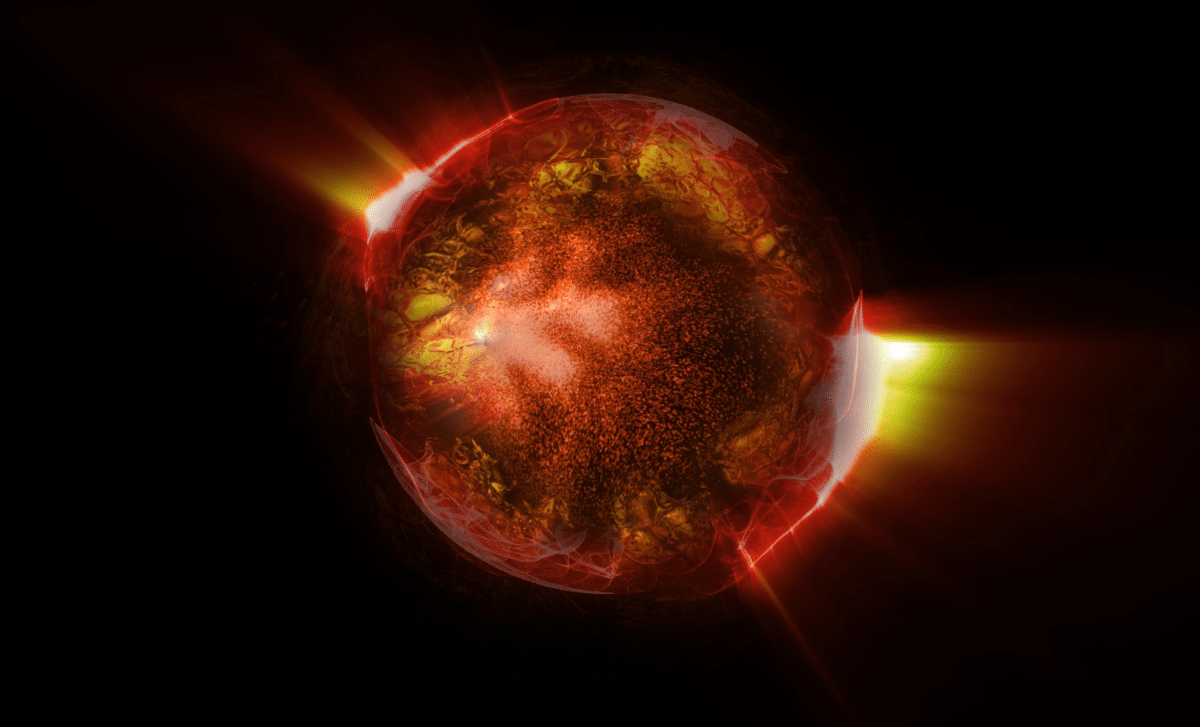
A Universal Phenomenon
For decades, solar physicists have observed 'sympathetic flares'—a phenomenon where an initial solar eruption triggers a second, delayed explosion on a distant region of the Sun. Until recently, we believed this intricate 'cosmic handshake' was a unique quirk of our own host star. New data suggests this is far from the truth; it is a fundamental behavior of stellar mechanics across the galaxy.
The Physics of Stellar Connectivity
These secondary flares occur via magnetic field line connectivity. When one flare erupts, it releases massive amounts of energy that propagate through the stellar corona. If the magnetic architecture of the star is sufficiently interconnected, these shockwaves can trigger instability in other regions, leading to a chain reaction. This revelation forces a fundamental reassessment of how we model stellar weather in distant planetary systems.
Implications for Exoplanetary Habitability
Understanding these sympathetic flares is critical for the search for extraterrestrial life. If a star can erupt in a double-tap fashion, the cumulative radiation hitting an orbiting exoplanet could be far more devastating than previously calculated. This discovery necessitates a higher degree of caution when analyzing the habitability of worlds orbiting active stars, as the 'calm' periods between eruptions may be shorter and more treacherous than our current models predict.