Beyond the Shoreline: A Paradigm Shift in Martian Hydrology
For decades, planetary scientists have scoured the Martian surface for signs of ancient shorelines—clear indicators of an ocean that once graced the planet's northern lowlands. However, recent research published in Nature challenges the long-held assumption that traditional shoreline identification is the definitive metric for finding extraterrestrial water.
The Case for Topographic Shelves
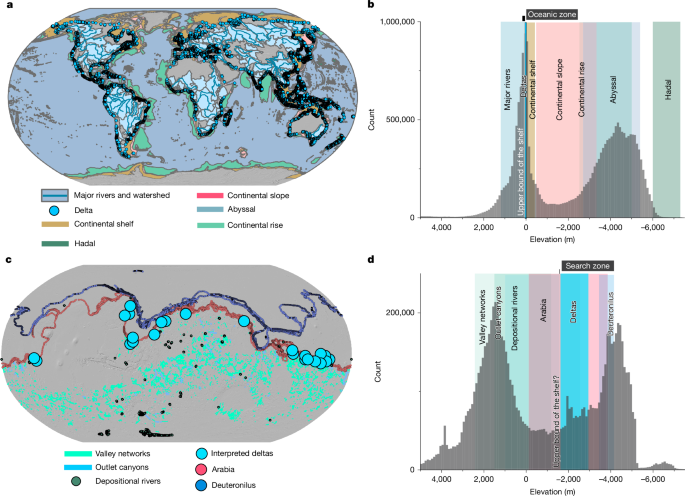
By analyzing transitional morphology in regions like the west Deuteronilus Mensae, researchers are moving away from searching for 'tide-line' patterns. Instead, the focus has shifted to the identification of 'shelves.' These geological features provide a more robust topographic signature for water-sediment interaction, mirroring similar landforms found on Earth.
Implications for Early Martian Climate
This shift in methodology is not merely academic; it completely recalibrates our understanding of Mars' climate history. If shelves are indeed the primary indicator of ancient oceans, it suggests that the lowland/upland boundary of Mars was shaped by complex sedimentological processes rather than simple sea-level recession. As we prepare for future robotic missions, understanding the exact nature of these water-related boundaries will be vital for selecting landing sites with high exobiological potential.