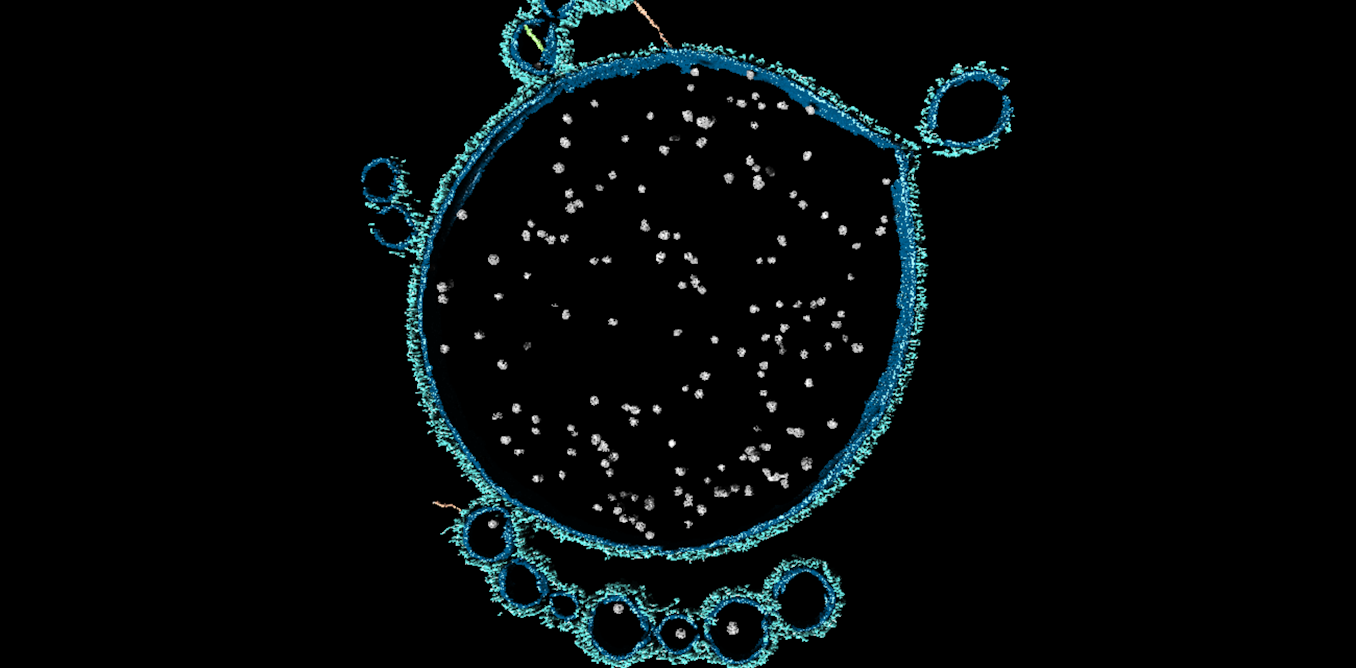
On the arid, sun-baked shores of Gathaagudu, or Shark Bay, Western Australia, lies a spectacle that defies its unassuming appearance. Here, the world's most ancient living structures, stromatolites and microbial mats, rise from the shallow waters – seemingly mere rocks, yet pulsating with billions of years of Earth's evolutionary secrets. These extraordinary formations are not just relics; they are a living, breathing window into our planet’s deepest past, now revealing what scientists are calling the 'first contact' – an interaction so fundamental it may have directly set the stage for the emergence of complex life on Earth.
Stromatolites: Architects of Early Earth
For nearly four billion years, long before the first fish swam or the first plant took root, microbial life dominated Earth. Among its most prolific manifestations were stromatolites – layered sedimentary structures formed by the growth of successive layers of photosynthetic microorganisms, primarily cyanobacteria. These ancient microbial cities were instrumental in shaping our planet, most notably through their production of oxygen, which slowly but surely transformed Earth’s early anoxic atmosphere into the oxygen-rich environment necessary for higher life forms.
Shark Bay's stromatolites are unique. Unlike their fossilized counterparts found globally, these are active, growing ecosystems, offering an unparalleled opportunity to study early Earth processes in real-time. The extreme salinity of the bay limits grazing by larger organisms, allowing these delicate microbial communities to flourish much as they did billions of years ago.
Witnessing the Genesis: A Pivotal Microbial Interaction
Recent groundbreaking observations by scientists at Shark Bay have illuminated a critical, hitherto theoretical, stage in the evolution of life. What was witnessed was not a single event, but a complex, dynamic interplay within the microbial mats themselves – a 'first contact' between different microbial species that catalyzed a new level of biological organization. Researchers observed distinct communities of anaerobic and aerobic microbes, traditionally thought to be spatially separated, engaging in novel forms of metabolic exchange and structural cooperation.
This interaction goes beyond simple cohabitation. Scientists identified specific gradients within the mats where oxygen-producing cyanobacteria created micro-environments that were then exploited by diverse heterotrophic bacteria. Crucially, the waste products of one group became vital nutrients for another, forming intricate food webs and symbiotic relationships that stabilize the entire mat structure. This 'interdependent network' represents a rudimentary form of cellular specialization and cooperation – a foundational step towards the complexity seen in multicellular organisms.
From Microbial Mats to Multicellular Organisms: The Evolutionary Bridge
The transition from single-celled life to multicellularity is one of evolution's grandest puzzles. The Shark Bay findings offer a compelling piece of this puzzle. The observed 'first contact' demonstrates how diverse microbial populations, by forming stable, metabolically integrated consortia within the stromatolitic architecture, could have experimented with collective living. This is not yet multicellularity in the sense of a complex organism with differentiated tissues, but it is a powerful analogue to the early stages of that process.
Imagine an ancient microbial community, not just a random collection of cells, but one where cells begin to "communicate" through shared resources and waste products, creating localized conditions beneficial to the group. Such early cooperation would have offered significant survival advantages, such as enhanced nutrient acquisition, protection from environmental stressors, and the ability to collectively modify their surroundings. These advantages would have provided the selective pressure for more permanent, genetically encoded forms of cellular cooperation – the very definition of multicellularity.
Beyond Earth: Lessons for Astrobiology and Future Exploration
The revelations from Shark Bay resonate far beyond Earth’s ancient history. Understanding how simple microbial interactions can lead to increasingly complex systems has profound implications for astrobiology. If life emerges on other planets, it is highly probable it will begin as microbial. The stromatolites provide a tangible model for what early alien life might look like and how it might evolve towards complexity. When searching for biosignatures on exoplanets, scientists can now look for evidence of such layered microbial structures and the specific metabolic gradients they produce, rather than solely focusing on individual cells.
Furthermore, these living laboratories offer insights into the resilience and adaptability of life. By studying how these ancient systems thrive in extreme conditions, we can better understand Earth’s own deep past and perhaps even inform strategies for environmental conservation in a changing climate. The delicate balance within these microbial mats holds clues to sustaining ecosystems in challenging environments, a critical area of research for our future.
A Glimpse into Life's Blueprint
The "first contact" witnessed at Shark Bay is more than just a scientific observation; it is a profound realization about the fundamental interconnectedness of life. It reminds us that the grandeur of Earth's biodiversity, from the smallest microbe to the largest whale, may have its roots in the humble, yet incredibly sophisticated, dance of ancient microorganisms. These living fossils continue to whisper tales of genesis, offering humanity an unprecedented glimpse into the very blueprint of life's complex journey.