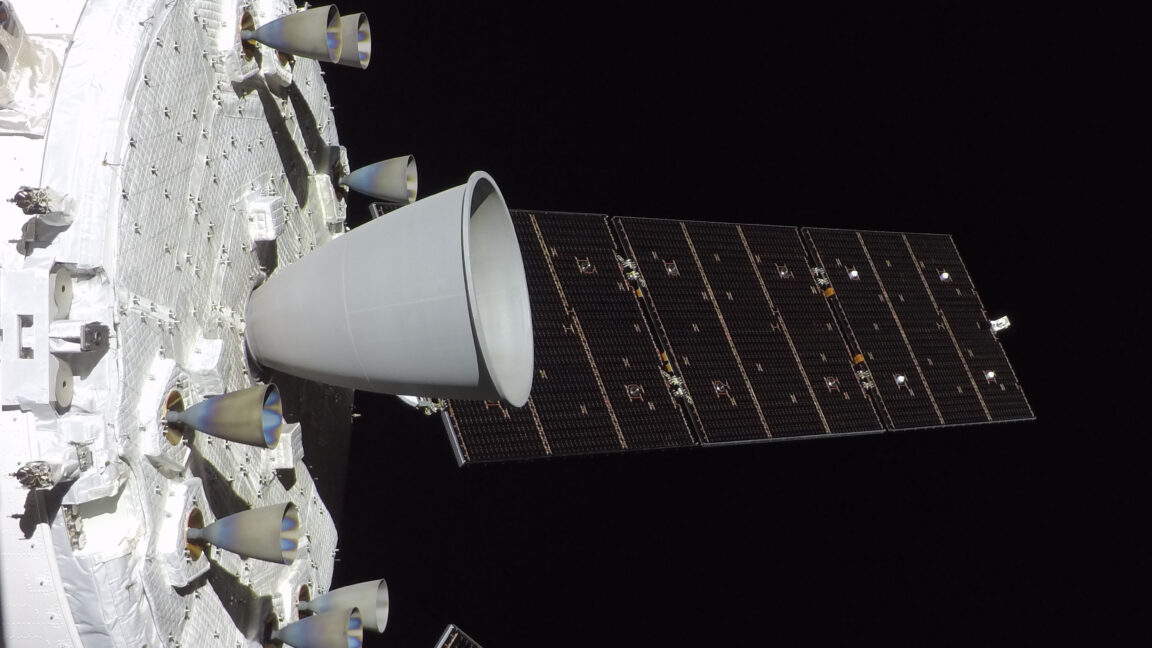
Orion's Achilles' Heel: How a Persistent Helium Leak Demands Redesign for Humanity's Lunar Return
The ambitious goals of NASA's Artemis program, aiming to return humans to the Moon and establish a sustainable lunar presence, hinge on the flawless performance of its cutting-edge hardware. Central to this endeavor is the Orion spacecraft, designed to ferry astronauts through deep space. However, a recurring technical challenge—a series of helium leaks—has emerged, signaling the need for significant redesigns despite posing no immediate threat to the upcoming Artemis II reentry.
A Persistent Anomaly: Leaks on Artemis I and II
The issue of helium leaks in the Orion spacecraft isn't new. It first surfaced during the uncrewed Artemis I mission, a critical test flight that successfully orbited the Moon and returned to Earth. While engineers successfully managed the leak during that flight, its recurrence on the Artemis II mission, which will carry a crew around the Moon, elevates the concern from a manageable anomaly to a design imperative. Helium is a crucial component in Orion's propulsion system, used to pressurize fuel tanks, ensuring a steady flow to the engines for maneuvers in deep space and reentry burns.
No Reentry Threat, But Future Implications are Clear
Despite the persistent leak, NASA has assured the public that the current helium issue poses no threat to the Artemis II crew's safe reentry to Earth. The spacecraft's redundant systems and robust design are built to accommodate such minor technical hiccups without compromising mission-critical phases. This assurance is a testament to the rigorous safety protocols and engineering redundancies built into the Orion program. However, the consistent nature of the problem, manifesting across multiple missions, clearly indicates that a systemic design flaw needs addressing.
"After leaks on Artemis I and II, Orion's next flight to the Moon will need new valves," states Ars Technica, underscoring the consensus among experts that the current valve design is the probable root cause.
The Path Forward: Redesigning for Reliability
The directive for a redesign means engineers will meticulously re-evaluate the helium pressurization system, with a specific focus on the valves. This process typically involves:
- Root Cause Analysis: A deep dive into why the current valves are failing or leaking, whether it's material fatigue, manufacturing tolerances, operational stresses, or environmental factors in space.
- Design Iteration: Developing new valve designs, potentially using different materials, sealing mechanisms, or actuation methods that can withstand the extreme conditions of spaceflight and repeated use.
- Rigorous Testing: Extensive ground testing of the new components under simulated flight conditions, including thermal vacuum, vibration, and pressure cycling, to ensure their long-term reliability.
- Integration and Verification: Incorporating the redesigned valves into the Orion spacecraft and conducting further system-level tests to ensure seamless integration and overall mission readiness.
While such redesigns can introduce schedule complexities and potentially increase costs, NASA's priority remains crew safety and mission success. Addressing this issue now, before more complex and longer-duration missions like Artemis III and beyond, is paramount. The helium system's reliability becomes even more critical for missions requiring extensive maneuvering or extended stays in lunar orbit.
Broader Implications for the Artemis Program
The Orion spacecraft is the bedrock of the Artemis architecture, connecting Earth to the Gateway lunar outpost and serving as the primary transport for astronauts. Every component must function with unwavering precision to facilitate a sustainable human presence on the Moon and lay the groundwork for eventual crewed missions to Mars. The helium leak issue, though solvable, highlights the immense engineering challenges inherent in deep-space exploration and the constant need for vigilance and adaptation.
This redesign isn't merely a fix; it's an investment in the long-term viability and safety of the Artemis program. It reinforces NASA's commitment to learning from every flight, refining its technology, and ensuring that when humanity next steps on the lunar surface, it does so with absolute confidence in its machines.