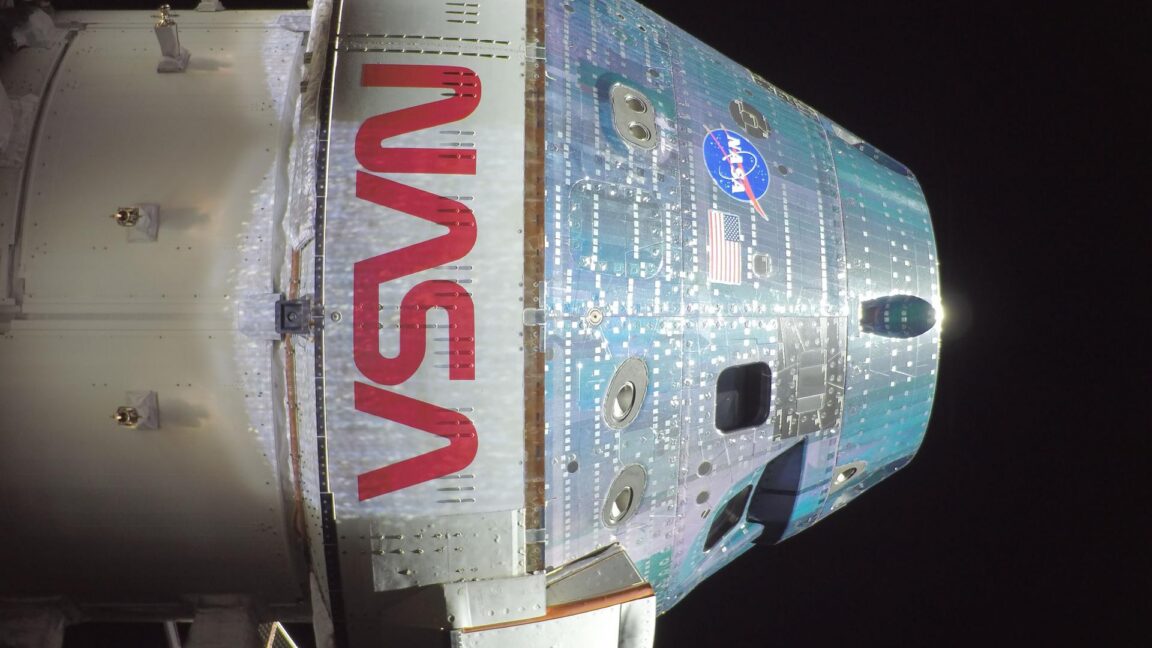
The Human Factor: How Frozen Urine Highlights the Success (and Challenges) of Artemis II
By The NovaPress Editorial Board
In the grand narrative of human space exploration, certain milestones are etched into history with bold strokes: the first human in space, the moon landing, the construction of the International Space Station. These are triumphs of engineering, courage, and scientific ambition. Yet, sometimes, the most mundane and seemingly trivial details can inadvertently underscore the profound success of such endeavors. Enter Artemis II, NASA's pioneering mission set to return humans to the vicinity of the Moon, and the unlikely conversation-starter that has emerged: frozen urine.
Artemis II: A Mission of Monumental Ambition
The Artemis program represents humanity's ambitious return to lunar exploration, not merely for a flag-planting exercise, but as a stepping stone towards establishing a sustained human presence on the Moon and, ultimately, preparing for crewed missions to Mars. Artemis II is the critical second act in this saga, following the uncrewed Orion spacecraft's successful journey around the Moon during Artemis I. This upcoming mission will send four astronauts—Christina Koch, Victor Glover, Reid Wiseman, and Jeremy Hansen—on a historic voyage around the Moon, testing critical systems and procedures before a potential lunar landing on Artemis III.
The stakes are astronomically high. Every component, every system, every protocol must function flawlessly. From the gargantuan Space Launch System (SLS) rocket to the intricate life support systems within the Orion capsule, the engineering is a symphony of cutting-edge technology and rigorous testing. The progress reports from NASA have been overwhelmingly positive, indicating that Artemis II's preparations are proceeding with remarkable smoothness and efficiency.
The Paradox of Perfection: When the Mundane Becomes the Main Event
So, what happens when a mission of this magnitude runs so perfectly that there are no major technical malfunctions, no dramatic last-minute fixes, no existential threats to report? Public (and media) attention, it seems, gravitates towards the most human, relatable, and sometimes, unglamorous aspects of life in space. The discussions around Artemis II have, somewhat comically, veered into the topic of space toilets and the management of astronaut waste, specifically, frozen urine.
This fixation, as one commentator aptly put it, "is kind of human nature." We can marvel at rocket science and celestial mechanics, but it's the shared human experience – eating, sleeping, and yes, using the bathroom – that truly connects us to the extraordinary lives of astronauts. In an environment where every ounce matters and every bodily function must be meticulously managed, the engineering of waste disposal becomes a surprisingly complex, critical, and therefore, fascinating challenge.
Beyond the Lavatory: What the 'Urine Talk' Really Signifies
While the focus on frozen urine might seem amusing, it paradoxically serves as a powerful testament to the underlying success and maturity of the Artemis II program. When the biggest 'problem' or talking point is related to human waste management, it means:
- Robust Engineering: It implies that the core propulsion, navigation, communication, and life support systems are performing as expected, with no red flags to divert attention. The mission is, in essence, boringly successful on its major fronts.
- The Human Element is Paramount: It underscores that even with advanced technology, human beings are at the heart of these missions. Addressing their basic physiological needs and comfort (or lack thereof) in an extreme environment is not a trivial afterthought, but a critical design consideration for long-duration spaceflight.
- Public Engagement: These relatable, if slightly gross, anecdotes humanize space travel. They break down the mystique and allow the public to connect with astronauts on a fundamental level, fostering broader interest and support for ambitious space programs.
Future Implications: Preparing for Lunar Outposts and Martian Journeys
The seemingly trivial discussion around waste management has significant implications for future missions. As humanity plans for sustained presences on the Moon (via the Gateway orbital outpost and lunar surface habitats) and eventual journeys to Mars, closed-loop life support systems, including efficient waste recycling and management, become absolutely vital. Every drop of water, every nutrient, every resource must be conserved and recycled. The challenges of handling frozen urine on a short lunar flyby, while not catastrophic, provide invaluable data and insights for designing systems that will support astronauts for months or even years away from Earth.
The ability to effectively manage all aspects of human existence in space, from food and air to sleep and sanitation, is what will ultimately enable deep space exploration. The smooth progress of Artemis II, even when leading to discussions about the less glamorous side of space travel, reassures us that NASA and its partners are diligently addressing every facet of sending humans further into the cosmos.
Conclusion: The Real Story is the Success Itself
While the headlines might playfully feature frozen urine, the underlying truth is far more profound: Artemis II is on track for an unprecedented mission, demonstrating humanity's unwavering resolve to explore. The fact that we are left to discuss the minutiae of personal hygiene, rather than critical system failures, is perhaps the greatest compliment one can pay to the engineers, scientists, and astronauts who are making this incredible journey possible. As Artemis II prepares to launch, let us appreciate not just the rockets and the science, but also the meticulous attention to every human detail that makes deep space exploration a reality. The future of lunar and Martian habitation hinges not just on monumental leaps, but also on the successful management of every small, human step along the way.