Echoes from the Deep: How Ancient Chinese Fossils Are Radically Reshaping the Story of Life on Earth
For decades, our understanding of the dawn of complex animal life has largely revolved around a pivotal event known as the Cambrian Explosion, a period approximately 541 million years ago when an astonishing diversity of multicellular organisms seemingly burst onto the scene. Textbooks have painted a picture of a relatively quiet, microbial world suddenly teeming with new forms, laying the groundwork for all animal life that followed. But what if this narrative, a cornerstone of evolutionary biology, is millions of years out of sync?
A groundbreaking discovery in China is forcing scientists to fundamentally reassess this timeline. Newfound fossils from ancient sea beds suggest that complex animals – including potential ancestors of vertebrates, the lineage to which humans belong – were not just present, but thriving, millions of years earlier than previously thought. This isn't just a minor chronological adjustment; it's a radical rewriting of the very first chapters of life's intricate saga on Earth.
Unearthing the Pre-Cambrian Pioneers
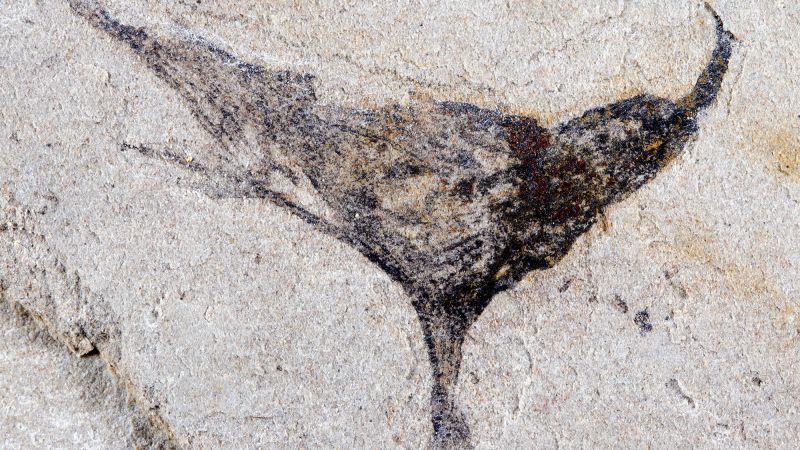
The revelations stem from meticulously preserved microfossils found in the Doushantuo Formation in China, a geological treasure trove known for yielding exquisitely detailed embryonic and early animal remains. These aren't the dramatic, hard-shelled creatures that characterize the Cambrian period, but rather the soft-bodied pioneers that preceded them. Among the finds are delicate, goblet-shaped organisms resembling early sea jellies, complete with miniature tentacles – a testament to radial symmetry and early tissue differentiation.
Even more astonishing are the indications of bilateral symmetry and more advanced body plans. Researchers have unearthed plump, legless creatures likened to ancient sausages, and long, segmented wormlike animals, some equipped with flat holdfast discs that allowed them to anchor themselves to the primordial seafloor. These aren't just collections of cells; they represent distinct, specialized forms of life with discernible anatomical features, suggesting a level of biological organization far beyond what was anticipated for their supposed age.
Redefining "Complexity" and Pushing Back the Clock
The significance of these fossils lies in their age. Radiometric dating places them squarely in the Ediacaran period, millions of years before the traditional onset of the Cambrian Explosion. This pushes back the accepted timeline for the emergence of truly complex, multicellular animal life – including our "squishy, wormlike ancestors" – by at least 4 million years, and potentially much more when considering the evolutionary steps required to reach these forms.
What constitutes "complexity" in this context? It's not just about being multicellular. These organisms exhibit evidence of specialized tissues, distinct anterior-posterior and dorsal-ventral axes, and potentially even early gut structures. The wormlike forms, in particular, are generating immense excitement, as they hint at the earliest branches of bilateral animals (bilaterians), a group that includes everything from insects to fish to humans. The possibility that these represent very early chordate ancestors or close relatives is tantalizing, offering a direct glimpse into the deep origins of our own evolutionary lineage.
Challenging the Cambrian Narrative and Future Implications
This discovery doesn't necessarily negate the Cambrian Explosion but rather recontextualizes it. Instead of a sudden "explosion" from simple life, it might represent a rapid diversification of existing, already somewhat complex lineages that had been quietly evolving for millions of years prior. This suggests a more gradual, protracted fuse leading up to the Cambrian "bang," challenging theories that rely solely on environmental triggers like sudden increases in oceanic oxygen levels or major climatic shifts to explain the rapid appearance of diversity.
The implications extend beyond mere chronology. If complex life emerged earlier, it suggests that the evolutionary pathways to multicellularity and sophisticated body plans might be more robust and perhaps less reliant on specific, rare environmental conditions. This has profound implications for fields like astrobiology, influencing our models of where and when complex extraterrestrial life might arise.
For paleontologists and evolutionary biologists, these fossils open new avenues of inquiry. Where else might similar pre-Cambrian complexities be hiding? What were the ecological pressures and genetic innovations that allowed these early animals to flourish? The search for even older, simpler animal forms will intensify, pushing the boundaries of our understanding of life's inception even further back.
A Continuing Saga of Discovery
The story of life on Earth is one of continuous revelation, a magnificent tapestry woven over billions of years. Each new fossil discovery is a thread, sometimes a seismic shift, that allows us to see the pattern with greater clarity. These ancient Chinese fossils are more than just rocks; they are whispers from a primordial past, echoing the incredible resilience and inventiveness of evolution. They remind us that the tree of life is far older and its roots far deeper than we ever dared to imagine, continuing to inspire awe and a relentless quest for knowledge about where we truly come from.