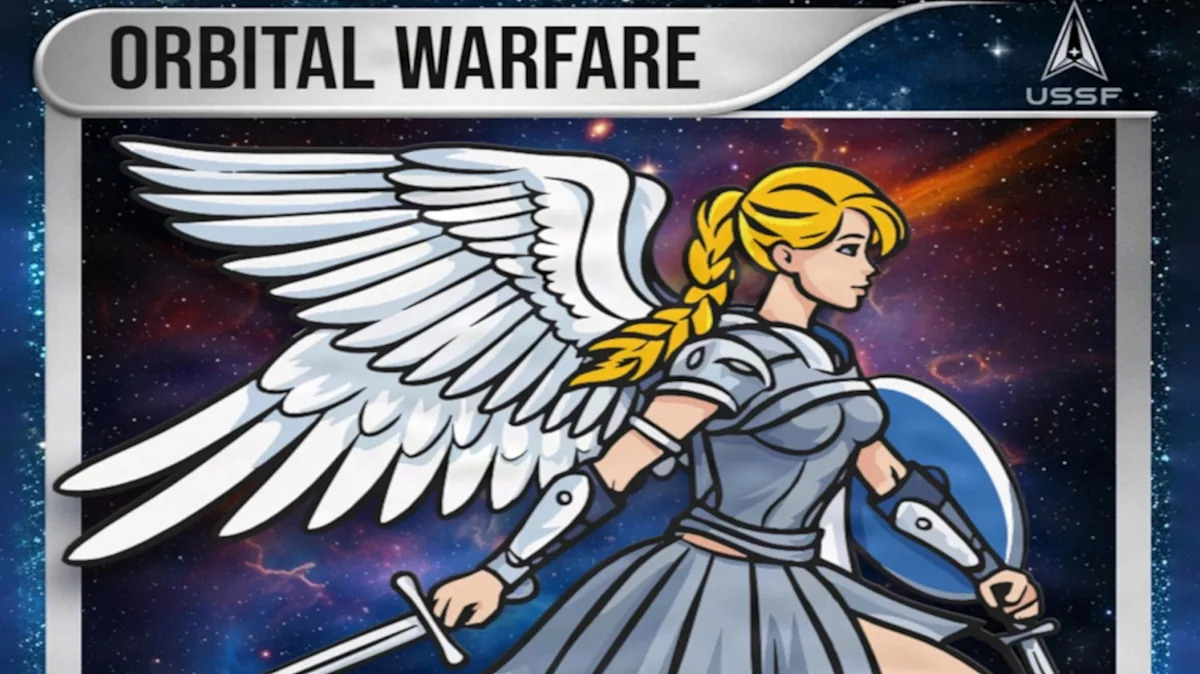
From Arcane Arts to Orbital Arenas: How Space Force's 'Magic' Cards Are Redefining Modern Military Engagement
In an era where national security often involves complex, abstract domains, the U.S. Space Force has unveiled a strikingly unconventional method to foster understanding and identity within its ranks: collectible card games. Drawing uncanny parallels to the globally popular fantasy game, Magic: The Gathering, these bespoke cards are not for recreational play but for assigning 'war names' to the nation's critical orbital assets – its satellites. NovaPress delves into this intriguing development, exploring the strategic genius and potential ramifications of gamifying the silent war above us.
The Invisible Battlefield: A Challenge of Perception
For decades, the allure of military service often conjured images of fighter jets screaming across the sky, boots on the ground, or ships cutting through formidable waves. These are visceral, tangible roles easily grasped by the public imagination. The U.S. Space Force, however, operates in an environment largely unseen, its battlegrounds defined by electromagnetic spectrums, orbital mechanics, and lines of code. Tracking satellites from a screen, while incredibly vital, lacks the immediate, dramatic impact that has traditionally characterized military recruitment and public perception. This inherent abstraction presents a significant challenge: how do you instill a sense of mission, identity, and importance in personnel and the public when your work is fundamentally invisible?
Gamification as a Strategic Imperative
Enter the 'war name' cards. Far from a trivial pursuit, this initiative represents a sophisticated application of gamification – the strategic integration of game-design elements and game principles in non-game contexts. The Space Force's cards are designed to be visually engaging, each bearing unique artwork, detailed descriptions, and statistics that imbue otherwise anonymous satellites with distinct personalities and operational roles. By turning the naming convention into a ceremonial, collectible event, the Space Force aims to bridge the gap between abstract data and tangible identity.
Echoes of Eldraine: The Magic in the Method
The comparison to Magic: The Gathering is not accidental. Wizards of the Coast, the creators of the iconic TCG, are masters of world-building, strategy, and fostering deep emotional connections through unique card identities. Space Force's adoption of this aesthetic taps into several powerful psychological levers:
- Identity & Ownership: Just as players connect with specific creatures or spells, Space Force personnel can now connect with a satellite's unique 'war name' and the symbolic power it represents. This fosters a sense of ownership and personal stake in the mission.
- Narrative & Lore: Each card, presumably, tells a story or signifies a specific capability, building a rich internal lore for Space Force operations. This narrative framework makes complex technical details more memorable and meaningful.
- Engagement & Morale: The very act of unveiling a new 'war name' with a custom card transforms a bureaucratic process into an event. It's a morale booster, a recognition of the satellite's significance, and a nod to a generation familiar with digital and game-centric culture.
- Simplified Communication: Complex orbital missions can be distilled into compelling visual and textual summaries on a card, making it easier for personnel to grasp the role and significance of each asset without drowning in technical jargon.
Beyond the Hype: Strategic Benefits and Future Horizons
While the initial reaction to 'Magic: The Gathering-style cards' might lean towards novelty, the underlying strategic benefits are profound. Internally, this approach could lead to enhanced team cohesion, improved operational understanding, and a stronger sense of shared purpose among Guardians. Externally, it presents a unique public relations opportunity. By embracing a relatable, even cool, aesthetic, the Space Force could potentially demystify its operations, attract tech-savvy recruits, and make its crucial mission more accessible to the American public.
Addressing Potential Criticisms
One might question if such an approach trivializes the serious nature of national defense. However, critics often misunderstand the intent of gamification. It is not about turning war into a game, but about leveraging proven engagement methodologies to improve internal communication, morale, and external understanding of a complex, critical mission. The 'war names' themselves are serious designations; the cards are merely the medium for their announcement and representation.
A Glimpse into the Future of Military Culture
The Space Force's card initiative is more than just a quirky anecdote; it's a potent signal of the evolving face of military culture and communication. As technology continues to push the boundaries of warfare into unseen and abstract domains, traditional methods of engagement may become less effective. This bold move by the Space Force suggests a willingness to adapt, to innovate not just in hardware and software, but in human-centric approaches that connect personnel to their mission and the public to its defense. Could we see similar gamified elements in other branches, perhaps for cybersecurity units or intelligence operations? The possibilities are as vast as the cosmos the Space Force is sworn to protect.
NovaPress believes this integration of digital-age culture into national security is a fascinating and potentially transformative trend. It highlights the importance of narrative, identity, and innovative communication in an increasingly complex world, reminding us that even the most cutting-edge defense strategies require a human touch to truly resonate.