The Fungus That Isn't: Unearthing Balanophora, Evolution's Most Bizarre Botanical Imposter
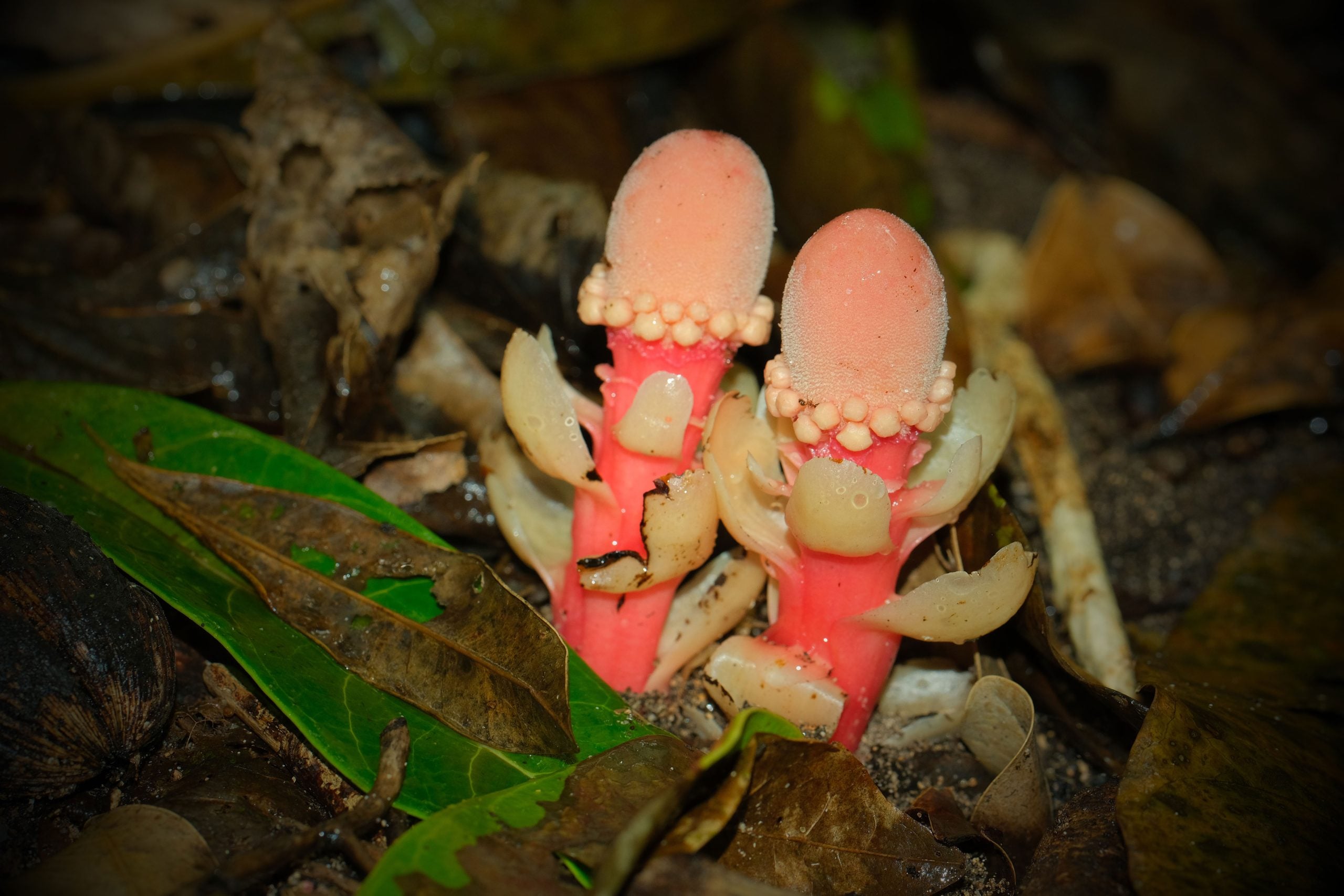
In the shadowy, damp undergrowth of mountainous regions across Taiwan and mainland Japan, amidst a tapestry of moss-covered trees, lies a biological marvel that challenges our very definitions of flora and fauna. It appears to be a mushroom, emerging from the forest floor with a distinct cap-like structure. Yet, this isn't a fungus at all. This is Balanophora, a genus of parasitic plants so profoundly adapted and so spectacularly strange that it has been dubbed one of evolution’s most perplexing experiments.
The Ultimate Botanical Deception
From a casual glance, particularly the species Balanophora fungosa ssp. fungosa (as photographed on Ishigaki Island in southern Okinawa Prefecture by Petra Svetlikova), one would be forgiven for mistaking it for a true fungus. Its fleshy, often vibrant, fruiting body emerges from the soil, devoid of any visible leaves or typical plant structures. This mimicry is not merely superficial; it hints at a deeper, more radical divergence from the conventional plant blueprint. Unlike most plants, Balanophora lacks chlorophyll – the green pigment essential for photosynthesis. This fundamental absence dictates its entire existence, pushing it into an utterly unique ecological niche where it must acquire nutrients through means other than sunlight.
A Life Sustained by Subterfuge: The Parasitic Strategy
Without the ability to photosynthesize, Balanophora has embraced a fully parasitic lifestyle. It attaches itself to the roots of host trees, penetrating their tissues with specialized organs called haustoria. Through these connections, it siphons off water, minerals, and crucial organic compounds, essentially living as a botanical vampire. This obligate parasitism is not a mere convenience; it is a necessity that has shaped its morphology, reducing it to a highly specialized organism focused solely on reproduction and nutrient acquisition from its unsuspecting hosts. The host trees, often suffering no immediate ill effects, unknowingly fuel the life cycle of this remarkable plant.
Cloning in the Crypt: Asexual Reproduction in Darkness
Perhaps one of the most astonishing facets of Balanophora is its reproductive strategy. Beyond its peculiar appearance and parasitic habit, it possesses the uncanny ability to clone itself in the dark. While many plants reproduce asexually, Balanophora's method, often involving subterranean vegetative propagation, allows it to spread efficiently without relying on pollinators or seed dispersal. This dark cloning mechanism is incredibly efficient for a sedentary parasite, enabling it to colonize new areas within its host's root system or spread to nearby hosts, ensuring genetic continuity and localized propagation even in light-starved environments where typical flowering plant reproduction would be challenging.
Ecological Significance and Evolutionary Insights
The discovery and ongoing study of species like Balanophora fungosa ssp. fungosa offer invaluable insights into the extremes of plant adaptation. Balanophora represents a lineage that has undergone profound evolutionary changes, discarding many defining characteristics of typical plants to thrive in a highly specialized niche. Its existence challenges our conventional understanding of plant evolution, demonstrating the immense plasticity of life and the diverse paths organisms can take to survive and flourish.
Scientists continue to study its unique physiology, genetic makeup, and interactions with its hosts. Understanding Balanophora could lead to breakthroughs in areas such as plant-parasite interactions, nutrient uptake mechanisms, and even novel pharmaceutical compounds, given the complex biochemical exchanges inherent in its lifestyle.
A Future Unveiling More Secrets
As we delve deeper into the subtropics and other biodiversity hotspots, more species like Balanophora are likely awaiting discovery, each presenting its own set of evolutionary riddles. This fungus-mimicking plant is a powerful reminder that the natural world is far more diverse and ingenious than we often imagine, continually pushing the boundaries of what we consider possible in biology. It stands as a testament to the endless creativity of evolution, a silent, subterranean master of deception and survival, cloning itself quietly in the dark, and redefining what it means to be a plant.