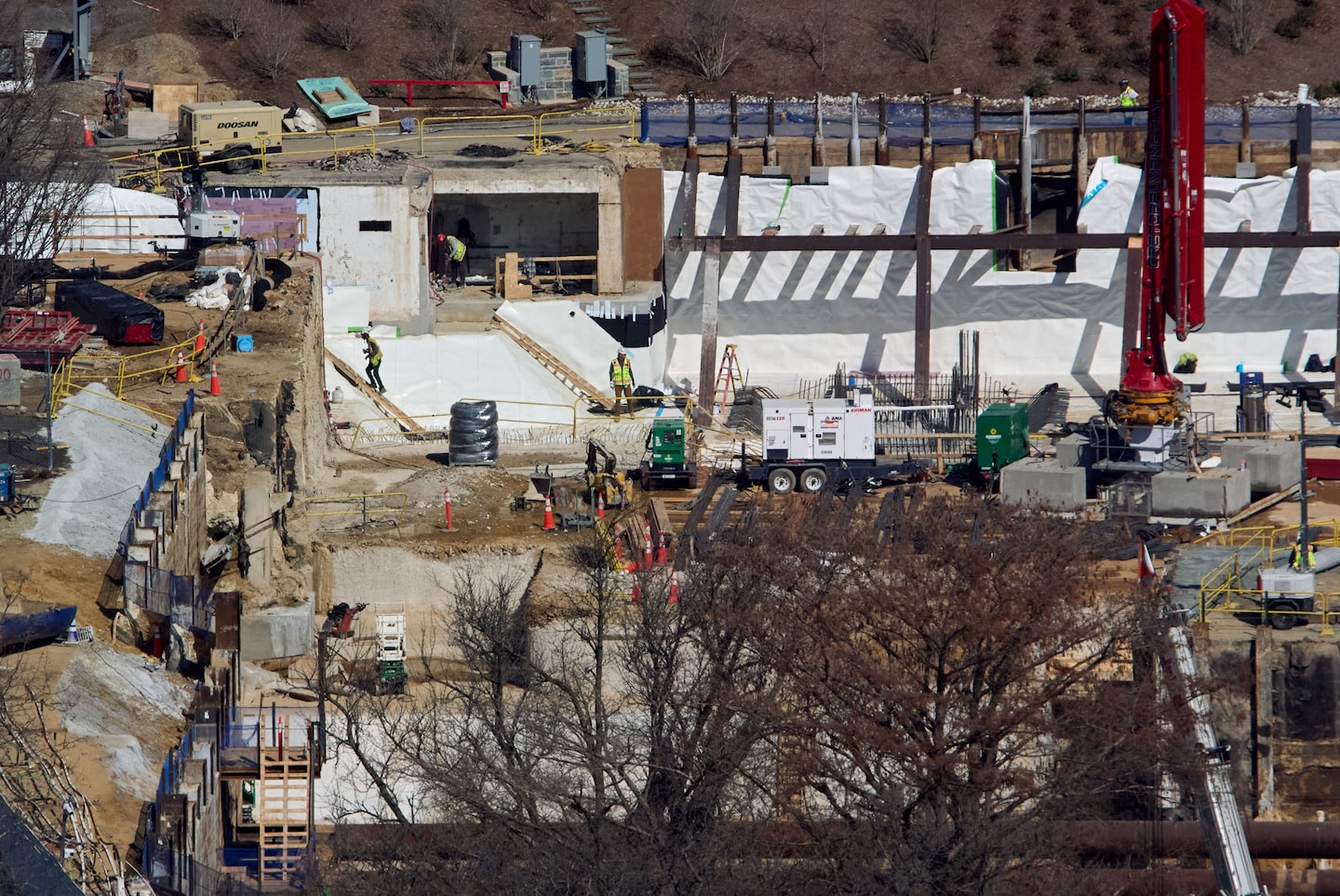
The $400 Million Stalemate: Trump's Ballroom Ambition Collides with Congressional Gridlock and Legal Hurdles
By The NovaPress Editorial Team
The grandeur of the White House has long been a symbol of American power and tradition. Yet, a proposed $400 million renovation project for a new White House ballroom under the Trump administration has become less about legacy and more about a stark illustration of the friction between executive ambition and legislative oversight. With President Trump reportedly disinclined to seek Congress's approval and a significant portion of lawmakers equally disinclined to grant it, this architectural endeavor has spiraled into a high-stakes political and legal impasse.
A Project of Unprecedented Scale and Contention
The sheer scale of the proposed $400 million ballroom project immediately raises eyebrows. This isn't a minor refurbishment but a major construction undertaking, one that historically would necessitate robust dialogue and authorization from Congress, particularly concerning appropriations. In an era of increasing national debt and competing priorities, such a lavish expenditure for a presidential residence project instantly attracts scrutiny, inviting questions about fiscal responsibility and the appropriate use of taxpayer funds.
Executive Initiative Meets Legislative Restraint
At the heart of this controversy lies a fundamental tension in American governance: the separation of powers. The executive branch, represented by the President, often initiates projects and sets priorities. However, the legislative branch, Congress, holds the crucial 'power of the purse.' For President Trump to push forward with a project of this magnitude without seeking explicit congressional approval is seen by many as an overreach, circumventing the very checks and balances designed to prevent unilateral executive spending. Conversely, Congress's reluctance is not merely political opposition; it's an assertion of its constitutional duty to oversee federal expenditures.
The Judicial Catalyst: Underscoring the Need for Approval
The recent federal judge's ruling, while its full details remain under wraps, serves as a critical underscore to the legality of such projects. It reinforces the established legal frameworks and precedents that often require legislative sign-off for significant governmental undertakings, especially those involving substantial public funds. Even without the explicit details, the very existence of such a ruling indicates that the project is operating in a legally contentious zone, further solidifying Congress's position that formal approval is not just a courtesy but a necessity. This judicial intervention effectively gives Congress more leverage, allowing them to remain "in no rush" because the legal system itself has acknowledged the project's tenuous footing.
The Political Calculus: Why the Stalemate Persists
For the Trump administration, the desire for a new ballroom likely stems from a vision of expanded entertaining capabilities or a grander aesthetic befitting the presidency. Yet, the political calculation on Capitol Hill is entirely different. For many lawmakers, particularly those in opposition, approving a $400 million ballroom would be a political liability, easily framed as wasteful spending. For others, even within the President's party, rubber-stamping such a project without proper vetting could be seen as an abdiction of their oversight responsibilities. The "no rush" stance from Congress is a tactical one, leveraging legal developments and public sentiment to resist a project they deem ill-conceived or improperly pursued.
Future Implications: A Precedent in the Making?
This ongoing saga has significant implications beyond a single ballroom. It tests the boundaries of presidential authority regarding discretionary spending and reinforces the enduring power of congressional appropriations. Should President Trump manage to proceed without explicit approval, it could set a dangerous precedent for future administrations. Conversely, Congress's steadfast refusal, backed by judicial interpretation, strengthens the legislative branch's role as a financial watchdog. The resolution, or lack thereof, will likely define how similar large-scale executive projects are approached in the future, highlighting the necessity of inter-branch cooperation or the potential for sustained gridlock when it's absent.
Conclusion: A Battle for the White House's Soul (and Budget)
The proposed White House ballroom is more than just a building project; it's a microcosm of the power struggles and constitutional debates that define American politics. With a President unwilling to seek approval and a Congress unwilling to grant it, compounded by judicial scrutiny, the $400 million ballroom project remains in limbo. This stalemate underscores the intricate dance between ambition and accountability, reminding all that even the most powerful office operates within a framework of checks and balances, a framework that, in this instance, seems poised to keep the White House's grandest new addition firmly on the drawing board.