Decades ago, as NASA astronaut Gene Cernan took his final steps on the lunar surface, he etched his young daughter's initials into the dust – a poignant, personal gesture amidst a monumental human achievement. His parting thoughts for humanity echoed a collective dream: that we would return. Now, that dream is poised to ignite anew.
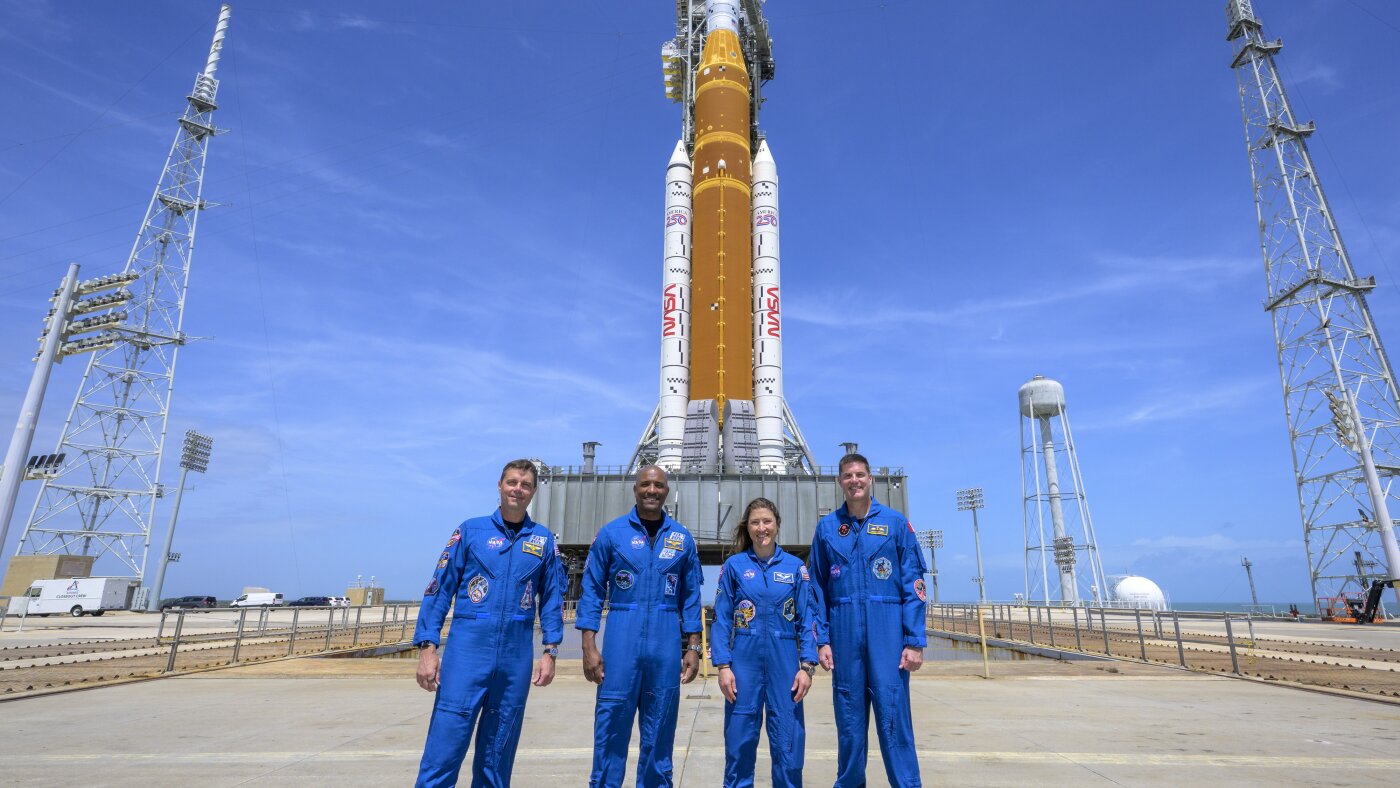
The world watches with bated breath as NASA's Artemis II mission prepares for its historic journey. Four astronauts are set to embark on a roughly 10-day voyage around the Moon, a critical precursor that promises to redefine humanity's relationship with our nearest celestial neighbor and pave an ambitious path toward a future lunar landing.
A New Chapter in Lunar Exploration
Artemis II isn't just a repeat of past glories; it's the audacious opening act of a sustainable lunar presence. While Apollo missions represented a sprint to plant flags, Artemis represents a marathon — a deliberate, methodical effort to establish a permanent human foothold on the Moon, eventually extending our reach to Mars.
The mission will see the crew aboard the Orion spacecraft, propelled by the towering Space Launch System (SLS) rocket, perform a circumlunar trajectory, testing critical systems and life support necessary for future deep-space endeavors. This journey is more than a flyby; it's a rigorous shakedown cruise, pushing the boundaries of human endurance and technological innovation beyond Earth's protective sphere.
From Flagpoles to Permanent Outposts: The Long-Term Vision
The significance of Artemis II extends far beyond its immediate objectives. It represents a fundamental shift in space exploration strategy. Where Apollo was a geopolitical triumph, Artemis is a foundational step towards building a sustainable lunar economy and scientific outpost. Future missions envision the construction of the Lunar Gateway, an orbiting outpost that will serve as a staging point for lunar surface missions and even a waypoint for journeys to Mars.
Scientists anticipate unparalleled opportunities for research, from studying lunar geology and resource potential (like water ice in permanently shadowed craters, crucial for propellant and life support) to establishing astronomical observatories shielded from Earth's interference. The Moon could become a unique laboratory, offering insights into the early solar system and the universe itself.
International Collaboration and the Next Generation
Unlike the solitary race of the Cold War era, the Artemis program is built on a foundation of international collaboration. Partners from Europe, Canada, and Japan are integral to its success, bringing diverse expertise and resources to the table. This collaborative spirit not only distributes the immense costs and risks but also fosters a shared human endeavor, uniting nations in a common pursuit of knowledge and exploration.
Moreover, Artemis is designed to inspire a new generation. The diverse crew of Artemis II, including the first woman and first person of color to journey to the Moon, embodies a future where space exploration is accessible and representative of all humanity. These trailblazers will become the new heroes, their journeys sparking curiosity and ambition in countless young minds, encouraging careers in STEM and pushing the boundaries of what's possible.
The Challenges Ahead
Despite the excitement, the path to a sustainable lunar presence is fraught with challenges. The SLS rocket, while powerful, represents a significant engineering and cost investment. The complexities of long-duration space travel, radiation exposure, and establishing habitats in a harsh extraterrestrial environment require continuous innovation and meticulous planning. Funding, political will, and public engagement will also be crucial factors in maintaining momentum.
Yet, as the clock ticks down to launch, the echoes of Gene Cernan's words resonate: "We leave as we came, and God willing, as we shall return, with peace and hope for all mankind." Artemis II is more than a mission; it's a testament to humanity's enduring drive to explore, to discover, and to reach for the stars. It promises not just a return to the Moon, but a new era of cosmic ambition, laying the groundwork for a future where humanity is truly a multi-planetary species.