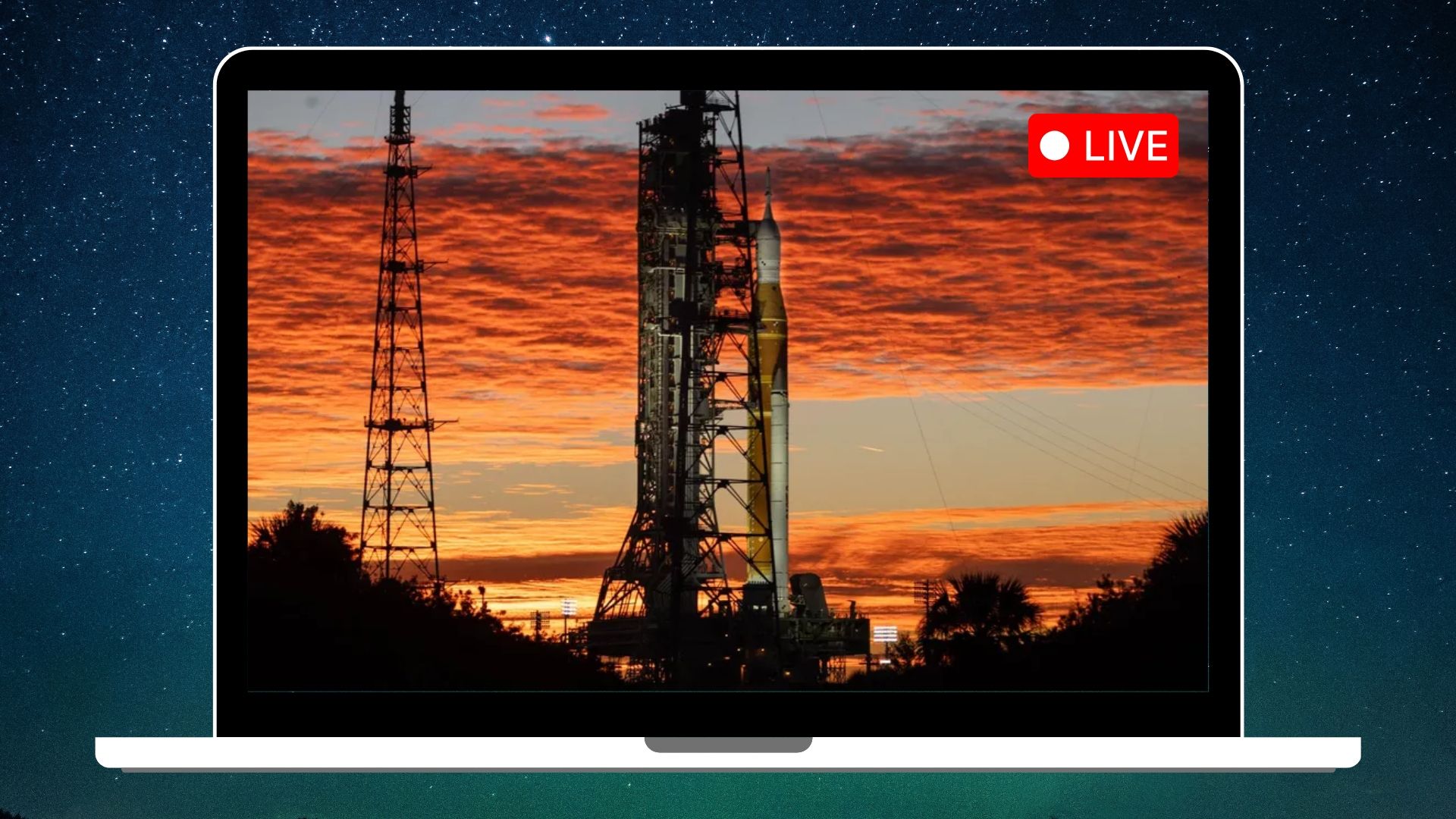
Echoes of Apollo: Artemis II Marks Humanity's Historic Return to Lunar Shores After Five Decades
Fifty years. Half a century. That's how long the silent expanse between Earth and its closest celestial neighbor has remained undisturbed by human presence. Today, that profound silence is set to be broken. With bated breath, the world watches as the Artemis II mission prepares to launch four astronauts towards the Moon, a monumental undertaking that not only revives humanity's lunar ambitions but ignites the next chapter in an interstellar odyssey.
A Giant Leap, Revisited: The End of a Lunar Hiatus
The last time human footsteps graced the lunar surface was in December 1972, with Apollo 17. Gene Cernan, Ron Evans, and Harrison Schmitt completed a mission that, at the time, felt like the natural progression of an unstoppable space age. Yet, for various geopolitical, financial, and strategic reasons, humanity's direct presence on the Moon ceased. For five decades, our gaze has shifted to robotic probes, orbital telescopes, and the International Space Station, leaving the Moon as a distant, unvisited memory for human explorers.
Artemis II isn't just another mission; it's a symbolic reawakening. It's the first crewed test flight of NASA’s Orion spacecraft and Space Launch System (SLS) rocket, designed to carry humans far beyond low-Earth orbit. This mission will see its crew—Commander Reid Wiseman, Pilot Victor Glover, Mission Specialist Christina Koch (all from NASA), and Canadian Space Agency astronaut Jeremy Hansen—perform a complex circumlunar trajectory, testing critical systems and life support capabilities in deep space before returning safely to Earth. Their journey will take them further than any human has traveled before, deeper into the cosmos, laying crucial groundwork for future lunar landings.
Beyond a Flyby: Paving the Way for Sustained Lunar Presence
While Artemis II is a flyby, its implications are far-reaching. It serves as the crucial precursor to Artemis III, the mission slated to put humans back on the lunar surface. But the vision extends even further. The Artemis program aims to establish a sustained human presence on and around the Moon, including the construction of the Lunar Gateway, a small space station orbiting the Moon. This ambitious endeavor envisions a future where astronauts live and work on the Moon for extended periods, conducting scientific research, testing technologies for deeper space travel, and potentially utilizing lunar resources.
This return is not merely about planting flags; it's about building a sustainable lunar economy, fostering international collaboration, and unlocking profound scientific discoveries. The Moon, rich in potential resources like water ice in its permanently shadowed craters, could serve as a vital staging ground for future missions to Mars and beyond. The insights gained from living and working in a reduced gravity, high-radiation environment will be invaluable for humanity's ultimate goal of becoming an interplanetary species.
Technological Marvels and Unseen Challenges
The hardware behind Artemis II represents the pinnacle of modern aerospace engineering. The Space Launch System, currently the world's most powerful rocket, delivers unprecedented thrust, while the Orion spacecraft is a marvel of resilience and adaptability, capable of protecting its crew through the harsh environment of deep space. These systems are not just designed for the Moon but are modular and scalable, intended to support future long-duration missions.
However, space travel remains an inherently risky venture. Artemis II faces myriad challenges, from the precision of its launch and trajectory to the reliability of its life support systems and thermal protection during Earth re-entry at blistering speeds. Each phase of the mission is meticulously planned, but the unforgiving vacuum of space offers no room for error. The bravery of the four astronauts, understanding these risks, underscores the profound human drive to explore and push boundaries.
A New Dawn for Space Exploration
Artemis II is more than a mission; it's a statement. It declares humanity's unwavering commitment to exploration, innovation, and international cooperation. The crew, a diverse representation of our world, carries the hopes and dreams of billions. Their journey will inspire a new generation, fostering interest in STEM fields and reminding us of our collective potential when we look beyond terrestrial boundaries.
As the countdown progresses, and the SLS rocket ignites, the echoes of Apollo will intertwine with the bold new symphony of Artemis. This mission is not just about returning to the Moon; it's about stepping forward, charting a course for humanity that transcends the familiar blue marble and reaches for the infinite possibilities that lie beyond. The next great chapter in space exploration begins today.