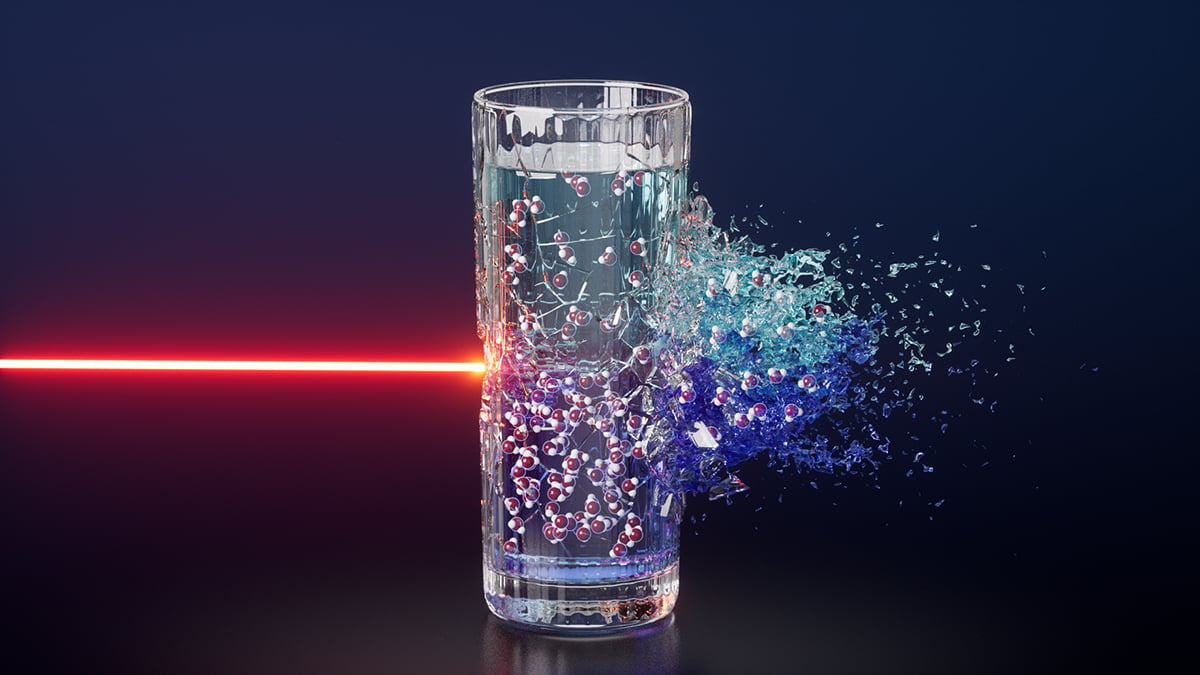
Water's Unseen Secret: Scientists Uncover a Hidden Critical Point in Supercooled Liquid
Water, the most ubiquitous substance on Earth, is also one of its most enigmatic. Despite its seemingly simple H₂O molecular structure, water defies conventional physical laws in numerous ways, particularly as it approaches its freezing point. For decades, scientists have grappled with its 'anomalous' behavior, a set of properties that make it utterly unique among liquids. Now, a groundbreaking discovery has peeled back another layer of this mystery, revealing a previously hidden "critical point" within supercooled water that promises to redefine our understanding of this life-giving fluid.
The Paradox of Supercooled Water
Normally, water freezes at 0°C (32°F). However, under specific conditions – free from impurities and nucleation sites – water can be 'supercooled,' remaining in a liquid state far below its standard freezing point. This supercooled state is where water truly begins to act bizarrely. Its density, viscosity, and compressibility all exhibit peculiar trends, hinting at underlying structural changes that have long eluded clear explanation. It's an unstable, transient phase, a liquid on the precipice of transformation, yet its properties have puzzled physicists for generations.
Unveiling the Hidden Critical Point
The new research, highlighted by ScienceAlert, pinpoints a "critical point" within this supercooled realm. In physics, a critical point marks the conditions (temperature, pressure) at which a substance can transition between two distinct phases without undergoing a first-order phase transition (like boiling or freezing). Think of it as the point where the distinction between two phases blurs. For water, this newly found critical point suggests that supercooled water isn't just one type of liquid, but rather a dynamic interplay between two distinct liquid structures, fluctuating rapidly between them.
This insight builds upon theoretical predictions from decades ago, which proposed the existence of two 'types' of liquid water – a high-density liquid (HDL) and a low-density liquid (LDL) – that might exist in equilibrium under extreme conditions. The critical point discovered here is believed to be the boundary where these two liquid forms become indistinguishable, much like the vapor and liquid phases of water merge at its standard critical point.
Rewriting the Rulebook for H₂O
The implications of this discovery are profound. For years, the unusual properties of supercooled water – such as its density maximum at 4°C, its high heat capacity, and its ability to expand upon freezing – have been attributed to the unique hydrogen bonding network between water molecules. This new critical point offers a more granular explanation: these anomalies might stem from the dynamic competition and coexistence of these two liquid structures.
Understanding this critical point could unlock secrets in diverse scientific disciplines. In cryopreservation, for instance, preventing ice crystal formation is paramount. A deeper understanding of water's pre-freezing states could lead to more effective techniques for preserving biological tissues and organs. In atmospheric science, the formation of clouds and precipitation hinges on the behavior of supercooled water droplets at high altitudes. This research could refine climate models and improve weather prediction. Even in materials science, where water plays a crucial role in self-assembly and crystallization processes, this knowledge could inform the design of novel materials with tailored properties.
The Path Ahead
While this discovery marks a significant leap, it also opens new avenues for research. Scientists will now seek to experimentally verify and precisely map this critical point across various pressures and temperatures. Further investigation into the specific structural differences between the proposed HDL and LDL forms, and how these structures influence macro-scale properties, will be key. The journey to fully demystify water continues, but with this latest finding, we are one step closer to understanding the very essence of life's most essential solvent.
Water remains a cosmic paradox, simple yet infinitely complex. The identification of a hidden critical point in its supercooled state isn't just a win for fundamental physics; it's a testament to the persistent curiosity of the human mind and a beacon guiding us towards a more complete understanding of the world, one molecule at a time.