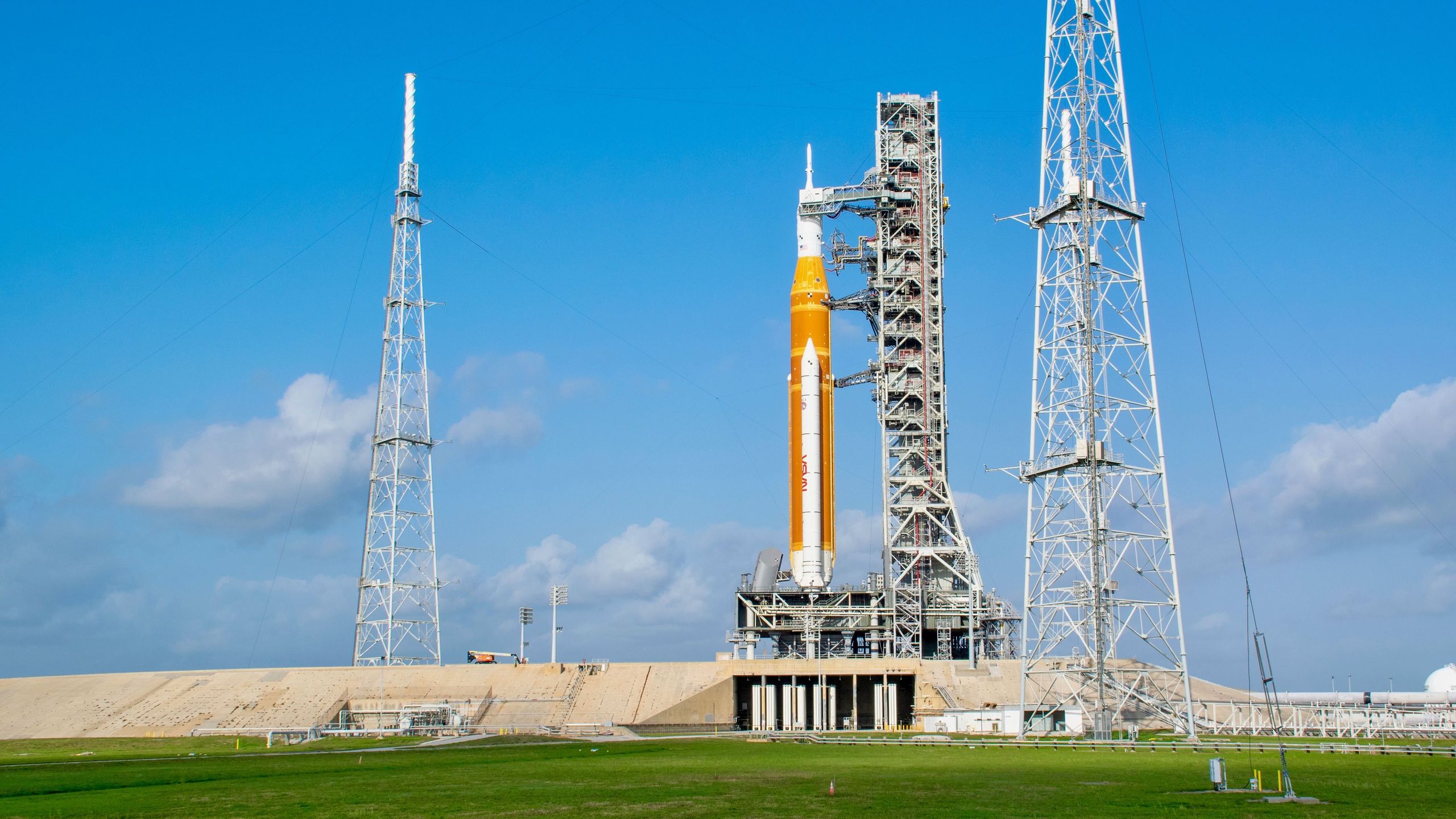
Fifty years after humanity last set foot on the lunar surface, NASA stands on the precipice of a new era of deep space exploration. The agency’s ambitious Artemis program is forging ahead, with the highly anticipated Artemis II mission still firmly on track to launch its four-person crew around the Moon as early as April 1. This crucial test flight marks the first crewed journey to the Moon's vicinity in over half a century, laying vital groundwork for future lunar landings and eventual expeditions to Mars.
A New Chapter in Human Spaceflight
Artemis II is more than just a spaceflight; it's a profound statement of intent. Following the resounding success of the uncrewed Artemis I mission, which thoroughly tested the Space Launch System (SLS) rocket and Orion spacecraft in lunar orbit, Artemis II elevates the stakes significantly by adding human lives to the equation. This mission will see astronauts Reid Wiseman, Victor Glover, Christina Koch, and Canadian Space Agency astronaut Jeremy Hansen embark on a challenging ten-day journey, performing a lunar flyby and testing Orion's critical systems, including life support, communications, and navigation, with humans onboard. Their precise trajectory will take them further from Earth than any humans have ever traveled before, pushing the boundaries of what's possible.
The significance of this mission cannot be overstated. It represents the crucial bridge between robotic exploration and sustained human presence in deep space. Every maneuver, every system check, and every data point gathered will inform the subsequent Artemis III mission, which aims to land astronauts, including the first woman and first person of color, on the lunar South Pole. The experiences and insights gained from Artemis II will be invaluable in refining the procedures, technologies, and training necessary for establishing a long-term human presence on the Moon.
Meticulous Preparations and Minor Hurdles
NASA's confident declaration, "We are ready," underscores the meticulous preparation and rigorous testing that has gone into every facet of the Artemis II mission. Years of development, countless hours of simulations, and extensive hardware assembly have culminated in this moment. However, deep space missions of this complexity are never without their challenges. As the description notes, "There are little things that we find as we go that we're working right there, but none of them are threatening the first right now." This candid admission reflects NASA's transparent and proactive approach to problem-solving.
These "little things" typically involve minor anomalies discovered during integrated system tests, software updates, or component checks. For an undertaking as intricate as a human-rated lunar mission, such discoveries are not unexpected but rather a testament to the stringent safety protocols and diligent engineering reviews in place. NASA's ability to identify and address these issues promptly, ensuring they do not escalate into mission-critical concerns, is a hallmark of its engineering excellence. The agency's commitment to safety and mission success remains paramount, ensuring that every astronaut aboard Orion is as protected as current technology allows.
Beyond the Orbit: Paving the Way to Mars
While the Moon is the immediate destination for Artemis II, the ultimate horizon for the program extends far beyond. The Artemis missions are conceived as a stepping stone towards establishing a sustained human presence on Mars. By developing capabilities for living and working on the Moon, testing advanced propulsion systems, and understanding the long-term effects of deep space on the human body, NASA is systematically building the foundation for interplanetary travel. The experiences from Artemis II will provide invaluable data on crew health, radiation exposure, and operational efficiencies critical for a multi-year journey to the Red Planet.
The return to the Moon is not merely a nostalgic revisit but a strategic pivot towards humanity's multi-planetary future. It fosters international collaboration, drives technological innovation, and inspires a new generation of scientists and engineers. As the world watches NASA prepare for this historic launch, the promise of discovery and the allure of venturing further into the cosmos grow stronger, reaffirming humanity's innate drive to explore the unknown.
As April 1 approaches, the excitement is palpable. Artemis II represents not just NASA's readiness, but humanity's collective aspiration to push beyond Earth's confines, redefine our place in the universe, and embark on the next grand chapter of space exploration. The journey to the Moon, once a distant dream, is once again within our grasp, leading the way to a future that promises even greater cosmic achievements.