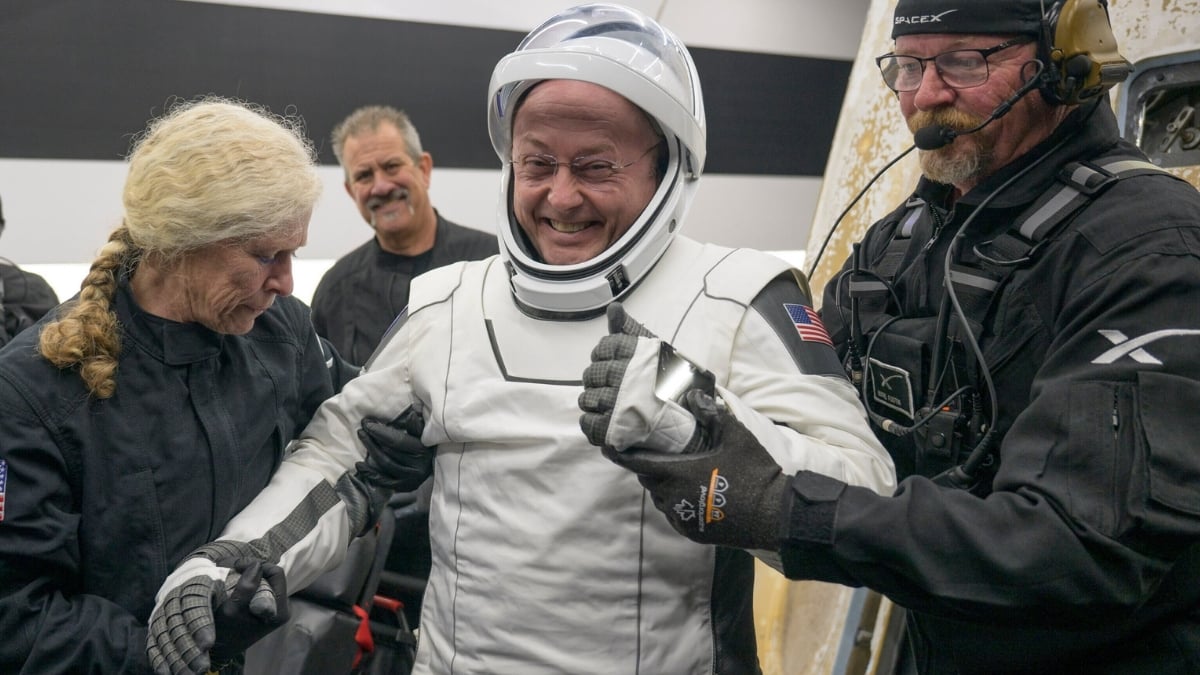
The Silent Frontier: NASA's Unexplained Astronaut Illness and the Looming Questions for Deep Space
CAPE CANAVERAL, Fla. — In the vast, silent expanse of low-Earth orbit, astronauts face challenges unimaginable to those on solid ground. Yet, even with decades of meticulous preparation and advanced medical protocols, space still holds profound mysteries. A recent, unsettling incident involving a NASA astronaut, who suddenly lost the ability to speak and required the agency's first-ever medical evacuation from the International Space Station (ISS), has exposed a critical new frontier of uncertainty: the human body's unpredictable reactions to the cosmos, and the limits of our current medical understanding.
The Unprecedented Incident: A Voice Lost in Orbit
Details surrounding the astronaut's illness remain sparse, shrouded in the customary discretion that accompanies medical events within NASA. What is known, however, is deeply concerning. Earlier this year, an astronaut aboard the ISS experienced a sudden onset of symptoms, most prominently a profound inability to speak. This wasn't a communication equipment malfunction or a transient bout of space sickness; it was a severe physiological event that prompted an emergency medical evacuation – a scenario NASA had long planned for but never had to execute until now.
The decision to extract an astronaut from orbit prematurely is not taken lightly. It involves complex logistics, significant cost, and a disruption to scientific missions. That NASA deemed it necessary underscores the severity of the astronaut's condition and the immediate concern for their well-being. Upon return to Earth, a battery of tests commenced, with medical teams from across disciplines working tirelessly to diagnose the baffling ailment.
A Baffling Medical Puzzle: Doctors Stumped
Months later, the medical community remains without answers. Despite extensive analysis, doctors have been unable to pinpoint the exact cause of the astronaut's sudden incapacitation. This lack of explanation is perhaps the most disquieting aspect of the entire event. Every conceivable cause, from neurological issues and environmental toxins to previously unknown forms of space adaptation syndrome, has likely been investigated, yet a definitive diagnosis eludes them.
This medical ambiguity opens a Pandora's Box of questions. Was it an idiosyncratic reaction unique to this individual? Was it related to the unique physiological stressors of microgravity, radiation exposure, or the confined, recycled environment of the ISS? The absence of a clear cause not only leaves the affected astronaut and their family in limbo but also sends ripples of concern throughout the entire space exploration community.
Implications for Humanity's Deep Space Ambitions
The incident casts a long shadow over NASA's ambitious plans for long-duration missions to the Moon and Mars. If a seemingly healthy astronaut can suffer such a severe, undiagnosed illness on the relatively controlled environment of the ISS, what does this portend for journeys lasting months or even years, millions of miles from Earth, with no possibility of rapid return or immediate specialized medical care?
- Medical Autonomy: Future missions will require significantly more advanced on-board diagnostic and treatment capabilities, pushing the boundaries of telemedicine and robotic surgery.
- Pre-Flight Screening: The incident may necessitate a re-evaluation of astronaut selection criteria and pre-flight health screenings, searching for subtle biomarkers or predispositions previously overlooked.
- Environmental Factors: It could force a deeper look into the long-term effects of the ISS environment itself, including air quality, microbial ecosystems, and radiation shielding.
- Psychological Impact: The fear of an unknown, untreatable illness could add immense psychological stress to already demanding missions.
The fundamental challenge is that space medicine is still in its infancy compared to terrestrial medicine. The small sample size of humans who experience spaceflight means that rare, complex physiological reactions can remain undetected until an event like this occurs. Each astronaut is, in essence, a living experiment, and every unexplained symptom is a data point demanding rigorous scientific inquiry.
NASA's Proactive Stance and Future Research
While the lack of answers is frustrating, it also serves as a potent catalyst for enhanced research. NASA will undoubtedly redouble its efforts in space medicine, focusing on:
- Developing more sophisticated real-time physiological monitoring systems for astronauts.
- Investing in artificial intelligence and machine learning to analyze vast datasets of astronaut health, identifying subtle patterns.
- Funding research into the unique neurological and immune system responses to long-duration microgravity and radiation.
- Enhancing training for astronauts in basic medical procedures and emergency response.
The health and safety of its astronauts remain NASA's paramount concern. This incident, while distressing, provides invaluable (if unwelcome) data that will shape the protocols and technological advancements necessary to safeguard future generations of spacefarers.
Conclusion: The Unfolding Saga of Human Adaptation
The case of the silent astronaut serves as a stark reminder that space is an environment of profound beauty and unparalleled danger. It challenges our assumptions about human resilience and the completeness of our scientific knowledge. As humanity pushes further into the solar system, we must not only master the physics of rocket science and robotics but also meticulously understand the delicate biology of the human body in an alien environment.
The unknown illness, far from being a setback, is an urgent call to action. It is a critical lesson in the ongoing saga of human adaptation, demanding innovation, humility, and an unwavering commitment to unraveling the deepest mysteries of space, both external and internal. Only then can we truly be ready for the silent, boundless frontiers that await.