Beyond the Moonshot: The Global Guardian Angels Protecting Artemis II's Return
As Artemis II prepares to etch its name in the annals of space exploration, a silent, global network stands ready, a testament to humanity's unwavering commitment to astronaut safety.
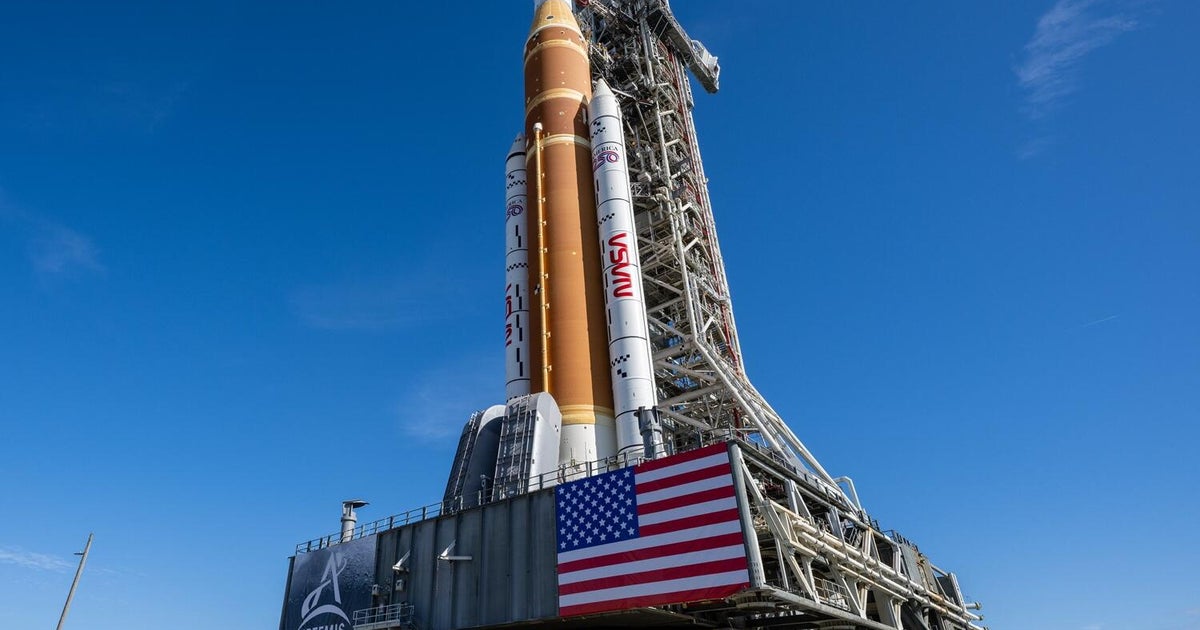
The countdown for Artemis II, a monumental step in humanity's return to lunar orbit, is ticking. From Kennedy Space Center in Florida, the four-person crew is poised for a journey that will test the limits of human ingenuity and resilience. Yet, while the world's gaze is fixed on the stars, an equally impressive, albeit less publicized, operation is being meticulously coordinated here on Earth: a global rescue crew, primed for any contingency space may present.
The Unseen Safety Net: A Symphony of Global Readiness
The dream of sustained human presence beyond Earth's orbit hinges not just on revolutionary spacecraft, but on an ironclad commitment to astronaut safety. For Artemis II, this commitment manifests as a complex, multi-national web of air force rescuers, medical experts, and recovery specialists. This isn't just a local operation; it's a global consortium designed to respond to every conceivable scenario, from an emergency splashdown in the vast expanse of the ocean to an unforeseen landing aberration on terra firma.
Imagine the challenges: a capsule returning from the moon, possibly experiencing an anomaly, requiring precise location and rapid intervention. The rescue protocols account for various points of impact across the globe, necessitating international agreements and the mobilization of assets from multiple countries. Teams practice meticulously, simulating everything from deep-sea recovery in rough weather to medical stabilization under extreme conditions. Their training encompasses advanced egress techniques, life support in isolated environments, and critical medical care, all under immense pressure.
Lessons from History: The Apollo Legacy and Beyond
The concept of a dedicated recovery force isn't new; it's deeply ingrained in the fabric of human spaceflight, forged in the crucible of early space missions. The dramatic rescue of Apollo 13, against all odds, stands as a stark reminder of the unpredictable nature of space and the vital necessity of a robust recovery plan. While the technology has advanced exponentially since then, the fundamental principle remains: prepare for the best, but be ready for the worst.
Artemis II, as a precursor to Artemis III's historic human lunar landing, represents a significant escalation in mission complexity and duration. This amplifies the need for a comprehensive, redundant, and agile rescue infrastructure. The lessons learned from previous missions, combined with cutting-edge simulation and training, ensure that the rescue teams are not merely reactive, but proactively prepared for the unique challenges of deep-space return.
Future Implications: Laying the Groundwork for Lunar Living
The meticulous planning for Artemis II's safety has far-reaching implications beyond this single mission. It is actively shaping the future of space exploration, particularly as humanity contemplates sustained lunar presence and eventual journeys to Mars. Establishing and refining these global rescue protocols now is crucial for scaling up future missions, ensuring that the increasing ambition of our space endeavors is matched by an equally robust commitment to the lives of our pioneering astronauts.
The knowledge that such a dedicated, highly trained global team stands ready offers immense psychological reassurance to the astronauts, their families, and the public. It transforms the perceived risk of space travel from an existential threat into a calculated, managed challenge. This ethos of safety, woven into every aspect of the Artemis program, underscores a profound truth: humanity's reach for the stars is fundamentally an act of faith in our collective ability to overcome adversity, together.
As Artemis II embarks on its historic voyage, let us not only celebrate the bold explorers venturing into the cosmos but also acknowledge the unsung heroes on Earth, whose vigilance and readiness form the silent, indispensable bedrock of our cosmic dreams.