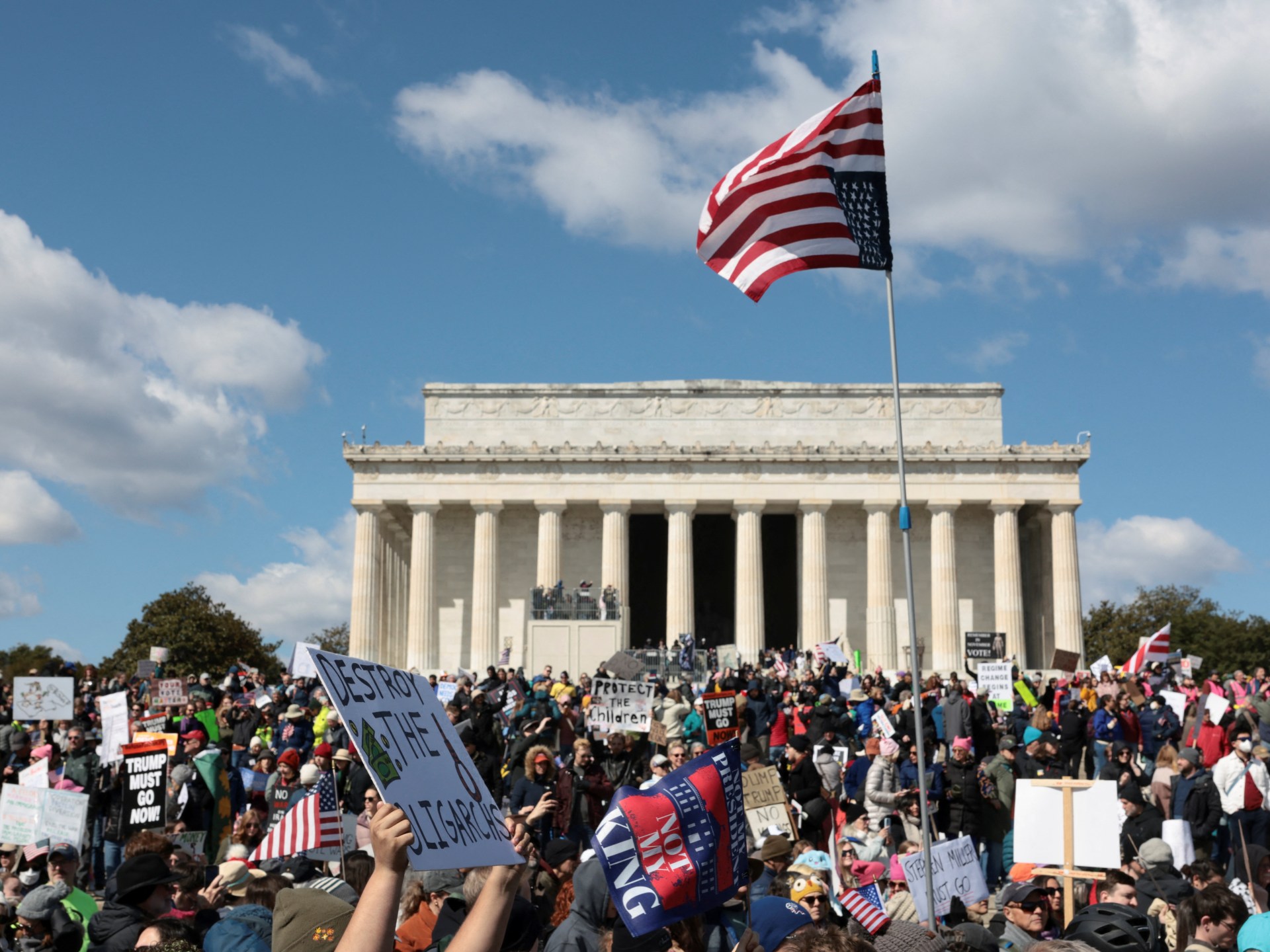
Unrest Unbound: 'No Kings' Protests Escalate Amidst War and a Second Trump Term
By The NovaPress Editorial Board
The streets of cities across the United States are once again alight with the fervent energy of dissent, as the "No Kings" movement stages its third major wave of protests. These demonstrations, a recurring symbol of anti-authoritarian sentiment since President Trump began his second term, now carry an intensified weight, framed by the shadow of the recently ignited joint US and Israeli war against Iran. This latest round of rallies isn't merely a continuation; it marks a significant escalation, intertwining long-standing domestic grievances with burgeoning opposition to foreign military intervention.
The Slogan's Potency: A Deep Dive into "No Kings"
The phrase "No Kings" serves as more than just a catchy protest slogan; it's a potent ideological declaration deeply rooted in American revolutionary ideals. Historically, it evokes the colonists' rejection of monarchical rule and unchecked executive power. In the contemporary context, it reflects a profound distrust of centralized authority and a demand for greater accountability from the nation's highest office. Since President Trump's second term commenced, this cry has resonated with diverse groups concerned about executive overreach, constitutional norms, and the balance of power. The initial two rounds of protests established a baseline of opposition, focusing on perceived abuses of power and challenges to democratic institutions. This third iteration, however, introduces a dramatic new dimension.
War's Shadow: A Catalyst for Escalation
The outbreak of the joint US and Israeli military campaign against Iran, just one month prior to these latest protests, has undeniably injected a new urgency and a palpable anti-war sentiment into the "No Kings" demonstrations. What began as a movement primarily focused on domestic governance and presidential conduct has now broadened its scope to encompass critical foreign policy objections. The swift pivot from domestic concerns to international conflict has likely galvanized a new cohort of protesters, those who might not have joined the earlier "No Kings" rallies but are deeply troubled by the prospect of a prolonged war in the Middle East. This convergence of anti-authoritarianism with anti-war activism creates a powerful, potentially volatile cocktail of dissent.
Geographic Spread and the Minnesota Focus
While reports indicate demonstrations spanning cities across the United States, the specific mention of a "Minnesota focus" suggests potential regional hotspots where local grievances might be intertwining with national discontent. Minnesota, often a bellwether for progressive activism and social justice movements, could be experiencing a particularly intense confluence of factors – perhaps related to local political dynamics, specific community impacts of the war, or a historical propensity for organized civil disobedience. This localized intensity points to the decentralized yet interconnected nature of modern protest movements, capable of erupting simultaneously across vast geographic distances while maintaining distinct regional characteristics.
Future Implications: A Nation at a Crossroads
The convergence of deep-seated domestic political grievances with fervent opposition to foreign military intervention signals a potentially volatile period ahead for the United States. The "No Kings" protests are no longer merely reactive; they are evolving, adapting to a rapidly changing geopolitical landscape. Key questions emerge: Will these disparate strands of discontent – anti-authoritarianism, anti-war sentiment, and localized grievances – coalesce into a broader, more unified anti-establishment coalition? How will the Trump administration respond to this escalating pressure, both domestically and internationally? The government's handling of these protests and its ongoing foreign policy decisions will undoubtedly shape public opinion, influence upcoming electoral cycles, and ultimately test the resilience of democratic institutions.
The "No Kings" movement, now amplified by the drumbeat of war, is more than just a momentary outburst; it is a critical barometer of profound public discontent. Its trajectory in the coming months will be a crucial indicator of the health of American democracy, the limits of executive power, and the nation's willingness to engage in or resist foreign conflicts. As the protests continue to unfold, NovaPress will provide in-depth analysis of their impact and evolution.