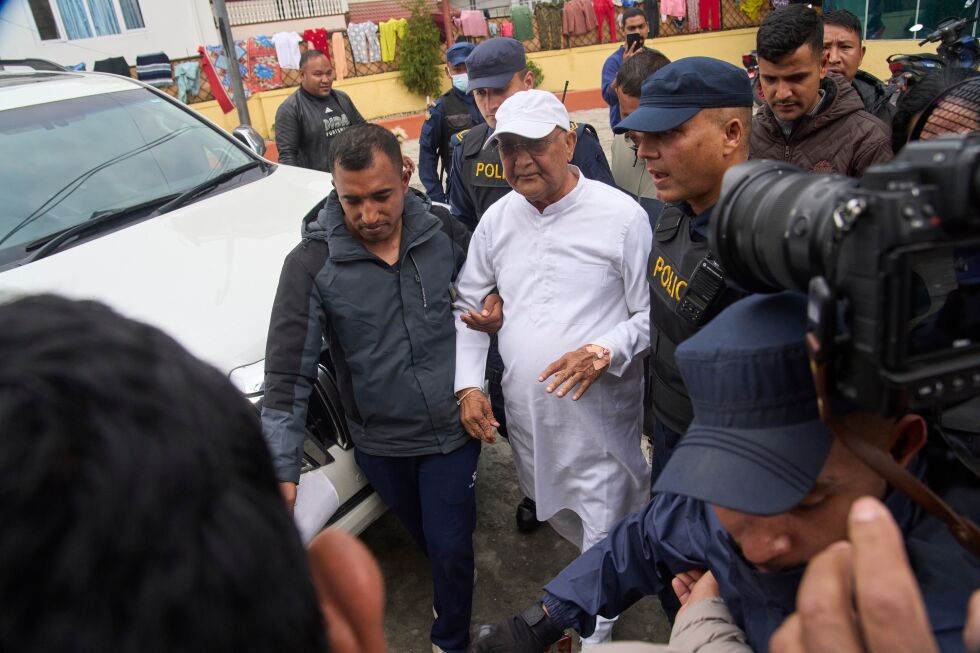
KATHMANDU, Nepal – The political landscape of Nepal was profoundly shaken early Saturday morning as police announced the arrest of former Prime Minister Khadga Prasad Oli, a towering figure in the nation's powerful Communist Party. The dramatic apprehension, which also included a former home minister, stems from the violent protests that gripped the nation in September, leading to dozens of deaths and ultimately toppling Oli’s government.
This isn't merely a high-profile arrest; it's a potential watershed moment for Nepal, signaling a robust — albeit challenging — assertion of judicial and democratic accountability at the highest echelons of power. For a country long grappling with political instability, ethnic tensions, and the delicate balance of its republican democracy, Oli's arrest over protest-related fatalities injects an unprecedented dynamic into its already volatile political narrative.
The September Unrest: A Nation Divided
The protests of September were not an isolated incident but the culmination of deep-seated grievances. While the immediate trigger for the demonstrations isn't explicitly detailed in the provided snippet, historical context suggests such widespread unrest in Nepal often relates to constitutional amendments, ethnic representation, or resource distribution. These particular protests were notable for their intensity, leading to significant loss of life and ultimately the collapse of the sitting government led by Oli. The fact that the police investigation has now reached the former prime minister and his then-home minister implies that authorities believe there was a direct link between their actions (or inactions) and the casualties.
The scale of the violence, described as "toppling the government," underscores the severity of the crisis. Such events leave indelible scars on the national psyche and create immense pressure for justice. The arrest of top officials suggests a commitment to address these wounds, even if it risks reigniting political fires.
A Precedent-Setting Move: Accountability at the Top
In many developing democracies, and indeed globally, holding former heads of state directly accountable for actions taken during their tenure, especially regarding public order and protest management, is a rarity. Often, political leaders are shielded by legal immunities or the sheer difficulty of proving direct culpability. Oli's arrest, therefore, sets a powerful precedent. It sends a clear message that no one, regardless of their past office or political stature, is above the law when it comes to grave matters like civilian deaths during state-managed crises.
For the Nepali Communist Party, of which Oli remains a powerful figure, this arrest will undoubtedly be seen as a targeted political attack by some factions, potentially galvanizing his base. Conversely, it could also be viewed by the broader public and opposition parties as a victory for the rule of law and an indicator of a more mature democratic process. The judiciary's independence and resolve will be under intense scrutiny as the case proceeds.
Implications for Nepal's Future Political Landscape
The timing of the arrest, following the toppling of Oli's government and subsequent new elections, adds another layer of complexity. It raises questions about the political motivations behind the timing and the potential impact on the nascent political stability following the electoral transition. Oli’s popularity, particularly within his party, means his incarceration could spark new waves of protest or political maneuvering, disrupting the fragile peace. The handling of his trial will be a defining moment for Nepal's legal and political institutions.
Furthermore, this event will reverberate across Nepal's diverse political spectrum, from the powerful monarchist factions to various regional and ethnic groups. It could empower movements advocating for greater accountability from political leaders or, conversely, create deep rifts that further polarize the nation ahead of any future electoral cycles.
A Global Echo of Justice?
Beyond Nepal's borders, this development serves as a stark reminder to political leaders everywhere that accountability for human rights abuses and mismanagement during civil unrest can eventually reach the highest offices. In an era where protests against governments are increasingly common, and state responses are under intense global scrutiny, Nepal’s bold move could inspire similar actions in other nations struggling with past injustices.
As the investigation unfolds and legal proceedings commence, the world will be watching Nepal closely. The outcome of this high-stakes trial will not only determine the fate of a former prime minister but will also shape the trajectory of Nepal's democratic journey and its commitment to upholding justice for its citizens.