Microgravity's Marvel: Unraveling the True Story Behind Don Pettit's 'Tentacled Object' on the ISS
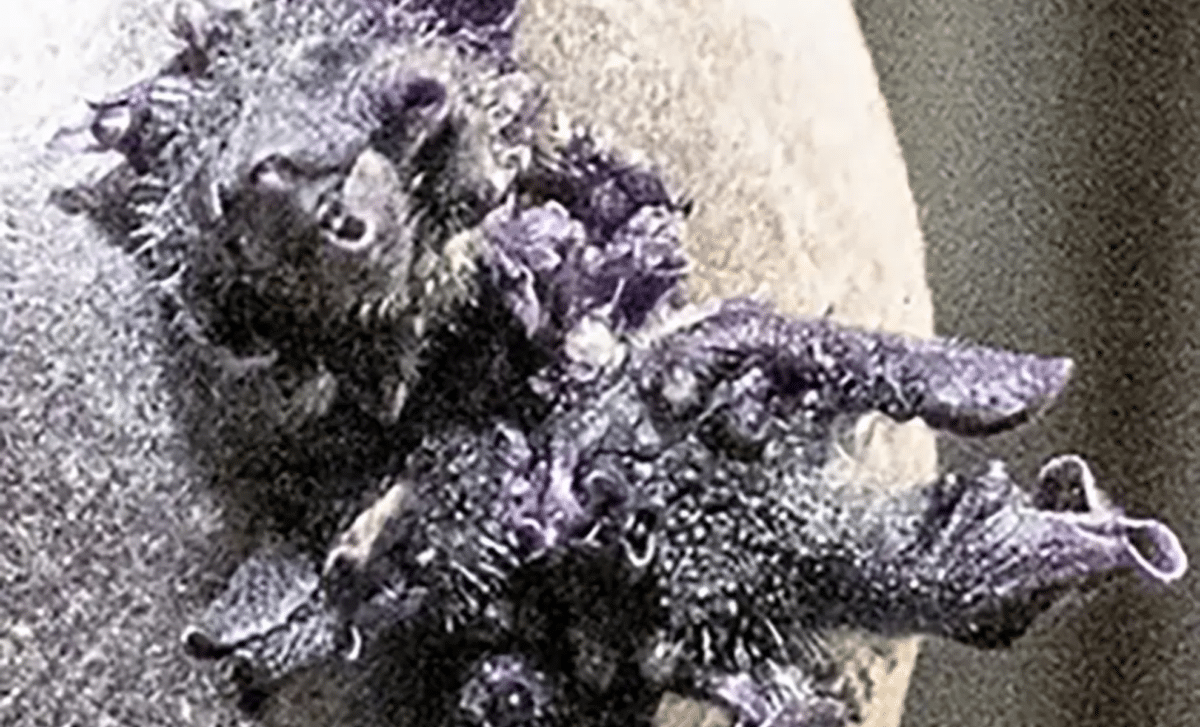
The internet exploded with speculation. A single photograph, shared by veteran NASA astronaut Don Pettit, depicted a bizarre, tentacled entity seemingly "growing" within the confines of the International Space Station (ISS). Was it an alien invader? A dangerous biological anomaly? Social media buzzed with theories, fueling both wonder and alarm. Yet, as often happens when venturing into the cosmic unknown, the truth proved to be far more nuanced – and in its own way, equally astonishing – than any initial conjecture.
The Man Behind the Lens
Don Pettit isn't just any astronaut; he's a scientist, an inventor, and a keen observer with three spaceflights and over 370 days in orbit under his belt. His penchant for documenting the peculiar and beautiful aspects of life in microgravity has endeared him to millions. From capturing stunning Earth views to conducting zero-G experiments with everyday objects, Pettit's curiosity is infectious. It was this very curiosity that led him to photograph the enigmatic structure, inadvertently kicking off a global conversation about life, space, and perception.
The Discovery and The Frenzy
The image itself was captivating: intricate, thread-like structures, vaguely reminiscent of an alien organism or a deep-sea creature, unfurling against the sterile backdrop of an ISS module. Pettit's casual caption only added to the mystique, hinting at something truly unusual. Almost instantly, the photo went viral. Forums buzzed with "is it alien?" questions, news outlets picked up the story, and the public held its breath, awaiting an official explanation for what appeared to be biological growth where none was expected.
Microgravity's Unseen Artistry: The Unexpected Revelation
The initial fears of an extraterrestrial intrusion or a station-threatening pathogen were, thankfully, unfounded. The "tentacled object" was, in fact, a remarkably complex and visually stunning biofilm formation—a colony of common terrestrial fungi (Mucor circinelloides, a known extremophile often found in human environments) that had developed in an unprecedented manner due to the unique conditions of microgravity.
Scientists later revealed that a minute, unnoticeable moisture buildup, combined with a nutrient-rich dust particle, provided the perfect substrate. In Earth's gravity, such fungi typically form compact, fuzzy patches. However, in the absence of gravitational pull, the fungal hyphae, seeking nutrients and moisture, extended outwards in elaborate, three-dimensional tendrils. Without the downward force, surface tension and subtle air currents became the dominant forces shaping its growth, leading to the bizarre, almost artistic, "tentacled" morphology. This was not uncontrolled contamination, but rather a rare and stunning example of microbial adaptation—a benign but visually striking instance of how life adapts to extreme environments.
Scientific Deep Dive: Implications for Space Exploration
This incident, while resolved with a terrestrial explanation, offered invaluable insights into several critical areas of space science:
- Microbial Adaptation: It underscored how even common Earth organisms can exhibit profoundly different growth patterns and morphologies in microgravity. This is crucial for understanding potential biohazards, but also for exploring the resilience of life.
- ISS Environment Monitoring: The event highlighted the importance of continuous and meticulous environmental monitoring on space stations. While benign, such growths could, in other circumstances, impact equipment or crew health.
- Astrobiology and Perception: The global reaction served as a potent reminder of humanity's fascination with extraterrestrial life and our propensity to interpret the unknown through familiar lenses. It also offered a case study in what seemingly "alien" structures might actually be: life adapting in extreme ways.
- Materials Science in Space: Understanding how biofilms form and adhere in microgravity is vital for designing future spacecraft materials that resist microbial growth, ensuring long-term mission success and crew safety.
Beyond the Image: A New Perspective
Don Pettit's photograph became more than just a viral sensation; it evolved into a teachable moment. It demonstrated that even in the most sterile and controlled environments, life finds a way to surprise us. It challenged our preconceptions of what life "should" look like and reaffirmed the boundless capacity for adaptation inherent in even the simplest organisms. The ISS, often seen as a marvel of engineering, proved once again to be a vibrant, living laboratory, full of unforeseen discoveries waiting to be made.
Conclusion
The 'tentacled object' on the ISS was not an alien, but a testament to the incredible ingenuity of life on Earth, even when propelled into orbit. It’s a compelling narrative that blends scientific discovery with public engagement, reminding us that the universe’s most profound mysteries sometimes reveal themselves in the most unexpected forms – and that sometimes, the greatest wonders are simply our own familiar biology, seen through a new, microgravitational lens.