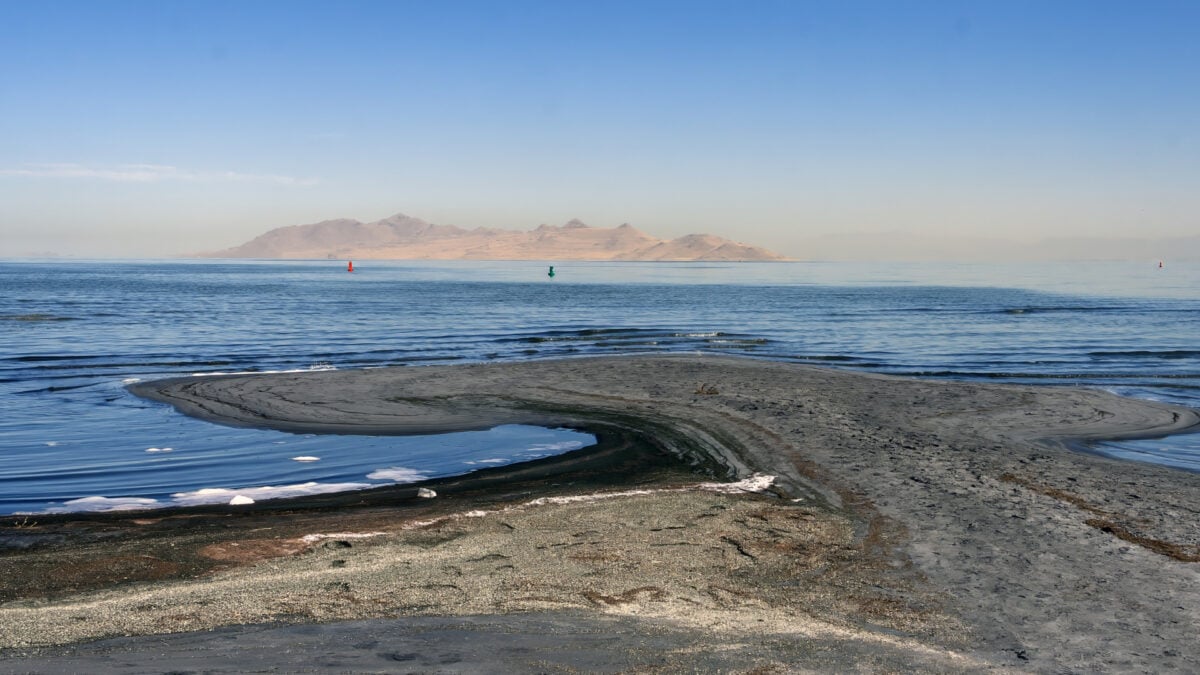
The Great Salt Lake's Hidden Miracle: A Subterranean Freshwater Reservoir Emerges
For years, the story of the Great Salt Lake has been one of slow, agonizing decline. Its shrinking shores, the looming threat of toxic dust, and the ecological devastation to its unique ecosystem have painted a bleak picture of an environmental disaster in slow motion. But recent scientific revelations are now offering a glimmer of hope, suggesting that beneath its increasingly saline surface lies a vast, hidden secret: a deep freshwater reservoir that could dramatically alter the lake's fate.
A Crisis Under Threat: The Shrinking Heart of Utah
The Great Salt Lake, the largest saltwater lake in the Western Hemisphere, is not merely a scenic marvel; it's a critical ecological engine and economic driver for Utah. Its hypersaline waters are home to a unique ecosystem supporting brine shrimp and brine flies, which in turn sustain millions of migratory birds. However, decades of water diversion for agriculture, urban development, and exacerbated by persistent drought conditions linked to climate change, have led to a precipitous drop in the lake's water levels. Its surface area has shrunk by more than two-thirds from historic averages, exposing vast expanses of lakebed laced with arsenic, selenium, and other heavy metals. As these toxic dusts become airborne, they pose significant health risks to the millions living along the Wasatch Front and beyond, signaling an environmental catastrophe of immense proportions.
Unveiling the Unseen: The Airborne Survey
In a groundbreaking effort to understand the lake's complex hydrology, scientists employed an airborne electromagnetic survey, an advanced geophysical technique that uses electromagnetic fields to map subsurface electrical conductivity. By measuring how electrical currents flow through the ground, researchers can differentiate between saline water (highly conductive) and freshwater (less conductive) deep beneath the Earth's surface. The results were nothing short of astonishing: beneath the Great Salt Lake's highly saline playa, a deep freshwater reservoir was uncovered. This subterranean aquifer extends far beyond previous estimations, suggesting a much larger and more complex hydrological system than previously understood, actively feeding into the lake from below.
The Science Behind the Subterranean Supply
The existence of a vast freshwater reservoir beneath a highly saline body like the Great Salt Lake presents intriguing scientific questions. It suggests complex geological structures and hydrological pathways are at play, likely involving ancient aquifers or a significant inflow of freshwater from surrounding mountain ranges and basins, protected from the lake's salinity by impermeable geological layers. This discovery challenges conventional assumptions about the lake's water budget and recharge mechanisms, highlighting the intricate interplay between surface water, groundwater, and geological formations. Understanding the dynamics of this deep reservoir—its volume, flow rates, and connectivity to surface sources—is now paramount for both scientific inquiry and practical application.
Implications and Future Hope: A Lifeline for the Lake?
The revelation of this freshwater cache injects a vital dose of optimism into the dire narrative surrounding the Great Salt Lake. While not a silver bullet, this subterranean supply could serve as a crucial lifeline, potentially slowing the lake's decline, helping to dilute its increasing salinity, and supporting its struggling ecosystem. Accessing and sustainably managing this newly identified resource could offer a supplementary water source to replenish the lake, mitigate dust production from exposed lakebeds, and foster a healthier environment for its unique flora and fauna. However, the path forward is fraught with challenges. Determining the feasibility of tapping into this reservoir, the potential environmental impacts of extraction, and the long-term sustainability of such an endeavor requires extensive research, technological innovation, and careful policy development.
Navigating the Path Forward
The discovery of this vast subterranean freshwater reservoir beneath the Great Salt Lake is more than just a scientific curiosity; it's a potential game-changer in the desperate fight to save one of North America's most vital, yet threatened, natural wonders. It necessitates a paradigm shift in how we approach water management in the region, demanding integrated strategies that consider both surface and subsurface hydrology. Further research is essential to quantify the reservoir's capacity, assess its renewability, and understand its interactions with the lake's surface waters. With careful planning, scientific rigor, and collaborative efforts between researchers, policymakers, and local communities, this hidden miracle could provide the critical support needed to steer the Great Salt Lake away from the brink of irreversible collapse and ensure its ecological and economic future.