Escalation and Defiance: Iran's Missile Barrage and the Geopolitical Gauntlet
By NovaPress Editorial Board | March 24, 2024
In a stark demonstration of rising regional tensions and outright defiance, Iran launched multiple waves of missiles at Israel on Tuesday, an action that reverberated across the Middle East and global capitals. This aggressive move, confirmed by the Israeli military, comes with a chilling layer of geopolitical messaging: a direct mockery of former U.S. President Trump's past assertions regarding joint international control over strategic waterways. The incident marks a dangerous escalation, underscoring the volatile dynamics at play and challenging the delicate balance of power in one of the world's most critical regions.
The Immediate Spark: Direct Confrontation
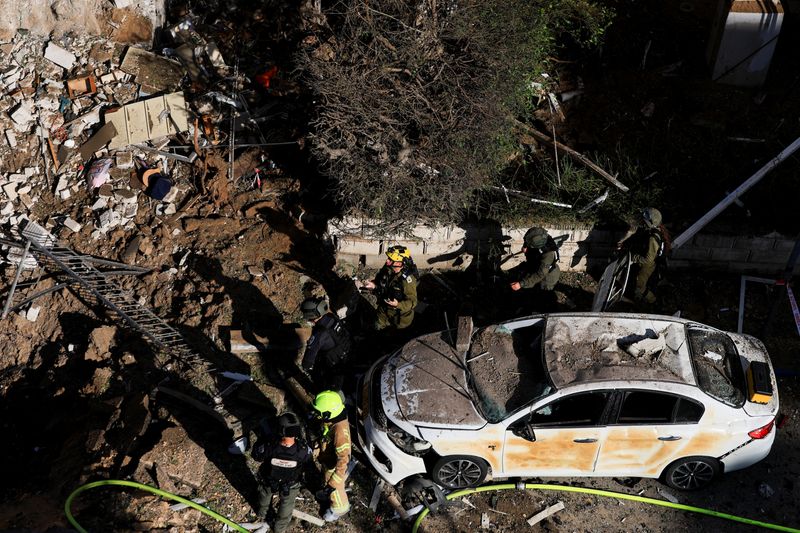
The missile attacks, originating from Iranian territory, represent a significant departure from previous proxy engagements, signaling a direct and overt confrontation. While details of specific targets and damage remain under assessment, the sheer act of launching a direct strike on Israeli soil carries immense symbolic and practical weight. It forces Israel into a defensive posture, tests its advanced missile defense systems, and immediately raises the specter of retaliation, pushing the region closer to a broader conflict. The implications for civilian populations and critical infrastructure are profound, elevating the crisis from a 'shadow war' to a more palpable threat.
A Calculated Provocation and the 'Strait' of Contempt
More than just a military strike, Iran's actions appear to be a calculated political statement. The report explicitly mentions Iran's mockery of former President Trump's past rhetoric concerning joint control of a 'strait.' While not specified in the initial report, this almost certainly refers to the Strait of Hormuz, a vital chokepoint for global oil shipments, which Iran has repeatedly threatened to close. Trump, during his presidency, often advocated for robust international presence and control in such strategic areas. Iran's actions, therefore, serve as a direct repudiation of such notions, asserting its unilateral regional power and its intent to dictate terms in its sphere of influence. This defiance is not merely aimed at a past US administration but signals a broader rejection of perceived Western hegemony and a bold assertion of Iran's strategic autonomy.
Deepening the Shadow War into Open Conflict
For decades, the animosity between Iran and Israel has largely played out through a 'shadow war' – a series of covert operations, cyberattacks, and proxy conflicts involving groups like Hezbollah and Hamas. Tuesday's missile barrage threatens to tear away this veil, transitioning the conflict into a more overt and dangerous phase. The direct nature of the attack bypasses proxies, placing the onus squarely on the two primary antagonists. This shift raises critical questions about deterrence, the efficacy of diplomatic efforts, and the potential for a cascading series of retributive actions that could engulf neighboring nations. The risk of miscalculation, already high in the region, has now reached alarming levels.
Implications for Regional Stability and Global Powers
The escalation has immediate and far-reaching implications. For regional stability, it means heightened alert levels, increased military readiness, and a severe test for existing alliances and security agreements. Countries like Saudi Arabia, the UAE, and Jordan will watch closely, assessing their own vulnerabilities and diplomatic options. Globally, the incident will force major powers, particularly the United States and European Union, to re-evaluate their strategies towards Iran. The prospect of an open conflict in the Middle East carries significant risks for global energy markets, international trade routes, and the broader fight against extremism. The challenge now lies in de-escalation, but Iran's bold move suggests a willingness to push boundaries, making a peaceful resolution an increasingly complex and distant prospect.
Iran's direct missile strike on Israel, coupled with its brazen political messaging, marks a pivotal moment in the ongoing geopolitical saga of the Middle East. It is a loud declaration of intent, challenging established norms and demonstrating a clear willingness to escalate. As the region holds its breath, the international community faces the daunting task of navigating this dangerous new phase, where the lines between shadow war and open confrontation have become perilously blurred, and the potential for catastrophic spillover looms large.