Hubble's Enduring Gaze: 36 Years of Redefining the Cosmos and Shaping Our Future Understanding
Next month, humanity's most cherished eye on the cosmos, the Hubble Space Telescope, will celebrate its 36th birthday. This monumental anniversary marks over three and a half decades of unparalleled discovery, breathtaking imagery, and a profound, lasting impact on our understanding of the universe. From peering into the nurseries of stars to unraveling the mysteries of dark energy, Hubble hasn't just observed the cosmos; it has fundamentally rewritten our cosmic story.
A Flawed Launch, A Flawless Legacy
Launched in 1990, Hubble’s early days were marred by a debilitating flaw in its primary mirror. Yet, through an audacious and unprecedented repair mission by Space Shuttle Endeavour astronauts in 1993, Hubble was not just fixed; it was reborn. What followed was an astronomical renaissance. Suddenly, images of distant galaxies, nebulae, and planets were not just clear but astonishingly detailed, free from the blurring effects of Earth's atmosphere. This immediate transformation cemented Hubble’s place in history, proving the immense value of space-based observatories.
Rewriting the Cosmic Textbooks
Hubble’s scientific contributions are vast and varied. It provided the most precise measurements yet for the expansion rate of the universe, leading to the groundbreaking discovery of dark energy, a mysterious force accelerating the universe's expansion. Its deep-field images, capturing thousands of galaxies in a tiny patch of sky, offered glimpses into the early universe, revealing galaxies just forming billions of years ago. It has scrutinized the atmospheres of exoplanets, mapped the distribution of dark matter through gravitational lensing, and observed the violent deaths of stars in supernovae, offering critical insights into stellar evolution and galactic dynamics.
More Than Just Data: An Icon of Inspiration
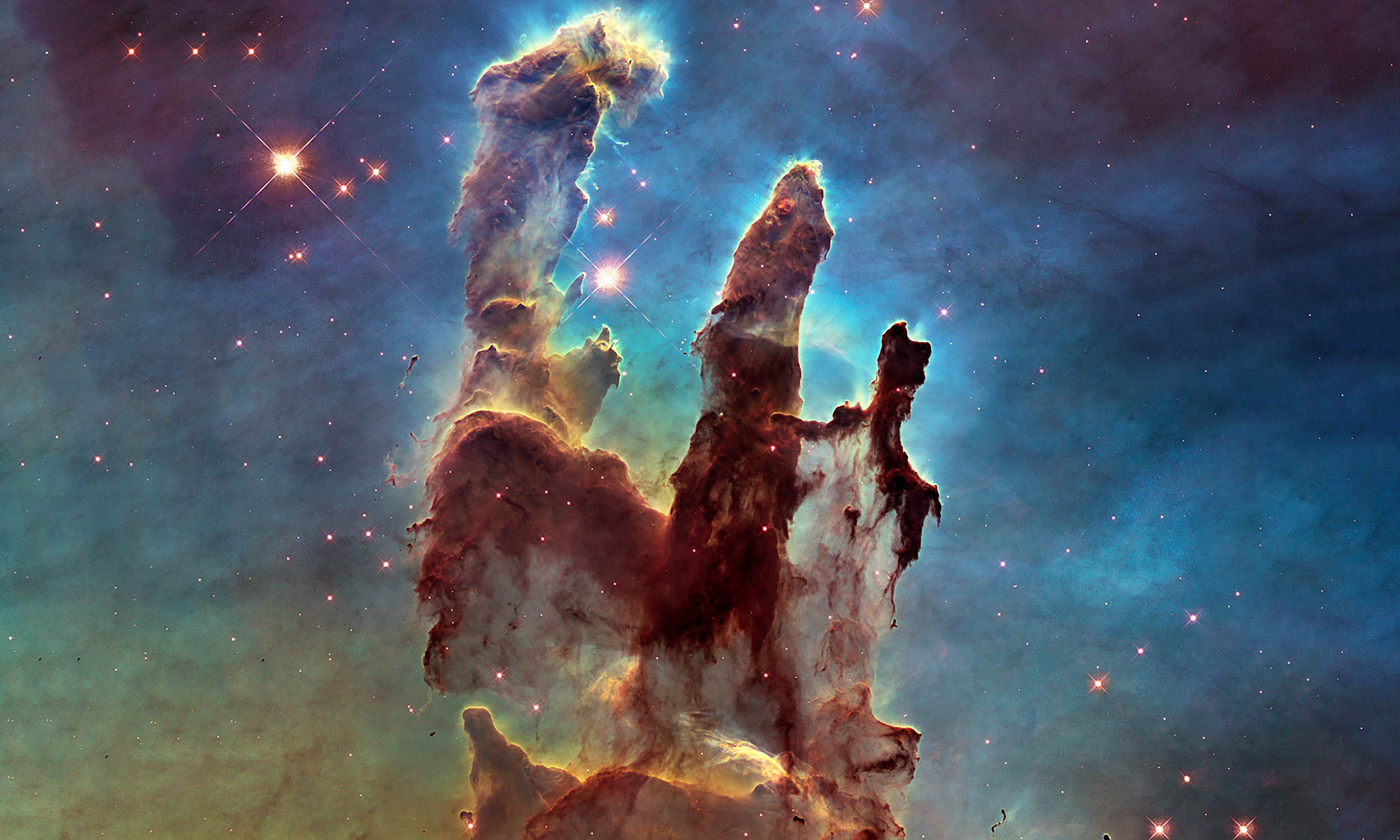
Beyond its scientific data, Hubble has gifted humanity an unparalleled visual journey through the cosmos. Its iconic images—the "Pillars of Creation" in the Eagle Nebula, the "Cosmic Cliffs" of the Carina Nebula, the "Sombrero Galaxy"—have transcended scientific circles to become cultural touchstones. These vibrant, awe-inspiring portraits of the universe have ignited public imagination, inspired countless budding scientists and artists, and offered a shared sense of wonder at our place in the vastness of space. As it did for its 35th birthday, NASA will undoubtedly release another gallery of stunning images, reminding us once again of its visual legacy.
Paving the Way for Future Gazes
As Hubble gracefully ages, its legacy is not just in its past discoveries but also in the path it has paved for future observatories. The engineering feats, operational experience, and scientific breakthroughs achieved by Hubble directly informed the design and goals of its successor, the James Webb Space Telescope (JWST). While JWST peers deeper into the infrared, complementing Hubble's visible and ultraviolet capabilities, Hubble continues to operate, providing crucial long-term data sets and serving as a vital partner in multi-wavelength astronomy. Its continued observations, even after 36 years, demonstrate remarkable longevity and an enduring capacity for discovery.
The Enduring Legacy of an Unblinking Eye
The Hubble Space Telescope stands as a testament to human ingenuity and our unquenchable thirst for knowledge. Its 36 years of service represent a golden age of observational astronomy, during which our cosmic address book expanded, our understanding of universal forces deepened, and our sense of wonder multiplied. As we anticipate its upcoming birthday, we celebrate not just a machine, but a legacy—a legacy that continues to inspire us to look up, to question, and to reach for the stars.