Beyond Earth: Unpacking SpaceX's Audacious Vision for Orbital Data Centers
WASHINGTON – In a move that could redefine the landscape of global data infrastructure, SpaceX CEO Elon Musk recently unveiled more technical details concerning the company’s ambitious plans to deploy an orbital data center constellation. While the financial specifics remain under wraps, the insights shared at a March 21 event in Austin paint a vivid picture of a future where data storage and processing transcend terrestrial boundaries, offering a glimpse into a truly 'above the clouds' computing paradigm.
The Cosmic Cloud: A New Frontier for Data
The concept of an orbital data center is as audacious as it is revolutionary. Imagine vast arrays of satellites, not merely relaying signals, but actively storing, processing, and analyzing data in real-time from low Earth orbit. This isn't just about extending internet access; it's about fundamentally altering how data is managed globally. For NovaPress, the implications are staggering: unprecedented low-latency access for remote regions, enhanced security through physical isolation from ground-based threats, and the potential to offload immense computational burdens from an increasingly strained terrestrial network.
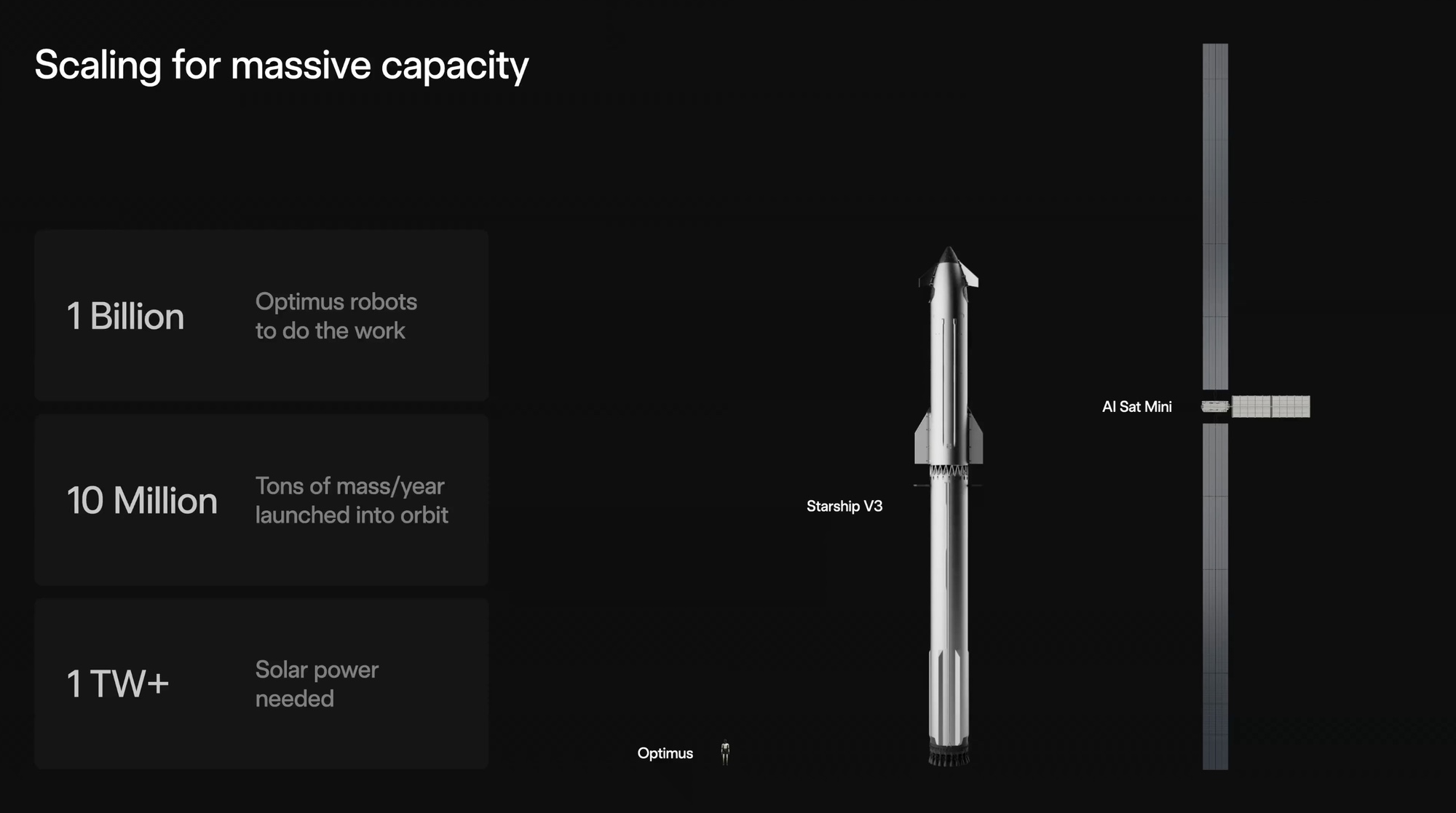
Musk's revelations, though technical, underscore a clear strategic vision. By leveraging SpaceX's established prowess in reusable rockets and its burgeoning Starlink constellation, the company is uniquely positioned to execute such a monumental undertaking. Starlink's inter-satellite laser links, already operational for internet traffic, could form the backbone for this orbital data network, enabling seamless, high-speed communication between orbital data nodes and ground stations.
Engineering the Heavens: Technical Hurdles and Innovations
Building a data center in space presents a myriad of complex engineering challenges. Unlike their ground-based counterparts, orbital data centers must contend with extreme radiation, vacuum conditions, microgravity, and the constant threat of space debris. SpaceX's technical disclosures likely touched upon innovations in radiation-hardened electronics, advanced thermal management systems capable of dissipating heat in a vacuum, and highly efficient power generation (presumably solar-based) and storage solutions.
Furthermore, the autonomy of these orbital systems will be paramount. With limited opportunities for direct human intervention, the satellites must possess sophisticated self-healing capabilities, robust error correction, and AI-driven operational intelligence to maintain performance and integrity. The density of computing power packed into each satellite will also be a critical factor, demanding miniaturization and efficiency far beyond current commercial standards.
Strategic Implications: Geopolitics, Economy, and Security
The emergence of orbital data centers carries profound strategic implications across various sectors. For national security, it offers a resilient and globally accessible infrastructure less vulnerable to localized attacks or natural disasters. For scientific research, it could enable unprecedented real-time processing of vast datasets from Earth observation, astronomy, or climate modeling. Commercially, it could unlock new possibilities for edge computing in space, supporting everything from autonomous spacecraft to in-orbit manufacturing and lunar missions.
Economically, this venture could create entirely new markets and disrupt existing ones. Traditional data center giants might face a formidable new competitor, while companies specializing in space-based services, data analytics, and secure communications could see explosive growth. The potential for global data sovereignty to shift, with data residing in an international (or non-national) orbit, also raises fascinating questions for regulators and policymakers worldwide.
The Road Ahead: Challenges and the Future Outlook
Despite the immense potential, the path to fully operational orbital data centers is fraught with challenges. Beyond the engineering feats, regulatory frameworks for data governance in space are nascent, and the economics of deploying and maintaining such a vast constellation, even for SpaceX, are formidable. Space debris mitigation strategies will become even more critical with increased hardware in orbit.
Nevertheless, if SpaceX succeeds, the impact will be transformative. It promises a future where data is truly ubiquitous, available with minimal latency from any point on Earth, and processed with unparalleled resilience. This isn't just about moving the cloud; it's about expanding humanity's digital infrastructure into the cosmos, laying the groundwork for a new era of global connectivity and computational power that truly knows no bounds.