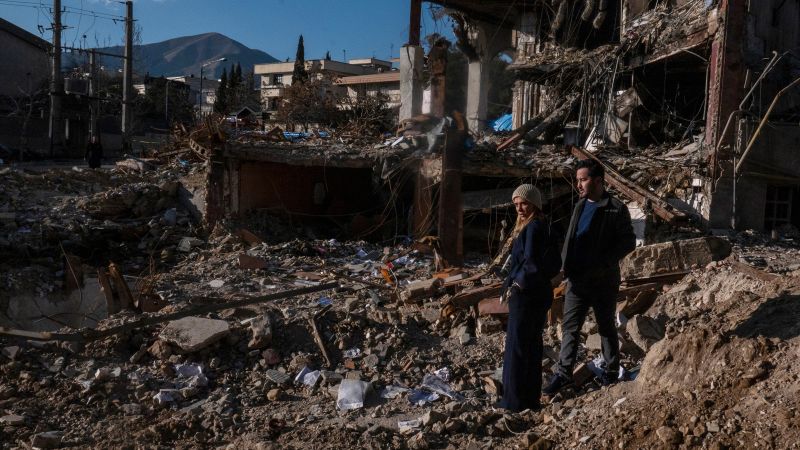
On the Brink: Iran's 'Irreversible' Retaliation Threat Pushes Middle East to the Precipice
The Middle East finds itself teetering on the edge of an unprecedented regional conflict following a stark ultimatum from Washington and an equally severe counter-threat from Tehran. In a dramatic escalation of long-standing tensions, US President Donald Trump issued a chilling warning regarding Iran's power infrastructure, prompting an immediate and unequivocal response from Iranian officials: if US bombs target its power plants, Iran vows to retaliate across the entire Middle East, ensuring the 'irreversible' destruction of critical infrastructure and energy sites.
The Ultimatum and the Red Line
President Trump's statement, delivered Saturday, indicated a readiness to order the bombing of Iran's power plants, a move that would represent a significant shift from previous strategies of sanctions and proxy engagement to direct military targeting of Iranian sovereign infrastructure. This threat crosses a crucial red line, implying a willingness to inflict severe damage on Iran's capacity to function, potentially crippling its economy and civilian life.
Iran's Unwavering and Potentially Catastrophic Response
Iranian officials and state media were swift to condemn Trump's threat, reiterating their long-held stance on retaliatory action. However, the specificity and severity of their current vow are particularly alarming. The promise to 'irreversibly' destroy critical infrastructure and energy sites 'across the Middle East' is not merely a threat against US assets or personnel; it implies a broader, region-wide targeting. This could encompass oil fields, refineries, shipping lanes (like the Strait of Hormuz, a global chokepoint for oil transport), communication networks, and power grids belonging not only to the US or its direct allies but potentially any nation perceived as complicit or even strategically vulnerable in the region.
Ramifications for Global Energy and Stability
The implications of such a scenario are staggering:
- Global Energy Crisis: Targeting energy sites in a region that accounts for a substantial portion of the world's oil supply would send crude prices skyrocketing, potentially triggering a global recession. Supply chains would be severely disrupted, impacting industries worldwide.
- Regional Destabilization: Iran's network of proxies and allies across the Middle East – from Yemen to Lebanon, Iraq, and Syria – could be activated, igniting multiple proxy wars and direct conflicts that would engulf the region in chaos.
- Humanitarian Catastrophe: Any widespread conflict of this nature would undoubtedly lead to immense civilian casualties, mass displacement, and a severe humanitarian crisis, far exceeding what the region has witnessed in recent decades.
- International Intervention: The scale of such a conflict would almost certainly draw in other global powers, risking a wider international confrontation and complicating any path to de-escalation.
The Dangers of Miscalculation
The current standoff highlights the perilous nature of high-stakes rhetoric. In an environment already rife with mistrust and historical grievances, a single miscalculation or misinterpretation of intent could rapidly spiral into an all-out war. The Strait of Hormuz, through which a fifth of the world's oil passes, remains a critical flashpoint, any disruption there having immediate global repercussions.
The Path Forward: De-escalation or Devastation?
As NovaPress, we urge a path of immediate de-escalation. The global community must prioritize diplomatic channels to avert a catastrophe that would reverberate far beyond the Middle East. The threats exchanged by Washington and Tehran are not merely political posturing; they outline a credible and terrifying scenario of regional devastation and global economic collapse. The time for measured diplomacy and a clear strategy for de-escalation is now, before the region crosses the point of no return and faces 'irreversible' destruction.