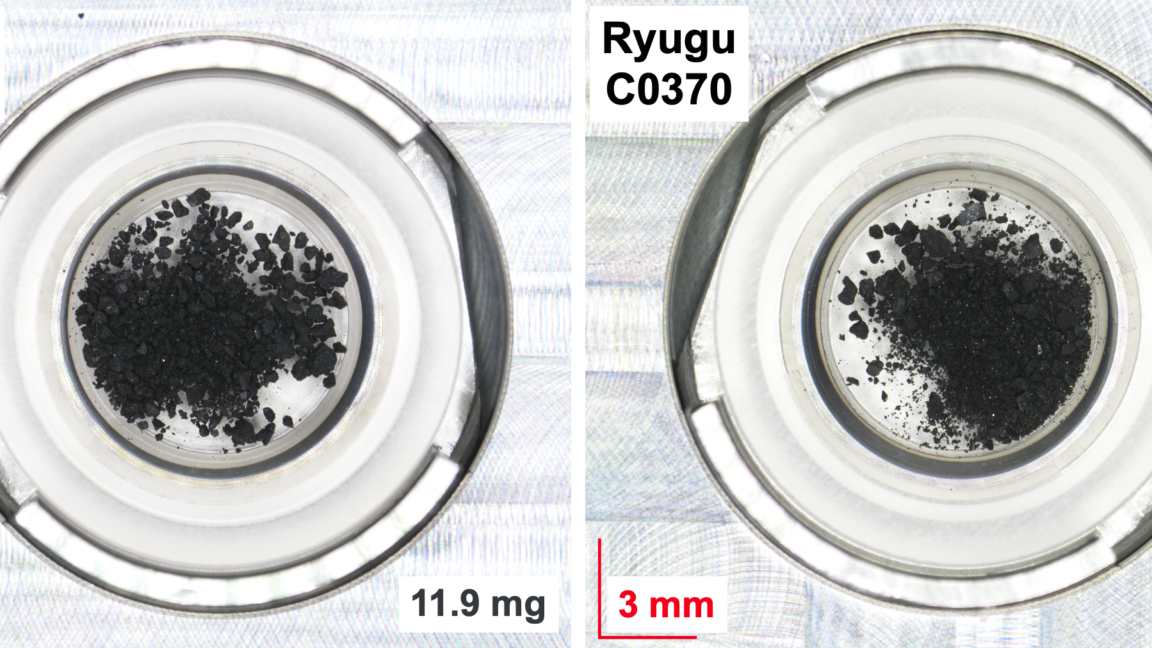
For decades, humanity has gazed at the stars, pondering one of life's most profound questions: Are we alone? While the direct answer remains elusive, a growing chorus of scientific discoveries is increasingly pointing towards a fascinating possibility: the very building blocks of life might not be unique to Earth, but rather, cosmic ubiquitous travelers. The latest results, adding to a rapidly expanding collection of evidence, confirm that asteroids are veritable delivery systems for the raw materials of DNA, fundamentally altering our perspective on how life might have begun on our planet—and where else it might exist.
This isn't just a singular finding; it's a pattern emerging from meticulous analysis of meteorites and asteroid samples. Scientists are consistently unearthing nucleobases—the critical components that form the ladder-like rungs of DNA and RNA—within these extraterrestrial rocks. While the early Earth possessed conditions suitable for the chemical synthesis of organic molecules, the persistent discovery of these complex organic compounds originating from space suggests a significant contribution from beyond our atmosphere. This cosmic delivery system could have jumpstarted or significantly enhanced the prebiotic chemistry that eventually led to the first self-replicating molecules.
The Building Blocks from Beyond: A Growing Collection
The notion that life's ingredients could come from space isn't new. The Murchison meteorite, which fell in Australia in 1969, famously contained amino acids—the building blocks of proteins. However, the consistent identification of nucleobases, particularly purines and pyrimidines, in various carbonaceous chondrites and asteroid samples over recent years has provided even more direct evidence for the extraterrestrial origin of critical genetic material precursors. These discoveries have been made using increasingly sophisticated analytical techniques, ensuring high confidence in their extraterrestrial origin and ruling out terrestrial contamination.
The implications are staggering. If asteroids, which are essentially cosmic debris from the early solar system, are rich with these fundamental molecules, it suggests that the ingredients for life are not rare, but potentially commonplace throughout the galaxy. This strengthens the 'panspermia' hypothesis—the idea that life, or its precursors, could be distributed throughout the universe via meteoroids, asteroids, and planetoids. While not suggesting fully-formed organisms are hopping between planets, it certainly implies a cosmic 'seeding' of chemical potential.
A Universe of Possibilities: Panspermia Revisited
The traditional view often centered on the 'primordial soup' scenario, where life emerged entirely from Earth-bound chemical reactions. While that remains a crucial part of the story, these new findings suggest a more expansive narrative. Imagine an early Earth, bombarded by these nucleobase-rich asteroids. Instead of starting from scratch with only indigenous elements, the planet's nascent oceans and hydrothermal vents would have been enriched by an influx of complex organic molecules, accelerating the pathways towards abiogenesis—the process by which life arises from non-living matter.
Implications for Life on Earth and Beyond
This paradigm shift doesn't just rewrite our understanding of Earth's genesis; it profoundly impacts the search for extraterrestrial life. If the necessary raw materials are so widely dispersed, the probability of similar chemical reactions occurring on other potentially habitable exoplanets significantly increases. Missions designed to explore ocean worlds like Europa and Enceladus, or even analyze atmospheres of distant exoplanets, gain renewed urgency and focus. The presence of these complex molecules on asteroids makes the jump from simple chemistry to life seem less like a miraculous anomaly and more like a probable cosmic outcome given the right conditions.
Future Frontiers: The Search Continues
Future research will undoubtedly focus on several fronts. Scientists will continue to analyze more extraterrestrial samples, including those brought back by missions like OSIRIS-REx and Hayabusa2, searching for an even wider array of organic compounds. Laboratory experiments will also play a critical role, simulating the conditions on early Earth to see how these asteroid-delivered nucleobases integrate into complex polymer chains, eventually leading to self-replicating molecules. Furthermore, astrobiologists will continue to refine models of planetary habitability, incorporating these new insights into the cosmic delivery of life's essential ingredients.
The continuous discovery of DNA's fundamental components in asteroids serves as a powerful reminder of the universe's interconnectedness and its profound capacity for creation. It's a testament to a cosmos that might be teeming with the potential for life, waiting for the right moment and the right conditions to bloom. As NovaPress continues to follow these incredible developments, one thing is clear: the universe is far more imaginative than we ever dared to believe, and the story of life is still being written, one cosmic seed at a time.