Beyond the Apex: Shocking Fossil Reveals Giant Fish Hunted Plesiosaurs in Prehistoric Seas
For millennia, the deep blue has held its secrets close, but every so often, a glimpse into its ancient past shatters our preconceived notions. A recent, groundbreaking discovery has done just that, revealing a brutal encounter from the Late Cretaceous period that forces us to redefine the very top of the prehistoric marine food chain.
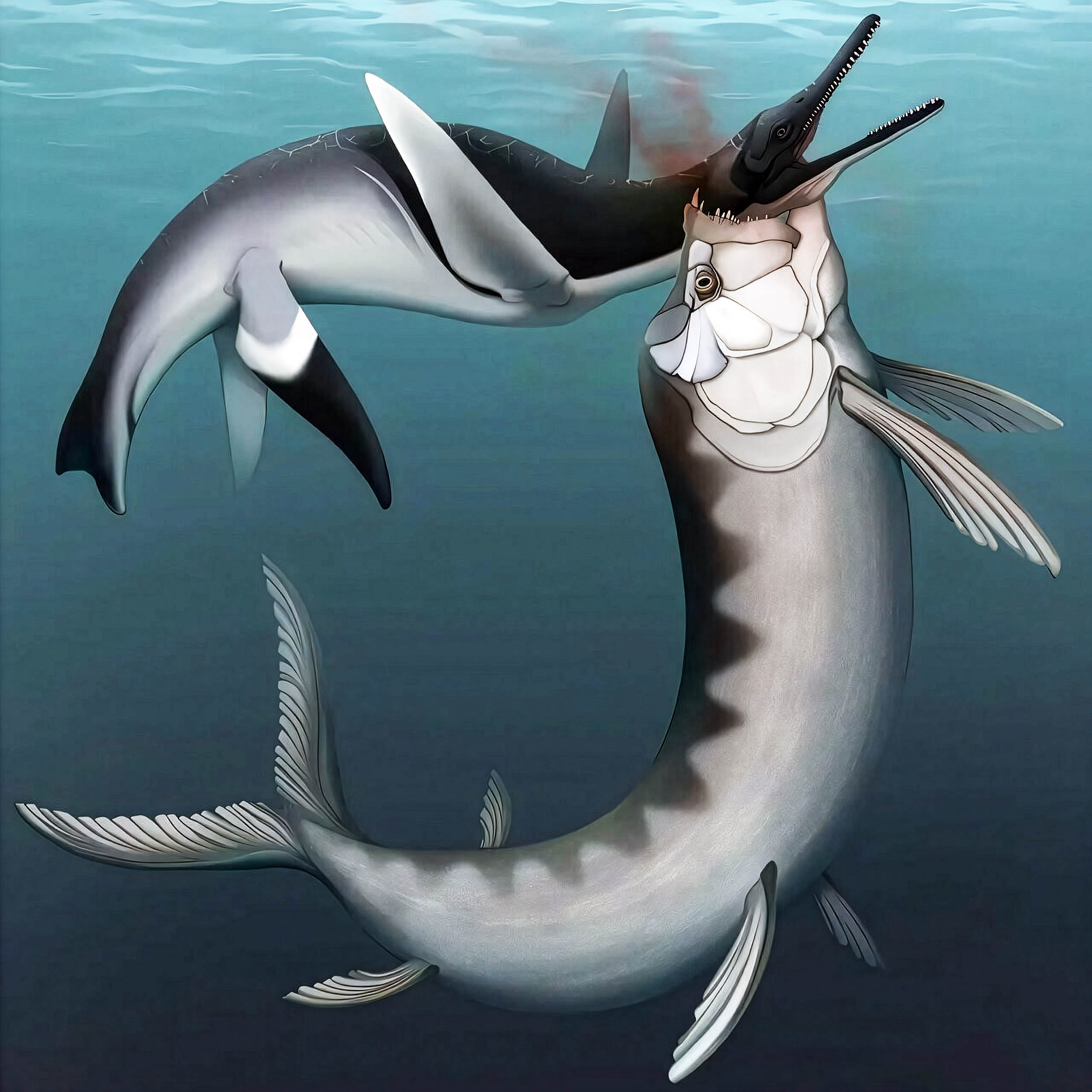
Scientists have unearthed compelling evidence of a fatal clash between two titanic predators: a 13-foot Polycotylus plesiosaur and an even more enormous Xiphactinus fish. This isn't just another fossil find; it's a preserved moment of predation, a broken tooth lodged in the plesiosaur's neck, speaking volumes about the savage realities of ancient ocean life.
The Contenders: Lords of the Deep
On one side stood Polycotylus, a member of the plesiosaur family – long-necked, four-flippered marine reptiles often considered apex predators of their time. Reaching lengths of up to 15 feet, they were swift, agile hunters, equipped with powerful jaws and sharp teeth, typically preying on fish and cephalopods. They were, by all accounts, formidable rulers of the Mesozoic seas.
Facing off against it was Xiphactinus, often dubbed the 'bulldog fish' or 'razor fish' due to its aggressive appearance. This wasn't just any fish; it was one of the largest bony fish to ever live, capable of growing up to 17 feet long. With an elongated, torpedo-shaped body and a mouth full of dagger-like teeth, Xiphactinus was an incredibly fast and powerful predator. Its diet typically consisted of smaller fish, making this new discovery all the more astonishing.
The Unprecedented Evidence: A Fatal Bite
The fossil record is replete with examples of predator-prey interactions, but direct evidence of a fatal attack between two such high-tier predators is exceedingly rare. This particular Polycotylus fossil presents an unambiguous testament to its final moments: a large, broken tooth, unmistakably belonging to a Xiphactinus, firmly embedded in the plesiosaur's cervical vertebrae, near its throat.
The location of the tooth is crucial. It suggests a targeted strike, not mere scavenging. The sheer force required to embed a tooth so deeply into bone speaks to the immense power of the Xiphactinus's bite. This wasn't a skirmish; it was a deadly assault, with the plesiosaur succumbing to the attack of a fish previously believed to be below it in the food chain.
Rewriting the Food Web: Implications for Prehistoric Ecosystems
This discovery forces paleontologists to re-evaluate the complex hierarchies of prehistoric marine ecosystems. For decades, marine reptiles like plesiosaurs and mosasaurs were considered the undisputed apex predators, with fish, no matter how large, occupying a lower rung. The Xiphactinus, though formidable, was thought to primarily consume other fish. This new evidence radically changes that perspective.
It highlights the brutal opportunism and relentless drive for survival that characterized life in the Late Cretaceous. Was this a desperate act of hunger from the Xiphactinus, or was the plesiosaur injured or sick, presenting an opportune moment? The ferocity of the attack, however, suggests a predator confident in its ability to take down much larger prey.
Furthermore, it provides a vivid parallel to modern marine environments, where surprising interactions occasionally occur – a large shark attacking a whale, for instance. Nature's food webs are dynamic, and the ancient oceans were no exception, filled with unexpected power dynamics and creatures capable of astonishing feats.
A Window into a Lost World
The identification of the attacker through dental morphology and forensic paleontological techniques underscores the advanced methods scientists employ today. Each fragment of bone, every embedded tooth, serves as a vital clue in piecing together the narrative of a lost world.
This rare fossil isn't just a testament to a single, dramatic event; it's a powerful reminder that the past is far more complex and surprising than we often imagine. It prompts new questions about the ecological pressures that shaped these creatures, their hunting strategies, and the delicate balance of power that governed the deep oceans millions of years ago. The discovery of the Polycotylus and its fatal wound has indeed brought a thrilling new chapter to the story of Earth's ancient apex predators, proving that sometimes, even the most established titans can fall to an unexpected challenger from the deep.